Monthly Archives: December 2012

UGANDAN WORLD CHESS CHAMPION
By Paul Ndiho

December 24th, 2012

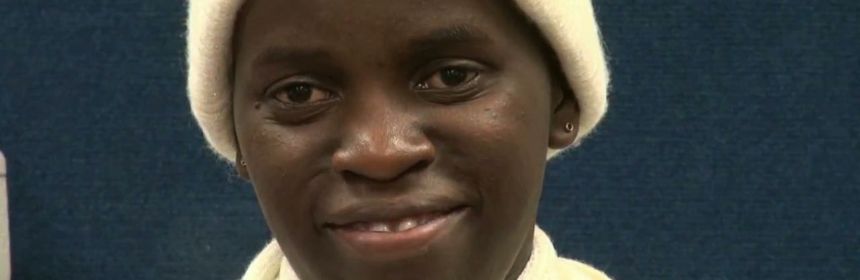
A 15-year old Ugandan girl, who is relatively unknown at home, is making international headlines playing a strategic board game. Phiona Mutesi is an award-winning World Chess champion, born in Katwe, a slum in the heart of the Ugandan capital, Kampala. Her story is inspiring millions of people. Robert _ Phiona - Part 2

Despite repeated hardships, Phiona Mutesi’s ability to play chees is amazing– and her journey to international stardom is remarkable. Her big break seems to have happened when Tim Crothers, a renowned author and former writer for the magazine, Sports Illustrated, wrote a book title “The Queen of Katwe” chronicling Phiona life and an article that has been nominated for that 2012 National Magazine Award.

Phiona was born and raised in this broken-down shack with her mother and three siblings and struggled to find a single meal to eat each day. She’s been out of school most of her life because her mother cannot afford it, and now she is just learning to read and write. Tim Crothers who brings Mutesi’s life to light, says she is one of the best chess players in the world and that her remarkable story is one in a thousand.

 “This story is about a 14-year-old girl in the slum in Uganda who has through unbelievable happenstance stumbled upon the game of chess. And with the help of a man who is as close to a saint as any man I’ve ever met, Robert Katende, she has grown in the game and has become one of the finest chess players in the world.

Phiona Mutesi is arguably one of the best chess players in the World, according to the World Chess Championship. Her journey from a Ugandan Katwe slum to the world stage as champion chess player was inspired by hunger. In 2005, while searching for food, nine-year-old Phiona followed her brother to a dusty veranda where she met Robert Katende, who had also grown up in the Kampala slums. Katende, a war refugee turned missionary, had an improbable dream: to empower kids through chess—traditionally, an elitist game in Uganda.  Katende says that once Phiona started participating in chess programs she slowly by slowly began to exhibit a level of chess expertise way ahead of her time. At age 11 she was her Uganda’s junior champion at the 14 a national championship.

 “By the end of the tournament, I realized that she had challenged all the girls and had topped the tournament. So that’s when I realized that wow this could be something so special in this girl. Because, I even asked her how she managed to win overs all these people… day by day and she could not fear, her most encouraging point was that she could not fear to play against the boys who had been there long before her. In a way she could always look for those challenging people to get to another level.

Despite a rough and tumble upbringing in the slums, Robert says Phiona grew to love the game of chess, because it’s reminiscent her of her own life, where she has had persevere against great obstacles. Chess allows her to think outside of the box.

 “She is one of the few people, that I kind of base on to say that game of chess is the best discipleship tool, because she has totally transformed. The way she used to look at things, the way she used to respond, because this mentality she’s had right from childhood of survival, aggressiveness, that I have to do this and who are to tell me that I can’t do this… You know what; in the slum it’s all about what can I snatch because you have to survive, so that kind of approach helps her.

Tim Crothers, who has followed Phiona Mutesi’s for over two years says her childhood was so challenging, and even to be alive at this time can be viewed as somewhat of  miracle..

 “When you grow up from the slum, the life is always difficult, just to get food is not simple — even the health is not good… so everything is about struggling.

This year, after qualifying first, she played at the 2012 Chess Olympiad in Turkey, Istanbul. At this prestigious tournament, she won three games, to earn the title “Woman Candidate Master”. She has also travelled the world and met her hero; chess grandmaster Gary Kasparov and Disney is planning to do a kid’s inspirational movie about her remarkable story. .

She is currently in the US, visiting After School Activities Partnerships, (ASAP) for the 9Queens Chess Academy and appeared in Chess in the Schools programs and at Gompers Preparatory Academy in San Diego and the Jay Stallings chess program at Trinity Classical Academy in Santa Clarita.

Ironically, her command of the game at such a young age certainly has had people talking– that she must have the best of coaches, the best education, and the best backing to be as good as she is. But surprisingly, Robert has painstakingly taught her the game each day with other kids in the slum.
Paul Ndiho’s take on what’s trending this X-mas

Christmas is on Tuesday and people worldwide are looking for last minute gifts for their loved ones.  Among the hot items are gadgets like the cell phone and the tablet, which are increasingly in use around the world. Paul New Tech

Here to tell us a little more about some of these gadgets is Paul Ndiho, who is an avid mac user, and keen follower of rising technology.


Empowering Cocoa Farmers in West Africa

By Paul Ndiho, Washington D.C.

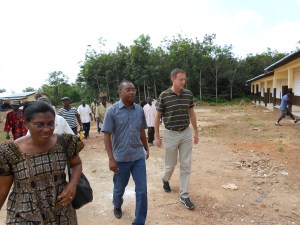
West Africa accounts for nearly three quarters of the world’s cocoa production. Millions of people are employed by the sector or indirectly rely on cocoa farming to make a living. Analysts are projecting that this season cocoa production is likely to surpass more than 2.8 million tons during a year-long period that began in October 2012. DSCN0026

The West African nations of Ivory Coast and Ghana are the two leading Cocoa producers in the world followed by other producers including, Nigeria, and Cameroon. The majority of cocoa produced in the region is grown by small-scale farmers who are located in remote areas.

Cocoa farmer Eugene Koffi Anzoua works in his field in the Brofodoume region in Ivory Coast, picking cocoa pods, drying and cleaning the beans — all in the name of quality.

“A week after drying, we proceed to marketing our produce to buyers. If there is a co-operative, we deliver the goods to this which carries it to the port,”

Cocoa is a delicate and sensitive crop and farmers must protect trees from the wind and sun. They must also fertilize the soil and watch for signs of distress including attack from pests and disease. Some farmers have limited access to credit and have difficulty in obtaining farming supplies. Paul Mensal, secretary of a local Cocoa Farmers Association in Ghana observes that the government has not done enough to help the farmers.

“The yields for this year have gone down due to lack of spraying materials. The amount this year has decreased totally. We are suffering; pests are spoiling our Cocoa. I suggest that the government must supply us with more chemicals. The price that the government is giving us is very, very low. Its two dollars to the kilo and we the farmers suggest that they must buy that at five dollars,”

The World Cocoa Foundation, a Washington, D.C –based international organization committed to ensuring cocoa sustainability through agricultural, environmental and development, is working with cocoa farmers to address some of these challenges. Bill Guyton, President, W-C-F says his foundation is empowering the communities by training farmers, enhancing education, investing in families, and improving community health and welfare.

 “We’re formed in 2000 to help improve cocoa sustainability in all three cocoa regions of the world but because of the importance of West Africa a lot of our programs focus on that region. We’re currently working on three major regional programs. The first one is called the cocoa livelihoods program which is funded by the Bill and Melinda Gates foundation and 16 of our company members as well as the Germany Development Agency. The program is to reach over 200,000 cocoa farmers over the next few years with the intent of doubling incomes. So it’s a very ambitious program but it’s also making some very good progress.”

Ivory Coast and Ghana have introduced stricter standards that require farmers in the cocoa sector to reform.  The reforms are aimed at improving farmers’ incomes and encouraging reinvestment in old plantations; the standards will also push farmers to develop better drying and fermentation practices.

However, Ivorian farmers fear that corruption threatens to undermine the process this year, as the country bounces back from a decade of economic decline caused by political instability and post-election violence. On the flip side, the tide seems to be favoring Ghana, which has had a steady economic growth and semblance of peace and stability.

Mr. Guyton who just returned from West Africa — visiting some of the projects says that improved access to inputs like fertilizers and improved planting material can help stimulate the production on the farms.

 “I was encouraged to see what was actually happening on the ground with our programs. The cocoa livelihoods program for example is helping to bring about new technologies to help reduce the cost of farmer training and improve the impact on productivity and yields. So for example I visited some farmers in both of those countries who have been trained on better or good agricultural practices and with some basic training on productivity, we’ve been able to see the yields improve by up to 30 to 50 percent but that’s not good enough. What we’d like to see over time is an improvement of up to twice that amount.”

Most of the cocoa produced in West Africa is exported in raw form to Europe, the United States, and other emerging markets like India, and China, where it’s processed into other finished products.

Today, people around the world are enjoying different forms chocolate and the industry employs hundreds of thousands of people. But, critics say the chocolate industry has done little to help the farmers — and sometimes these farmers don’t know even how chocolate tastes.

Congo Crisis — Analysis

By Paul Ndiho

The United Nations Security Council unanimously adopted a resolution last month that extended the arms embargo on the Democratic Republic of the Congo (DRC), while expressing its intention to consider additional targeted sanctions against the leadership of the M23 rebel fighters.

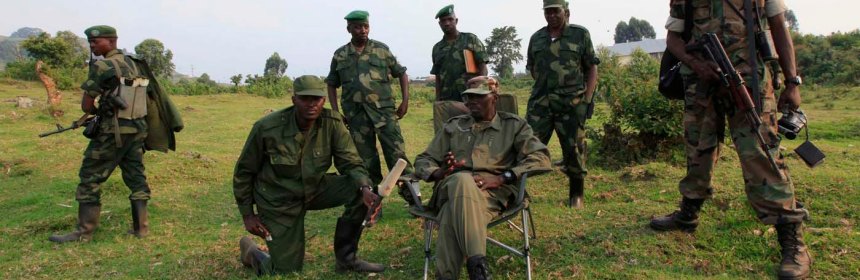
Colonel Makenga, leader of M23 rebel group, speaks during an interview with Reuters in Bunagana

Rwandan support for rebels in neighboring Democratic Republic of Congo may be more widespread than previously believed, according to a report released in November by the UN Panel of experts.  The report, noted that Rwanda continues to violate the arms embargo by providing direct military support to the M23 rebels, distributing arms, ammunition, facilitating recruitment and dispensing intelligence and political advice.

Dr. Théogene Rudasingwa, a former top aide of Rwandan President Paul Kagame, now a fierce critic of the regime, agrees with the report. He says despite public denials, President Paul Kagame is directly involved.

“These accusations are certainly based on fact. The UN Panel of experts did conduct an investigation and compiled a report. But for us who belong to the region, even without the group of experts report, we know very well that Rwanda primarily and to a larger extent Uganda had been middling in the affairs of the Democratic Republic of Congo since 1996. So there is a legacy, a continuing legacy, and there is evidence to point that actually the recent escalation of conflict the Congo is actually the creation by Rwanda and Uganda.

The M23 rebels have withdrawn, at least for now, from the Eastern city of Goma in the Democratic Republic of Congo following an agreement reached with the rebels that preceded meetings with regional leaders in the Ugandan, Capital, Kampala. Congolese activist, Yussa Bunzigiye Prosper, says that at the beginning of their conflict with the government, nobody took M23 rebels seriously, but once they took Goma, things changed, and that President Joseph Kabila should be held accountable.

“The Congolese want to see a government which is responsible, a government which will deal with these issues, and a government which will deliver to them social services, a government which will allow them to be free on their land and enjoy everything on that land.

The International community has been pushing for sanctions that encompass an arms embargo against all armed groups including M23 rebels and a travel ban and asset freeze against individuals or entities that have violated the embargo. But Prosper disagrees with this notion.

“Does the international community really have a say in this matter? The International community has been in Congo for more than ten years with MONUSCO. The same very MONUSCO they’re in Walikali ten miles away from Walikali women are being raped, the same MONUSCO they are in Rubilizi in South Kivu and 30 kilometers away women are being raped, venerable people are being displaces all over their land by militias and they are there… Guess what, they are getting a billion and half dollars every year to do what –to just enjoy the Congo soil… Come on? The international community has no moral authority to discuss this matter.

Critics of Rwanda and Uganda say both Governments have also cooperated to support the creation and expansion of the political branch of M23 and have constantaly advocated on behalf of the rebels some of whom reside in or regularly travel to Rwanda and Uganda. But, both governments vehemently deny backing the M23 rebellion. However, Dr. Rudasingwa warns that observers monitoring the Congo crisis should look at it from the context of these two leaders wanting to be relevant to the international community.

“I think it points to the Character and the state of governance in Uganda and Rwanda because most of these problems that we can see in Congo are more or less an extension of the problems that have not been solved in Rwanda and to a large extent to Uganda itself.”

The international community is optimistic that the rebel’s pullout from Goma might signal progress in efforts to negotiate a peace deal, but only time will tell. Meanwhile, the rebels have given no indication they are ending their eight-month insurgency.