The 2024 Amazon Web Services (AWS) Summit in Washington, D.C., is an exciting event with a strong focus on generative artificial intelligence (A.I.). Major announcements include a $50 million investment for a global public sector A.I. initiative. Also, this week, AWS announced that it is committing $10 million to empower nonprofit institutions to harness the power of the AWS cloud to advance pediatric and children’s causes worldwide. VOA’s Paul Ndiho is joining us live from the Convention Center in downtown Washington, D.C., to provide more insights. VOA’s Paul Ndiho is joining us live from the Convention Center in downtown Washington, D.C., to provide more insights.
This is a fascinating story about a young Ethiopian student who turned his hobby into an innovative business on Compass. His entrepreneurship spirit and ability to innovate are remarkable. Firaol Ahmed, a Saint Louis University and Billiken track and field athlete, is generating headlines as a student entrepreneur. Ahmed founded Moii Coffee in his university dorm room, where he had 30 pounds of green coffee beans and roasted the beans in small batches. The Moii brand has gained attention on Compass and social media, generating over $35,000 in sales in its first year. For more insight, Firaol Ahmed, the founder and CEO of Moii Coffee, is right here in the studio.
M-KOPA is a leading African fintech company recognized for its significant growth and impact. It drives financial inclusion and digital connectivity across Africa and has reached over 4 million customers.
M-KOPA is not just a fintech company; it is a sustainability champion. The company is committed to providing comprehensive solutions, from smartphone financing to digital loans and health insurance.
With operations in several African countries, M-KOPA has provided over $1 billion in credit and is proud to employ over 2,000 people.
VOA’s Paul Ndiho spoke to Dustin Kahler, M-Kopa’s director of Mobility, to learn more about the company.
On Monday, President William Ruto flagged off the first 400 police officers for the United Nations peace mission in Haiti. Ruto expressed confidence that the Kenyan contingent and others from contributing countries will help restore lasting peace in conflict-ravaged Haiti. For more insight into this multinational peacekeeping mission, VOA’s Paul Ndiho spoke to Dr. Edgar Githua, an International Relations, Security, and Diplomatic expert at the US International University in Nairobi.
After months of expressing anger on social media, hundreds of young Kenyans gathered in Nairobi to hold a march calling on the church to speak out against the contentious finance bill proposed by President Ruto. The bill involves punitive tax measures that will pile further pressure on young Kenyans struggling with the cost of living surges, with well-paid jobs remaining out of reach. The government plans to raise $2.7 billion in additional taxes, according to an alliance of rights groups and the police watchdog. President William Ruto’s cash-strapped government has proposed these tax hikes, which many fear will worsen the cost-of-living crisis. The government agreed to make concessions earlier on Tuesday after initial clashes with the police, but it will still proceed with some tax increases, defending them as necessary.
On June 20th, World Refugee Day, designated by the United Nations, aims to draw global attention to the hardships faced by those fleeing conflict or persecution. To mark this day, the Refugee and Forced Displacement Initiative (RAFDI) will host an event titled “Celebrating Refugee Talents and Host Country Leadership,” to honor the talents of refugees and emphasize their positive impact on communities.
The African National Congress (ANC) has agreed to form a national unity government in South Africa with three other parties, including its main rival, the pro-business Democratic Alliance. The unity government will include the ANC, the DA, the socially conservative Inkatha Freedom Party, and the right-wing Patriotic Alliance. As part of the agreement, the DA will get the post of deputy speaker of the National Assembly. President Cyril Ramaphosa, the ANC leader, is expected to win a new term in office with the support of the other parties. VOA’s Paul Ndiho spoke to Ricky Mukonza, a political analyst and professor at Tshwane University of Technology in South Africa.
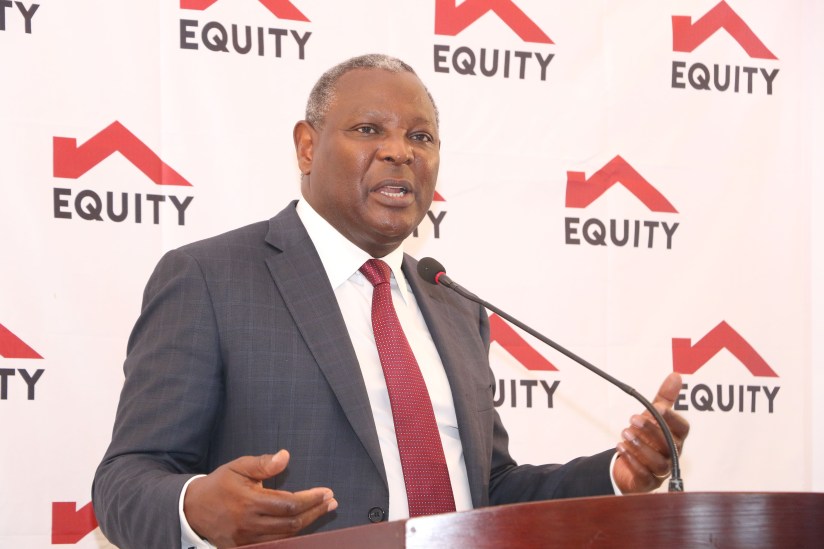
In 2024, Equity Bank, based in Nairobi, was announced by Brand Finance as the second-strongest banking brand on the planet. The brand’s value has skyrocketed to $450 million (Kes. 64 billion), solidifying this position as Africa’s tenth most valuable banking brand. And it is working, aided by Equity Group’s 20 million strong customer base.
At the helm of Equity Group Holdings is the visionary CEO, Dr. James Mwangi, whose leadership has been instrumental in the bank’s success. In a conversation with VOA’s Paul Ndiho, he shared the key factors that have propelled their success.’We concentrated on our governance systems, taking them to a level as high as you can get. By the end of last year, we had the largest number of shareholders in the world, including the World Bank and IFC,’ Dr. Mwangi revealed.
Equity Group’s unique strategy is rooted in inclusivity. As Dr. Mwangi aptly says, ‘We believe in leaving no one behind.’ Their range of services caters to a diverse clientele, from refugees to micro-small enterprises, small-holder farmers to high-net-worth individuals. With 20 million customers, Equity Group has become a home for everyone in the region.
Dr. Mwangi also underscored the importance of technology: “We are working with technology a lot. “Now, 98% of all our transactions are on digital platforms, which are becoming scalable. He says Equity Group made investments that could act as shock absorbers to ensure the longevity of social governance and essential inputs because they realized that not just financial services were necessary to reach the goals of the target customers.
Strategic partnerships have also been critical to the success of Equity Group. We launched today with Microsoft on the one hand, and MasterCard on the other, to provide the farmers with that digital solution, which we call the MasterPass,” said Dr. Mwangi
He enhanced their partnering with philanthropic foundations to access finance, especially from a social and a sustainability point of view, saying the credit guarantee for women and young people can be one of the solutions in that regard. “On what the foundation, led by social sustainability, really helped us bring that finance to the table, we have used the twin-engine model.
Dr. James Mwangi shared his dream for the future, indicating that digital inclusivity and artificial intelligence in decision-making would be more critical than ever. AI is then layered on top of the digitized systems and is utilized to conduct deep analysis on people’s behavior and needs,” he said. His reflections offer a comprehensive reflection following a different thought process and operational approach to banking by uplifting communities and powering sustainable growth in the continent.
This week, Nairobi, Kenya, marks the 10th anniversary of the Africa Prize for Engineering Innovation, founded by the Royal Academy of Engineering. Celebrating its impact across 23 African countries, the prize has supported nearly 150 entrepreneurs, created over 28,000 jobs, and improved the lives of more than 10 million people. This year includes Rory Assandey, co-founder of La Ruche Health in Ivory Coast, whose team uses artificial intelligence (AI) and WhatsApp to transform healthcare.
AI and WhatsApp: A Game-Changer for Healthcare
In an interview with technology correspondent Paul Ndiho, Rory Assandey explained La Ruche’s innovative approach. “We built a standard electronic medical records system to digitize documentation, billing, and payouts. But the real game-changer is our use of generative AI integrated within WhatsApp,” Assandey said.
The decision to use WhatsApp was strategic. “WhatsApp is a very frequent means of communication. It uses low data and memory and is accessible for low literate populations,” Assandey noted. This accessibility allows users to ask health-related questions via text, voice notes, and photos, making healthcare information available to communities that need it most.
Reaching the Masses
La Ruche Health has successfully reached over 150,000 people through WhatsApp. “It’s a perfect channel to reach the masses without significant marketing expenditure,” Assandey said. The platform supports multiple local languages, helping to bridge the gap for users who may need to speak French or English.
Impact of the Africa Prize
Being a finalist for the Africa Prize is a significant achievement for Assandey and his team. “It’s an honor to represent past winners and to showcase the potential of Francophone countries in this prestigious competition,” he said. Winning the prize would validate their efforts and provide valuable networking opportunities with investors and experts.
“We want to continue to tap into the network and resources provided by the Africa Prize, demonstrating our growth and the program’s effectiveness,” “Assandey concluded.
La Ruche Health aims to expand its reach and impact, leveraging technology to improve healthcare accessibility. As the Africa Prize for Engineering Innovation celebrates its 10th anniversary, the achievements of finalists like La Ruche Health highlight the transformative power of engineering innovation in addressing local challenges and improving lives across the continent.
The future of Africa’s industrialization depends on clean, renewable energy. In a recent interview with VOA’s Paul Ndiho, Erik Granskog, Founder and CEO of Milele Energy, highlighted the crucial role of renewable energy in Africa’s industrial future.
“Everything is powered by electricity,” Granskog explained, emphasizing the need for reliable and sustainable energy sources to drive development across various sectors.
Last month, the U.S. and Kenya established a Climate and Clean Energy Industrial Partnership in a move of global significance. This collaboration, focusing on clean energy deployment and green industrialization, reflects Kenya’s leadership in renewable energy and the U.S.’s commitment to sustainability. “The partnership aims to guide both nations towards a new green trajectory, promoting sustainable and prosperous development.”
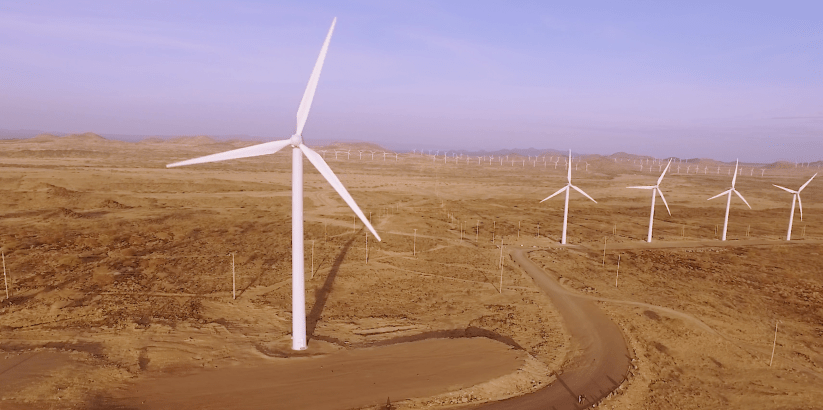
Milele Energy, a key player in Africa’s renewable energy landscape, actively invests in clean energy projects across sub-Saharan Africa. It holds a substantial stake in the Lake Turkana Wind project in Kenya, the largest wind project on the continent. “We cover Africa, developing, implementing, financing, and operating independent power projects. We have a 20% to 25% stake in the Lake Turkana Wind project and are working to expand it by adding solar, wind, and battery storage for green industrialization,” said Granskog.
The Necessity of Reliable Energy: The importance of reliable energy cannot be overstated. “You need electricity for everything, whether it’s e-mobility, data centers, hospitals, or manufacturing. The big issue is not just generation but also transmission,” Granskog explained.
Kenya’s initiatives to create independent transmission lines are a significant step forward in ensuring a reliable grid for industrial activities. “Seeing that Kenya is looking at an independent transmission program is a big step forward in ensuring the grid is reliable.” Reliable energy is paramount for setting up manufacturing facilities, whether for pharmaceuticals, green steel, or other types of refining. “Without reliability, cost doesn’t matter,” he added.
Africa’s Potential and Challenges Granskog highlighted Africa’s potential, which is driven by its youthful population, entrepreneurial spirit, and growth aspirations. “In Kenya and other parts of Africa, a highly educated workforce is underemployed. We need jobs that create value, whether it’s building, creating, refining, or any value-added activities,” he emphasized.
Despite the potential, energy issues are a pressing concern across the continent, demanding immediate attention and action.
Milele Energy aims to address these challenges. “We have a project in Sierra Leone expected to close next month with support from the U.S. government. With $412 million in finance and insurance support, that project will generate 60% of the country’s electricity and lower costs,”
The argument for clean, renewable energy in Africa is compelling. It is not just about environmental sustainability but also about driving economic growth and industrialization. With strategic investments and partnerships, Africa can harness its renewable energy potential for sustainable and prosperous development.