God of Cycles: Dr. Frederick Nnoma-Addison on Finding Hope When Life Breaks You. What keeps you going when life gets tough? This question lies at the heart of Dr. Frederick Nnoma-Addison’s new book, “God of Cycles”, featured in our latest episode of Different Perspectives with Paul Ndiho
Angola has one of the lowest literacy rates in the world, despite being a country richly endowed with natural resources. In this video conversation, education activist Rafael Marques explains how making education a human right can turn this situation around, empowering youth and contributing to the well-being of Angolans. As Executive Director of the Ufolo Good Governance Center, Rafael has been working with the private sector to build badly needed schools in Angola. He is also Senior Advisor to the Extractive Industries and Human Rights Development Center at the Institute of World Affairs. Rafael is joined by Gregory Pirio, the director of the Extractive Industries and Human Development Center, who has studied the role of schools in promoting peace and social cohesion. Veteran journalist Paul Ndiho leads the conversation. This video podcast is a collaboration between Ndiho Media and the Institute of World Affairs.
Former Zambian President Edgar Chagwa Lungu has died at the age of 68 while receiving treatment in Pretoria, South Africa. His passing was confirmed by the Patriotic Front (PF), the party he led for nearly a decade. Lungu served as Zambia’s sixth president from 2015 to 2021. He rose to power after the death of President Michael Sata and later won a full term in 2016.
WASHINGTON, D.C. – President Donald Trump on Wednesday revived one of the most controversial policies of his first term: a sweeping travel ban targeting foreign nationals from countries deemed high-risk by the administration.
The updated proclamation bars entry to the U.S. from 12 countries and imposes additional travel restrictions on seven more. The ban goes into effect Monday at 12:01 a.m., giving travelers and airlines a brief window to adjust and potentially avoid the chaos that marked the rollout of Trump’s original ban in 2017.
Trump announced the decision in a video posted on social media, citing Sunday’s terror attack in Boulder, Colorado, as justification. The suspect in that attack — reportedly from Egypt, which is not on the restricted list — allegedly overstayed a tourist visa, a fact Trump used to argue for tighter entry controls.
Countries Now Fully Banned:
🇦🇫 Afghanistan
🇲🇲 Myanmar
🇹🇩 Chad
🇨🇬 Republic of Congo
🇬🇶 Equatorial Guinea
🇪🇷 Eritrea
🇭🇹 Haiti
🇮🇷 Iran
🇱🇾 Libya
🇸🇴 Somalia
🇸🇩 Sudan
🇾🇪 Yemen
Countries Facing Heightened Restrictions:
🇧🇮 Burundi
🇨🇺 Cuba
🇱🇦 Laos
🇸🇱 Sierra Leone
🇹🇬 Togo
🇹🇲 Turkmenistan
🇻🇪 Venezuela
Some of the same countries were previously banned under Trump’s 2017 executive order, which targeted majority-Muslim nations and led to widespread detentions, protests, and court challenges. The Supreme Court later upheld the order in a 5–4 decision and last week reaffirmed the president’s authority by siding with the administration on immigration enforcement, opening the door for this latest move.
Johanna Leblanc, a national security law and foreign policy expert, spoke with Ndiho Media and warned that the new ban could destabilize immigrant communities and send ripple effects through U.S. foreign relations.
“For Haitians and other affected groups, this is a moment of deep uncertainty.”
Uganda’s Parliament has passed the 2025 Uganda Peoples’ Defence Forces (Amendment) Bill, a highly controversial law that would allow civilians to be tried in military courts—defying a Supreme Court ruling earlier this year that deemed such trials unconstitutional.
If signed by President Yoweri Museveni, the bill would authorize military courts to prosecute civilians accused of crimes allegedly linked to military personnel or operations. Critics argue this is a dangerous overreach and a deliberate attempt to weaponize military justice against political opposition.
The African Commission on Human and Peoples’ Rights has made it clear that military courts should never have jurisdiction over civilians. Uganda’s own Supreme Court ordered an immediate halt to military trials of civilians in January 2025.
Ndiho Media spoke to Henry Muguzi, a respected political analyst and Coordinator of the African Elections Observer Network in Kampala. He warned:
“This bill is a direct assault on the independence of the judiciary and a clear attempt to intimidate political opposition as we approach the 2026 elections.”
Human Rights Watch has also documented years of abuse in military courts, often targeting opposition figures like Dr. Kizza Besigye. His lawyer, Eron Kiiza, was even jailed for contempt after clashing with the army tribunal earlier this year.
The bill now sits on President Museveni’s desk. Many are calling on him to reject it—for the sake of constitutional order and democratic legitimacy.
Washington, D.C. – The U.S. Supreme Court ruled Friday that President Donald Trump’s administration can revoke the legal status of over 500,000 migrants, striking down a federal judge’s block on ending the Biden-era humanitarian parole program.
The decision immediately puts migrants from Cuba, Haiti, Nicaragua, and Venezuela at risk of deportation. The program protected people fleeing political and economic turmoil in their home countries. Justices Ketanji Brown Jackson and Sonia Sotomayor dissented, warning that the ruling leaves vulnerable communities without recourse to the law.
“This goes beyond policy — it impacts real families and communities,” said Pamela Asobo-Anchang, editor of The Immigrant Magazine, in an interview with Ndiho Media.
Meanwhile, the administration has halted all student visa appointments at U.S. embassies and is expanding social media vetting for student and exchange visas. A leaked memo says the move will have “significant implications” for U.S. consulates worldwide.
Critics argue this visa crackdown is politically motivated, targeting elite universities seen as “too liberal” and failing to respond to pro-Palestinian campus protests. Supporters say that it’s about restoring order and enforcing long-neglected immigration laws.
With sweeping immigration changes now backed by the highest court, the future for many migrants and international students remains uncertain.
Former President Joseph Kabila has begun holding consultations with residents and civic leaders in the eastern Congolese city of Goma — a stronghold now under the control of the M23 rebel group. His visit comes days after the Congolese Senate voted to strip him of legal immunity, clearing the way for possible prosecution on charges of treason and war crimes. Kabila, who ruled the DRC from 2001 to 2019, says his return is part of a broader effort to help end the conflict in the region. During his meetings in Goma, Kabila reportedly listened to grievances from displaced families, youth leaders, and religious figures, many of whom expressed frustration over the deteriorating security and economic situation. Government officials, however, remain sharply critical. Spokesman Patrick Muyaya accused Kabila of “positioning himself as a rebel leader,” fueling fears that his presence could undermine peace efforts backed by Washington and regional allies. In a recent speech, Kabila rejected the allegations, saying, “Our justice system has become nothing more than an instrument of oppression.” Whether his visit is a genuine peace initiative or a calculated political move remains to be seen — but one thing is clear: Kabila is back, and the stakes for Congo’s future just got higher.
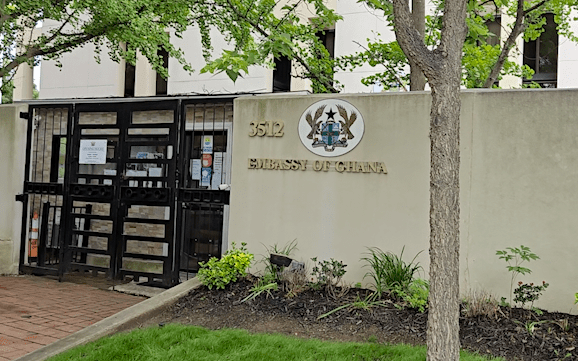
By Ndiho Media Ghana’s abrupt decision to shut down its embassy in Washington, D.C., has left dozens of citizens stranded, many of whom traveled from across the U.S. to pick up passports and visas.
Ndiho Media spoke to frustrated applicants gathered outside the embassy, which was locked. “I flew in from Michigan, only to find the place shut down with no explanation,” said Derrick. “There was no email, no alert — just locked doors.”
Gift, who traveled from Atlanta, was equally disheartened. “I had an appointment to renew my passport. I’m taking my adopted parents to Ghana for the first time, and now everything’s up in the air.” Others came from New York, Georgia, and California — all reporting no prior notice from embassy staff. The closure follows a damning audit ordered by Foreign Minister Samuel Okudzeto Ablakwa, revealing a fraudulent visa scheme run by a local IT staffer. For at least five years, a local staffer and his collaborators allegedly directed applicants to a private company, where they charged unauthorized fees and pocketed the money. In response, Ablakwa dismissed staffers, recalled all foreign ministry staff, suspended local hires, dissolved the IT department, and invited the Auditor-General to conduct a forensic audit. The embassy will remain closed temporarily for a complete systems overhaul. President Mahama’s administration has pledged zero tolerance for corruption, but for stranded travelers, the damage is done. “We support the clean-up,” said Derrick, “but this could’ve been handled way better.”
Abidjan, Côte d’Ivoire—Exciting developments emerged earlier this month at the AmCham Business Summit, where U.S. tech firm Cybastion and its American partners unveiled over $500 million in new agreements across Africa. The move was recognized by the U.S. Embassy as part of a larger initiative to enhance trade and innovation on the continent.
These agreements encompass a range of sectors, including digital infrastructure, cybersecurity, and workforce development. Notable projects include establishing national data centers in Benin and Côte d’Ivoire and launching Safe Cities and cyber command centers in Gabon, Guinea, and Burkina Faso.
Cybastion’s CEO, Dr. Thierry Wandji, emphasized the mission: “Our goal is to create secure, inclusive, and sovereign digital ecosystems” in collaboration with African governments.
In addition to technology initiatives, Yaatra Ventures also signed a significant Memorandum of Understanding (MoU) to co-develop a 200,000 bpd refinery with a local partner in Côte d’Ivoire. This project is expected to generate jobs and enhance the regional energy supply.
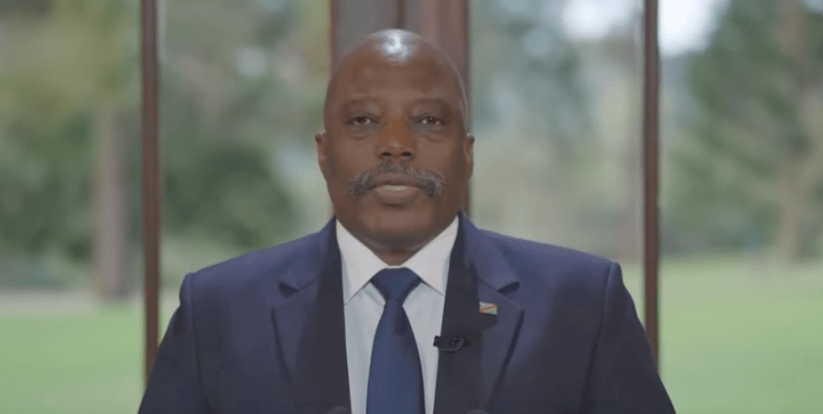
Former DR Congo President Joseph Kabila has resurfaced with a scathing attack on President Félix Tshisekedi’s government just days after losing his immunity from prosecution.
In a 45-minute YouTube speech — now deleted but widely reshared — Kabila labeled the current regime a “dictatorship” and accused it of weaponizing the justice system for political revenge. Authorities are preparing treason and war crimes charges against him, alleging ties to the Rwandan-backed M23 rebels occupying parts of eastern Congo.
Kabila, who ruled from 2001 to 2019, said he broke his silence out of concern for national unity and warned that Congo’s democracy is declining. He outlined a 12-point peace plan and denied recent claims that he secretly traveled to Goma.
The government responded by banning his PPRD party and freezing his assets, which Kabila says reflects growing authoritarianism.
He condemned the rise of armed militias, corruption, economic mismanagement, and the presence of foreign troops, calling for their withdrawal.
Once allies, Kabila and Tshisekedi split in 2020. The political temperature is rising, and the stakes for Congo’s future couldn’t be higher.
For more analysis, Ndiho Media spoke to Zihindula Mulegwa, one of Kabila’s attorneys and former spokesman.

 Ndiho Media,LLC.