Ghana is making strides in promoting women’s and girls’ participation in STEM fields, challenging gender stereotypes, and changing mindsets. This initiative is gaining momentum and is seen as a promising step towards the future of STEM education.
With the increasing demand for skilled workers in robotics and automation, it is crucial to introduce Ghanaian students to the world of robotics from an early age. Jonathan Kennedy, CEO of Inovtech Stem Center, based in Accra, Ghana, joins me to provide more perspective.
A new era has begun in Senegal, a West African nation. Bassirou Diomaye Faye has been inaugurated as the new President, averting a crisis that almost pushed the country to the edge. Bassirou Diomaye Faye, who has never held an elected office, is now set to lead a nation grappling with a failing economy that has left one in three of the approximately 17 million impoverished inhabitants. Political analysts say that this peaceful transfer of power in a region that has experienced coups is a sign of Senegal’s political maturity and pride in its democratic stability. To shed more light on this issue, VOA’s Paul Ndiho spoke to Mundia Paul Hakoola, a political analyst based in Lusaka, Zambia.
Jacob Zuma, the former President of South Africa, has been disqualified from running in the country’s upcoming general election in May. The Independent Electoral Commission (IEC) did not explain his disqualification. Still, observers speculate that his conviction and subsequent jailing for contempt of court in 2021 may have played a role.
To gain more insight into the current political situation in South Africa, VOA’s Paul Ndiho spoke with Dr. Maropeng Mpya, an advocate and political and social commentator based in Johannesburg.
The African diaspora has significantly contributed to developing and rebuilding African countries. They have done this by providing remittances, transferring skills, advocating for political and social causes, and promoting African culture globally. African governments can leverage the potential of the African diaspora through various strategies. For instance, they can develop policies and institutions that engage the diaspora, encourage diaspora investments through incentives and simplified processes, and manage remittances to support development. To help us better understand this, Nii Simmonds, a nonresident senior fellow at the Atlantic Council, is a think tank based in Washington, D.C.
Zambia’s President Hakainde Hichilema recently declared a national emergency because of the drought that has devastated the country’s food production and electricity generation. This declaration comes soon after Zambia struggled to recover from a deadly cholera outbreak. The drought has affected over 1 million hectares of the 2.2 million hectares of land used to cultivate maize, the country’s staple crop. VOA’s Paul Ndiho spoke with Paul Chisunku, the Country Director of the African Education Program based in Lusaka, Zambia, to gain more insight into the situation.
Zambia is currently facing a severe food crisis due to a prolonged dry spell, which has caused a significant increase in the price of essential food items. In fact, studies suggest that Zambia has the lowest daily food supply in the world. To address this issue, the African Education Program has partnered with the Amos Youth Centre (AYC) in Kafue, Zambia, to launch a Nutrition Program. This program provides meals with an average of 1,500 calories to more than 350 children and youth every school day. VOA’s Paul Ndiho recently spoke to Paul Chisunku, Country Director of the African Education Program, based in Lusaka, Zambia, to learn more about this program.
The United Nations General Assembly has endorsed a resolution titled “Seizing the opportunities of safe, secure, and trustworthy artificial intelligence systems for sustainable development.” The United States introduced the resolution, co-sponsored by over 120 Member States. According to US Ambassador Linda Thomas-Greenfield, the resolution establishes a worldwide agreement for developing safe, secure, trustworthy AI systems and advancing sustainable development while respecting fundamental freedoms.
Dall-E
Paul Ndiho, an AI enthusiast, recently discussed with Philip Thigo, a Kenyan technology, and public policy expert, the importance of global regulation frameworks that follow the United Nations human rights charter. They highlighted the need for a balanced approach that promotes innovation while addressing the potential harm that AI may pose to society and the environment. Transparency, accountability, and public good are crucial when developing and deploying AI technologies.
Thigo emphasized the vital role of AI in education and infrastructure in Africa, stating that the continent’s unique position could significantly enhance its technological capabilities by investing in foundational elements like data, energy, and internet connectivity. By doing this, Africa can serve as a model for other regions to ensure AI development is inclusive and beneficial for all.
Thigo envisions a future where African students have the tools and skills to thrive in a technologically advanced world. He believes that access to devices, the internet, and a curriculum that reflects the latest technological innovation would ensure that young Africans are not just consumers of technology but active participants in its creation and application.
As Africa positions itself at the forefront of technological innovation, the lessons and strategies discussed by Philip Thigo could very well define the continent’s trajectory toward a more inclusive, prosperous, and technologically advanced future. However, it also reminds us of the critical need for thoughtful regulation, international cooperation, and a commitment to human rights and the public good.
The Democratic Republic of Congo (DRC) has recently reinstated the death penalty after a more than two-decade-long moratorium. This decision was made as the authorities are struggling to curb violence and militant attacks in the country. According to a justice ministry statement, the ban from 2003 allowed offenders accused of treason and espionage to escape proper punishment. Eastern Congo has been riddled with conflict for decades, with more than 120 armed groups fighting for land, power, and, in some cases, protecting their communities. To provide more perspective on the issue, Zihindula Mulegwa, an attorney and former spokesperson for President Joseph Kabila of the DRC, spoke to VOA’s Paul Ndiho.
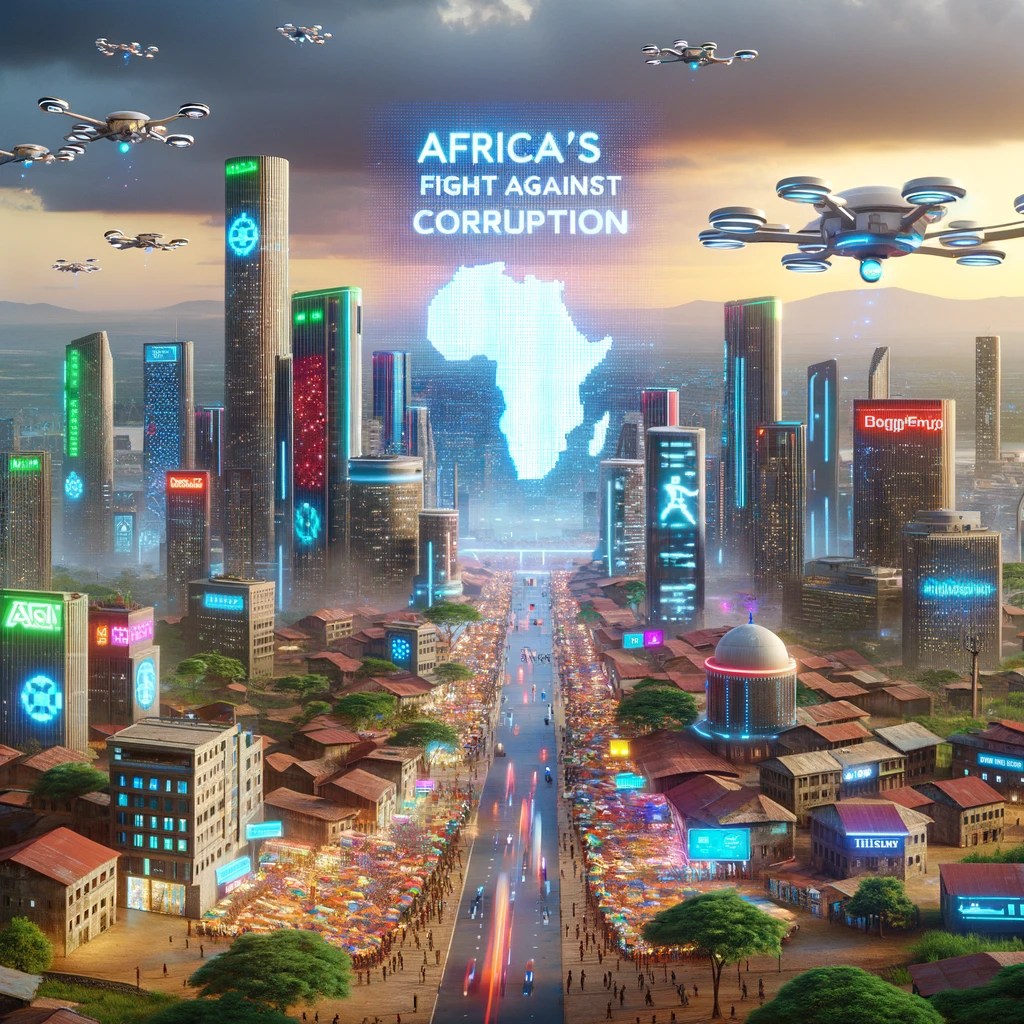
Artificial Intelligence (AI) holds transformative potential for combating corruption in Africa by providing advanced tools for detecting irregularities, enhancing transparency, and streamlining public services. By analyzing vast datasets, AI can uncover patterns indicative of corrupt practices in government procurement, where contract awards and pricing anomalies can be flagged for further investigation.
Moreover, AI’s capability to automate and monitor government transactions promotes transparency and reduces the human discretion that often facilitates corrupt dealings. Additionally, AI-driven platforms can offer secure means for whistleblowers to report corruption anonymously, leveraging natural language processing to organize and assess the credibility of such reports. Sombo Muzata, Ph. D., Assistant Professor in the Department of Political Science at James Madison University, explains how “AI could be a game-changer in this struggle to transform Africa’s fight against corruption.”
According to Dr. Muzata, AI is a technological advancement and a paradigm shift in how humans interact with technology. By automating systems and leveraging big data, AI could revolutionize various sectors, including governance, and combat corruption. However, there is still skepticism about AI, especially in African contexts, due to fears of job displacement and misinformation. The deployment of AI in the fight against corruption is challenging. These include the need for robust digital infrastructure, a skilled workforce, and comprehensive legal frameworks to govern AI use ethically. There’s also the risk of misusing AI technologies if not adequately regulated. Dr. Muzata stresses the importance of reshaping perceptions and recognizing AI’s potential for creating new opportunities rather than obliterating old ones. AI’s integration into everyday life, from being a personal assistant to a strategic tool in the corporate world, emphasizes its potential and the need for African societies to harness this technology proactively. A collaborative approach involving government entities, civil society, the technology sector, and international organizations is crucial to realizing AI’s full potential in combating corruption. Ensuring AI systems are developed and implemented transparently, accountablely, and equitably is essential to prevent the reinforcement of existing disparities and foster trust in these technologies as tools for positive change.
In 2024, more than 20 African countries are scheduled to hold presidential or general elections, according to Afrobarometer. Afrobarometer is a pan-African, non-partisan survey research network that provides reliable data on African experiences and evaluations of democracy, governance, and quality of life. Afrobarometer conducted 9 surveys in 39 African countries and found that while most Africans endorse elections as the best method for choosing their leaders, this preference has weakened over the past decade. VOA’s Paul Ndiho spoke to Dr. Boniface Dulani, Director of Surveys at Afrobarometer base in Zomba, Malawi, to provide more perspective on this matter.


 Ndiho Media,LLC.