Africa’s Silicon Valley

By: Paul Ndiho

Growing internet and mobile phone penetration has inspired the Kenyan government to build an IT focused city called Konza. The government’s initiative is expected to take 20 years to complete but it is already being touted as Africa’s silicon savannah.url


An innovations revolution is unfolding in Africa and the East African Nation of Kenya is taking the lead.  Young people are creating new technologies and applications that are driving the country’s economic growth and turning Kenya into a high tech hub that is being promoted as Africa’s answer to America’s Silicon Valley.

Located 70 KM from the capital Nairobi, the project dubbed Africa’s Silicon Savannah will be constructed on a 5,000-hectare of land at a cost of 14.5 billion US dollars.  The I -T city is expected to be complete in the next 20 years and will create more than 20,000 IT jobs by 2015 and more than 200,000 jobs by 2030.

“If we start with Africa we are already at the top three probably after South Africa and Egypt who got into this ICT business a while before us. So we compete very well and we are increasingly competing for position number one because of the innovations, the city that we are putting in place, the government policies and investments to make an enabling environment in order for ICT business to thrive.”

Africa’s silicon savannah is part of an ambitious government plan to develop infrastructure in east Africa’s biggest economy by 2030. Africa is the world’s fastest-growing mobile phone market and was estimated will be home to 738 million handsets, or nearly three mobiles for every four of its people, by the end of 2012, according to an industry survey done in 2011. Kenya’s telecoms industry was among the fastest growing with 29.7 million out of 40 million people having mobile phones.

“Technology will largely impact Africa with mobile penetration and because of the various ways that we have skipped ahead of out predecessors in the west and so mainly because of the mobile phone and the penetration that has happened in Africa.”

Innovation centers in Kenya like iHub and mLab are helping to incubate and train developers to launch their start-ups and access markets and funds so that come 2030, Konza will be a truly Kenyan affair.

Mobile app developers come to mLab to test their young innovations, on a technical and business front. The mLab has close to 100 different types of mobile handsets used for trials.

“We don’t want a situation whereby Konza city is there there’s all that real estate and there’s all that infrastructure there but the people… the tenants of that city or the residents are being international companies.”

The developers say the city will provide, universities, science parks and establish modern living facilities that cab attract high caliber professionals to the modern lifestyle that will be created there.

The government is expected to finance 5 percent of the total cost then lease land to private investors who can build and run industries in different identified areas.

Nigerian Students Cash in on Google’s Form+ Application

By Paul Ndiho

Three undergraduates of the University of Lagos won the 2012 edition of Google Apps Developer Challenge in sub-Saharan Africa. The students won for creating the Form+ application software which lets anyone create an online resume.Form + Winners

Three students Bolutife Ogunsola, Michael Adeyeri and Willie Aniebiet, from the University of Lagos recently scooped up the 2012 Google Apps Developer Challenge award for developing Form+ application software.

The competition gives a platform to young IT talents in Africa and all around the world to present their innovations.

Form+ is aimed at developing content and ease the process of creating Curriculum Vitae (CV) or resume, submission forms for businesses, as well as facilitating E-Learning, which is not well developed in Nigeria. The developers say, their App, Form+ was born out of a need to provide E-learning solution.

“This is “Form+”, you can access the App via “Form +”. When you get to the site, you have two options of using the app, you can either log in with your Google account or install directly from your chrome web store. So if I choose to log in with my Google account, it brings me to this page where all I have to do is enter my username and password.”

20 year-old Bolutife Ogunsola, part of the trio that created Form +, adds that now that E-Learning is available, there should be more emphasis on pushing for similar solutions.

“They want to do some training for the lecturers to enable them make use of the platform so they can post their lectures online and those kind of stuff, but the problem still remains adoption, will people use the things that already exist? How much drive for adoption exists?”

Google’s program manager and market outreach team for Sub-Saharan Africa, says he is surprised at the response Form+ App has generated so far since its creation.

“The “Form+”, the last time I looked at the application on the Chrome web store, they had more than 12,000 users which for an application that was just launched late last year, you know by a group of students, I think they are doing pretty good. I don’t know how many applications that are launched in this part of the world that gets that many users within the first two, three months of the launch.

Analysts say that developing the Information, communications and Technology (ICT) sector would become a live wire of today’s businesses and an opportunity for youngsters to develop software’s that will be relevant to the local society.

Omotayo Fakinlede, Dean of Engineering faculty at the University of Lagos says ICT development will also to the growth of the education sector.

“Once our environment improves and we can teach better, of course the students are challenged to think better because our teaching is not spoon-feeding the students, education has changed in the modern era. A lecturer is basically now a coach because the information is available on the internet:

Along with the award, the three young innovators also took home 20,000 US dollars, as well as an extra 18,000 US dollars for their department at the University of Lagos

2013 North American International Auto Show in Detroit

By Paul Ndiho

In Detroit, Michigan the home of American automobile industry, Car makers are appealing to egos and a buyer’s desire for status to push a new wave of luxury cars at the North American International Auto show ended this week and will run through January 27th.Auto%20show

Excitement and optimism are dominating the North American International Auto Show. Car lovers say there is a serious luxury vibe this year, as carmakers strive to draw more affluent consumers into showrooms.

The Continental GT Speed Convertible, which makes its debut at the Detroit auto show, is no exception. This car has it all – says Bentley CEO, Dr. Wolfgang Schreiber — there’s only one way to describe it.

“Dream on wheels. It’s a dream on wheels.”

Luxury carmakers in North America held their footing despite a slow recovery from the economic downturn and were able to reinvest in those brands. At the end of 2012, automakers like BMW, Mercedes-Benz and Porsche all reported strong finishes.

At the BMW stand all eyes are on the new 4 series Coupe. Lead designer Adrian van Hooydonk says he designs specifically with the American consumer in mind.

“I saw with my own eyes that people actually use cars differently here. Of course a car is something you absolutely need in and between most American cities. People drive further than in Europe and people see cars as their most important personal accessory.”

U.S. automakers are upping their luxury game too. This new Corvette Stingray has everyone here buzzing. The Stingray is the latest version of America’s most iconic sports car the 2014 Chevy Corvette. The show-stopper is only the 7th model ever designed and is the first and most highly anticipated reveal at this year’s North American International Auto Show.

Tadge Juechter, Corvette’s Chief Engineer says the car is sexy looking, but it feels even better.

“The big story is the way it feels behind the wheel. The way it wraps around you and hugs your body, makes you part of it, so you feel totally in control. It’s super super responsive, it’s a very different kind of driving experience than what people have had before.”

Many analysts predict 2013 sales could slightly back off last years five-year high due to the fog of uncertainty still emanating from Washington.

But nowhere is the recovery of the industry more evident than in Motor City itself. The big three U.S. automakers all reported increases in sales in December. And between them – are rolling out at least 12 new models between them.

TrueCar.com’s Larry Dominique says after bankruptcys and bailouts, the glamour are back in Detroit.

“This Year is different than other years. Going back 3-4 years the auto show was depressing. What we’ve seen over the last 3-4 years is step by step resurgence of energy and excitement. What I’m seeing this year is a tremendous number of debuts from European, Asian manufacturers and domestics. Also seeing a wide range, everything from luxury to entry level vehicles. So what you’re seeing is a tremendous number of reveals, world debuts and overall a lot of energy and excitement.”

In 2012, U.S. auto sales topped out at nearly 14.5 million new vehicles, the best performance since 2007.

Many analysts predict 2013 sales could slightly back off last year’s five-year high due to the fog of uncertainty still emanating from Washington.

But nowhere is the recovery of the industry more evident than in Motor City itself. The big three U.S. automakers all reported increases in sales in December. And between them – are rolling out at least 12 new models between them.

German luxury carmaker Mercedes-Benz expects to sell a record number of vehicles this year in the United States. Daimler CEO Dr. Dieter Zetsche.

“Last year for the first time we sold more cars in the U.S. than in any other market and therefore for us the U.S. market is the number one market and we are putting a lot of focus and emphasis with our great new product being launched in this market.”

Analysts are looking for a sneak preview of the redesigned 2014 Acura MDX, which will appear as a thinly disguised “concept.”

GM’s first luxury hybrid, the 2014 Cadillac ELR, will make its public debut at the show, about a year ahead of the projected on-sale date. The two-door ELR is an upmarket companion to the Chevrolet Volt and is likely to be priced above $60,000.

Among the more mainstream vehicles coming to the show are the Nissan Resonance, a preview of the redesigned 2014 Murano crossover; the Honda Urban SUV concept, which teases the redesigned 2014 Fit subcompact, and the Fiat 500L, a compact five-passenger people-mover that will be marketed as a companion to the tiny Fiat 500 hatchback.

New HD TV’s take center stage at the U.S Consumer Electronics Show in Las Vegas

By Paul Ndiho, Washington D.C

The 46th annual International Consumer Electronics Show opened this week in Las Vegas, showcasing a new generation of “smart” gadgets. Some are controlled by voice and gestures, some let you dictate emails or check real-time, gas prices, and others incorporate innovations in cars. Paul Ndiho-1

Las Vegas is arguably one of the most populous cities in the U.S and perhaps primarily known for gambling, shopping and great entertainment.  But this month, the city came alive — Putting a spotlight on upcoming technology trends.  This show attracted thousands of exhibitors and was attended by more than 150,000 people.

Each year, Consumer Electronics Show or C-E-S showcases upcoming products ranging from cellphones to giant televisions. This year H-D televisions that promise four times the picture resolution of current TVs are among the “must see” items. TV makers Sony and Samsung are among the tech giants looking to set the pace for the “Ultra HD” or “HD 4K” market.

“The main thing this year is TVs, HD TVs, either 4k, which they are also calling ultra-high definition or OLED TVs. The 4K TVs we are seeing from everyone across the board. I saw, at least 8 different 4k Ultra high definition TVs yesterday.”

Sony Japanese electronics maker lost in the large shadow cast by Apple and others, seems renewed at this year’s show, unveiling a 25,000 dollar (USD) 4K TV that literally looks more vibrant and life-like than real life itself.

Sony hopes to make an impact with its new 5-inch smartphone, the Xperia Z, which comes equipped with a high resolution camera and a powerfully updated core processor.

South Korea’s Samsung meanwhile continues to draw large crowds at the convention, offering a wide-variety of charismatic products, including a 110-inch HD set. The tech giant, which makes more chips, flat-screens, handsets and TVs than any of its competitors – including the world’s best-selling smartphone – is aiming to sell 55 million flat-screen TVs this year, up from 51 million last year, even as the industry is set to remain stagnant due to the weak global economy.

Another hot item at the show is “the driver less or self-drive car” Google, Toyota and Audi were on hand to present their technology that aims to take you out of the driver’s seat. While there are still real challenges to overcome, Toyota believes that the goal is attainable.

“Ultimately, there will be a driver-less vehicle. But, for now, being realistic about it, we believe that driver-less autonomy is not just driver-less yet.”

Connectivity continues to play a major role at CES, with electronic makers displaying the ability to connect everything in your home and car through your smart phone. ADT, a home security provider, is among those at the convention.

“So we built it on a fully opened standard, so we have WiFi, it is all wireless and you can manage any appliance, you can manage any light, you can manage your thermostats, you can integrate your entertainment systems, like we are demonstrating here on Samsung.”

The ability to monitor yourself has also never been easier. Wearable device maker FitBit, who is among the leaders in an industry that didn’t exist 5 years ago, allows users to track their physical fitness now on several different levels.

“Many of our users say that by having our device with them all the time, that gives them real time feedback about how many steps they have taken at that moment, makes them have smart decisions about moving a little bit more.”

While there has been much speculation concerning the waning influence of CES – software maker Microsoft was a no-show this year, joining Apple as non-participants – the event is still the world’s largest, offering more than a glimpse into the future of technology.

New HD TV’s take center stage at the U.S Consumer Electronics Show in Las Vegas

By Paul Ndiho, Washington D.C

The 46th annual International Consumer Electronics Show opened this week in Las Vegas, showcasing a new generation of “smart” gadgets. Some are controlled by voice and gestures, some let you dictate emails or check real-time, gas prices, and others incorporate innovations in cars. Paul Ndiho-1

Las Vegas is arguably one of the most populous cities in the U.S and perhaps primarily known for gambling, shopping and great entertainment.  But this month, the city came alive — Putting a spotlight on upcoming technology trends.  This show attracted thousands of exhibitors and was attended by more than 150,000 people.

Each year, Consumer Electronics Show or C-E-S showcases upcoming products ranging from cellphones to giant televisions. This year H-D televisions that promise four times the picture resolution of current TVs are among the “must see” items. TV makers Sony and Samsung are among the tech giants looking to set the pace for the “Ultra HD” or “HD 4K” market.

“The main thing this year is TVs, HD TVs, either 4k, which they are also calling ultra-high definition or OLED TVs. The 4K TVs we are seeing from everyone across the board. I saw, at least 8 different 4k Ultra high definition TVs yesterday.”

Sony Japanese electronics maker lost in the large shadow cast by Apple and others, seems renewed at this year’s show, unveiling a 25,000 dollar (USD) 4K TV that literally looks more vibrant and life-like than real life itself.

Sony hopes to make an impact with its new 5-inch smartphone, the Xperia Z, which comes equipped with a high resolution camera and a powerfully updated core processor.

South Korea’s Samsung meanwhile continues to draw large crowds at the convention, offering a wide-variety of charismatic products, including a 110-inch HD set. The tech giant, which makes more chips, flat-screens, handsets and TVs than any of its competitors – including the world’s best-selling smartphone – is aiming to sell 55 million flat-screen TVs this year, up from 51 million last year, even as the industry is set to remain stagnant due to the weak global economy.

Another hot item at the show is “the driver less or self-drive car” Google, Toyota and Audi were on hand to present their technology that aims to take you out of the driver’s seat. While there are still real challenges to overcome, Toyota believes that the goal is attainable.

“Ultimately, there will be a driver-less vehicle. But, for now, being realistic about it, we believe that driver-less autonomy is not just driver-less yet.”

Connectivity continues to play a major role at CES, with electronic makers displaying the ability to connect everything in your home and car through your smart phone. ADT, a home security provider, is among those at the convention.

“So we built it on a fully opened standard, so we have WiFi, it is all wireless and you can manage any appliance, you can manage any light, you can manage your thermostats, you can integrate your entertainment systems, like we are demonstrating here on Samsung.”

The ability to monitor yourself has also never been easier. Wearable device maker FitBit, who is among the leaders in an industry that didn’t exist 5 years ago, allows users to track their physical fitness now on several different levels.

“Many of our users say that by having our device with them all the time, that gives them real time feedback about how many steps they have taken at that moment, makes them have smart decisions about moving a little bit more.”

While there has been much speculation concerning the waning influence of CES – software maker Microsoft was a no-show this year, joining Apple as non-participants – the event is still the world’s largest, offering more than a glimpse into the future of technology.

GABON’S YOUTH UNEMPLOYMENT

 Paul Ndiho, Washington D.C.

January 14, 2013

On paper, the central African nation of Gabon enjoys a per capita income four times that of most sub-Saharan African nations, but because of high income inequality, a large proportion of the population remains poor. Youth unemployment is over the roof, in spite of country’s vast natural resources.  Gabon unemploment

The International Monetary Fund estimated in a recent report that unemployment and poverty in Gabon remains on the rise despite the abundance of natural resources, including oil, on which the country is still very dependent.  But a drive through the suburbs of the capital of Libreville changes the narrative. People are on the streets trying to make living by selling everything from fresh food stuffs, used clothing and house hold items.

In Gabon’s biggest market, customers are patiently waiting at Mont Bouet, where 38-year-old Cedric Wanjda once dreamt of an office job.

But eight years after obtaining his high school diploma and unable to pursue a university education due to lack of school fees, Wanjda was unable to find a job.

In order to support his family, he decided to open a small stall at Mont Bouet where he sells clothes and shoes, bringing in around 400,000 C-F-A (800 USD) per month.

Wandja says that entrepreneurship may become the only solution for Gabon’s youth, faced with growing unemployment.

“Today, many young Gabonese understand that through entrepreneurship, they can feed their families, and maybe one day, they will become influential business men.”

In a country with a population of just 1.5 million people, youth unemployment stands at more than 30 percent despite the country’s vast supply of oil, gold and manganese. A report released by the I-M-F last year suggests that Gabon’s economic growth is projected to slow down to 2.3 percent in 2013, from an expected 5.6 percent in 2012.

Wandja’s story is one shared by many young people in Libreville. Eric Etoung now makes a living as a barber and says that the government should put more emphasis and reinforce the informal sector, to give youths more options in the job market.

“Informal jobs are not valued, when they provide a living for so many young people who have no other options. For example, there are many young people who are studying, and hope to maybe find work in the informal sector, but they lose interest once they find out that informal jobs are not taken seriously, meaning that it’s not viewed as something that would interest many young people. Young people then think that the only employment they can find is one where they sit in an office, when that is not the only solution.”

IN 2010 Gabon launched a Special Economic Zone (SEZ) in Nkok, near the capital, Libreville. The zone is meant to attract foreign investment, improve Gabon’s infrastructure, build social housing projects and create over 50,000 jobs for its local population. But critics say that’s not enough and more needs to be done.

“The main challenge in Gabon today is that there are around 90,000 to 100,000 unemployed people, mainly young people, some of whom will be finishing their studies and who will be unable to find employment. That may be dramatic, because at the moment the country’s economic predictions are good, prices for raw materials are going up. The government has put in place extensive programs for infrastructure development, and improves the economy to attract more investors. So if we do not adjust the education system to meet the demands of the different sectors, we will have jobs that will be created, but will have no candidates to fill them. There will be young Gabonese who will see jobs being taken by foreigners, who are more qualified than they are.”

Sociology professor Fortune Matsiegui, says the high unemployment levels, caused by years of economic mismanagement where the country’s oil money was wasted away by corrupt leaders, is a ticking bomb, given Gabon’s rich potential.

“We know that Gabon is a country with great potential and is immensely rich. According to the latest economic figures, when you look at the GDP, we are close to becoming a middle income country, meaning that the country’s national wealth distributed amongst the population per year is estimated to be around 3,000 USD to 4,000 USD per person. Which is not little, it’s not a small amount. So we should be amongst the richest country’s not poor or not too rich like some of the biggest economies in the West. But the problem is that the country’s wealth is not evenly distributed.”

Analysts say despite the abundance of natural wealth, poor fiscal management continues to hobble the economy. And with the decline in oil output experts say Gabon should start diversifying its economy to compensate for the decline, and expand its mining industry and improve sectors such as telecommunications, forestry and fishing sectors for more revenues and create more jobs.

Sudan Cashing in on Gum Arabic

By Paul Ndiho

Sudan is beginning to diversify its economy by cashing in on a rise in global demand for gum Arabic, a natural edible gum produced by acacia trees growing in the most parts of the country. Gum Arabic is used to bind ingredients in food, pharmaceuticals and adhesives. Sudan Gum Arabic

More than a decade ago, Sudan’s economy boomed on the back of increases in oil production, high oil prices, and to a larger extent, inflows of foreign direct investment. But agricultural production remained the backbone of the economy, because it employs more than 80% of the work force and contributes a third of GDP.

Most of the oil was coming from the south Sudan, which seceded from Sudan in 2011, becoming Africa’s newest nation. Since then, oil production and export has suffered greatly and now Sudan is trying to diversify its cash crops and gum Arabic as its major agricultural exports.

Gum Arabic is a natural and edible gum taken from these trees. It takes four years for each tree to fully grow; a small cut is then made on the bark, which causes a glue-like resin to seep out. This resin or gum Arabic is collected once a year.

On a plantation outside En Nahud, in western Sudan, Mohammed Adam harvests gum Arabic from his acacia trees. He belongs to one of 3,000 gum Arabic associations in Sudan. He makes about 6,500 us dollars a year from his crop, but says he wishes he could benefit more like the exporters.

“We know that when gum Arabic is exported abroad, the traders make a lot of profit, we do not benefit like the do. We hope that we can make more profits in future.”

Analysts say there are so many middlemen who buy the produce at a cheap price and sell at higher prices abroad, leaving farmers struggling to get their share of the profits.

The u.N. World food program and World Bank provide aid to small farmers in Sudan but the industry also faces another problem – a shortage of workers.

Gum Arabic is produced in Sudan’s savannah belt, which stretches from the western border with chad to Ethiopia in the east.

En Nahud lies in the main farming state of north Kordofan, which alone is expected to produce 40,000 tons in the current season.

Business is booming here thanks to rising global demand for gum Arabic, used as an emulsifier to prevent sugar from crystallizing in fizzy drinks, as a thickener in confectionery and as a binder for drugs, cosmetics and postage stamps.

Fatima Ramli is the national coordinator of the gum Arabic producers association.

“We have markets in east Asia, japan, china and gulf states. All people import the gum Arabic besides the United States and Europe. Because of that the prices increases in the last three years and there are incentive to the producer who works hard to produce as much quantity as he can.”

It is a rare export success story for Sudan because gum Arabic is so important to the soft drinks industry and other products; the United States has exempted it from a broad trade embargo, which Washington originally imposed in 1997 over Sudan’s human rights record.

This has allowed Sudan to remain a world power in gum Arabic. It hopes rising demand, especially from fast-growing Asian countries, will help to soften an economic crisis triggered by the loss of three-quarters of its oil production when south Sudan seceded in 2011.

Fighting between rebels and the army in three farming regions of Sudan, Darfur, Blue Nile and south Kordofan, has also hit production.

But Sudan’s gum Arabic is still first choice among many consumers because of its high quality.

“The total of the gum Arabic sold in En Nahud market during 2012 amounted to 9000 tones. Compared to last year amount it is too small because we exported in 2011 13000 tones and this represents a great percentage of Sudan export of gum Arabic.”

Sudan earned more than 85 million us dollars from exporting tones of gum Arabic in 2012 and Sudan’s association of gum Arabic producer’s estimates farmers will produce up to 80,000 tons of gum Arabic in the coming seasons.

TOGO-TECHNOLOGY BOOTCAMP


By Paul Ndiho

2012 was a great year for young tech savvy Africans who created new technologies and applications that are driving the continent’s economic growth and turning around its global image. The last year also ended on a positive note — with a three day workshop dubbed the “technology boot camp” in Togo that brought together more than 50 young techies and inventors from across West Africa. Togo Tech Bootcamp

Young Inventors from across the African continent are making their mark on the world stage as drivers of technological change geared towards finding solutions for their own problems. Ideas are turning in great innovations, there is an interest in all things tech, and young people are finding that their skills are extremely valuable. 

In the West African Nation of Togo, Inventors from across the region gathered in Togolese capital, Lome. They exchanged ideas and showcased their latest innovations in the first ever “technology boot camp”.

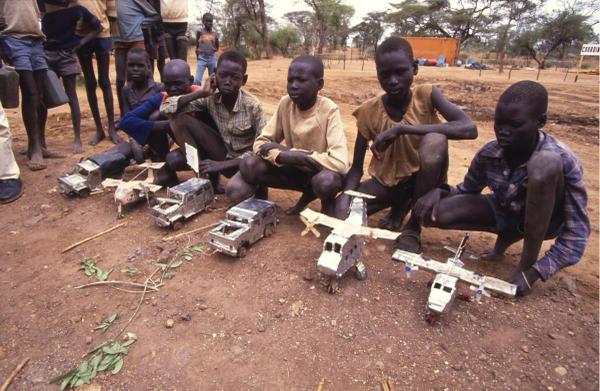
The initiative was modeled after the African “maker faire” Organisation, which aims at providing space for African inventors, where initiatives and inventions are identified, brought to life and promoted – Where engineering whiz kids create prototypes of robots and other innovations using locally sourced material including everything from old radios, TV sets, car speakers, plastics and plywood.

Sam Kodo, a young Togolese inventor showcased a robotic arm that pours A drink, operated by a computer.

“You can put anything in the bottle, water or fruit juice, anything you want, and as you can see there is a glass here, so you can pour the contents in the glass.”

Nigerian innovator, Mogbolahan Ajala says these types of events will help increase awareness about technology and give young people a platform to learn from each other.


“I think it has started, the future is clear, because this is more… I see this as a new religion and these are the new prophets, or the early missionaries, whereby we are telling people technology is living, learn technology. So Africa is going to live technology. I’m saying five, ten years… five, ten years, I see it like this (clicking fingers), five… ten years.”

Many of those who participated said the event gave them an opportunity not only to see what other young innovators on the continent are doing, but also allowed them to see how far they can go with the right kind of support. Benoir Vonsa, is a Togolese inventor, who made a 3D printer.

“This took me three days to make, I was really impressed. I did not know that there were a large number of young people who are interested in this. In fact, what I have come to understand is that there are young people who have good ideas, and a good imagination, but who do not have the tools to go along with their ideas.

Guests at the event said they were surprised to see such high levels of talent coming from the region and the use of locally sourced materials. Organizer Sename Kofi noted that the aim was to attract more people involved in innovation to solve local problems as well as create employment.

“I hear many who say that there is no work, so I would like to send a message that this space is an open space where there is equipment to make anything, where there is a team, a team that can assist young people in developing any technology related project. So it’s really a place where one can create his own work, there are tools to achieve what one may want to do, and any support they may need, all for free.”

Organizers say they plan to host the event in other parts of Africa in the coming years and reach more young innovators. With so many insightful innovations in 2012, it will be interesting to see what 2013 has to offer and where Africa’s technology revolution will lead to.

UGANDAN WORLD CHESS CHAMPION

By Paul Ndiho

December 24th, 2012

A 15-year old Ugandan girl, who is relatively unknown at home, is making international headlines playing a strategic board game. Phiona Mutesi is an award-winning World Chess champion, born in Katwe, a slum in the heart of the Ugandan capital, Kampala. Her story is inspiring millions of people. Robert _ Phiona - Part 2

Despite repeated hardships, Phiona Mutesi’s ability to play chees is amazing– and her journey to international stardom is remarkable. Her big break seems to have happened when Tim Crothers, a renowned author and former writer for the magazine, Sports Illustrated, wrote a book title “The Queen of Katwe” chronicling Phiona life and an article that has been nominated for that 2012 National Magazine Award.

Phiona was born and raised in this broken-down shack with her mother and three siblings and struggled to find a single meal to eat each day. She’s been out of school most of her life because her mother cannot afford it, and now she is just learning to read and write. Tim Crothers who brings Mutesi’s life to light, says she is one of the best chess players in the world and that her remarkable story is one in a thousand.

 “This story is about a 14-year-old girl in the slum in Uganda who has through unbelievable happenstance stumbled upon the game of chess. And with the help of a man who is as close to a saint as any man I’ve ever met, Robert Katende, she has grown in the game and has become one of the finest chess players in the world.

Phiona Mutesi is arguably one of the best chess players in the World, according to the World Chess Championship. Her journey from a Ugandan Katwe slum to the world stage as champion chess player was inspired by hunger. In 2005, while searching for food, nine-year-old Phiona followed her brother to a dusty veranda where she met Robert Katende, who had also grown up in the Kampala slums. Katende, a war refugee turned missionary, had an improbable dream: to empower kids through chess—traditionally, an elitist game in Uganda.  Katende says that once Phiona started participating in chess programs she slowly by slowly began to exhibit a level of chess expertise way ahead of her time. At age 11 she was her Uganda’s junior champion at the 14 a national championship.

 “By the end of the tournament, I realized that she had challenged all the girls and had topped the tournament. So that’s when I realized that wow this could be something so special in this girl. Because, I even asked her how she managed to win overs all these people… day by day and she could not fear, her most encouraging point was that she could not fear to play against the boys who had been there long before her. In a way she could always look for those challenging people to get to another level.

Despite a rough and tumble upbringing in the slums, Robert says Phiona grew to love the game of chess, because it’s reminiscent her of her own life, where she has had persevere against great obstacles. Chess allows her to think outside of the box.

 “She is one of the few people, that I kind of base on to say that game of chess is the best discipleship tool, because she has totally transformed. The way she used to look at things, the way she used to respond, because this mentality she’s had right from childhood of survival, aggressiveness, that I have to do this and who are to tell me that I can’t do this… You know what; in the slum it’s all about what can I snatch because you have to survive, so that kind of approach helps her.

Tim Crothers, who has followed Phiona Mutesi’s for over two years says her childhood was so challenging, and even to be alive at this time can be viewed as somewhat of  miracle..

 “When you grow up from the slum, the life is always difficult, just to get food is not simple — even the health is not good… so everything is about struggling.

This year, after qualifying first, she played at the 2012 Chess Olympiad in Turkey, Istanbul. At this prestigious tournament, she won three games, to earn the title “Woman Candidate Master”. She has also travelled the world and met her hero; chess grandmaster Gary Kasparov and Disney is planning to do a kid’s inspirational movie about her remarkable story. .

She is currently in the US, visiting After School Activities Partnerships, (ASAP) for the 9Queens Chess Academy and appeared in Chess in the Schools programs and at Gompers Preparatory Academy in San Diego and the Jay Stallings chess program at Trinity Classical Academy in Santa Clarita.

Ironically, her command of the game at such a young age certainly has had people talking– that she must have the best of coaches, the best education, and the best backing to be as good as she is. But surprisingly, Robert has painstakingly taught her the game each day with other kids in the slum.

Paul Ndiho’s take on what’s trending this X-mas

Christmas is on Tuesday and people worldwide are looking for last minute gifts for their loved ones.  Among the hot items are gadgets like the cell phone and the tablet, which are increasingly in use around the world. Paul New Tech

Here to tell us a little more about some of these gadgets is Paul Ndiho, who is an avid mac user, and keen follower of rising technology.


« Older Entries Recent Entries »