World Bank says developing countries should be prepared for more slowing in the global economy

By Paul Ndiho
January 26, 2012
A new report released by the World Bank last week says global prices of farm commodities like wheat and rice may decline by more than 10 percent this year. In its new report, World Bank researchers say developing countries should be prepared for more slowing in the global economy as a result of Europe’s debt problems, and weakening growth in some big emerging economies.

“We have seen capital flows to developing countries decline by almost 50 percent and we are really beginning to see some of these effects in terms of activity. We have developing countries, the major developing countries offering slower growth now than they were earlier and that happening at the same time as Europe enters into a recession offers a pretty worrisome conjuncture.”
The World Bank is lowering its growth forecast for 2012 to about 5 and a half percent for developing countries and 1 and a half percent for high-income countries. Global growth is now projected at about 2 and a half percent for this year and next.
“Obviously if what is happening in Europe were to deteriorate significantly is going to have important impacts for developing countries. We ran some scenarios here: were that crisis to become more serious, growth in developing countries could decline by almost some 4 percentage points, GDP be lower by 4 percentage points; that is a very significant slowdown.”
Slower growth is already visible in weakening prices. Global exports of goods and services are projected to rise by about 2 percent less than they did last year. Meanwhile, global prices of energy, metals, minerals, and agricultural products are off as much as 25 percent from their peaks of 2011.
“Developing countries really have to prepare for the unexpected, if you wish. What we are really suggesting to do is take a look at their current situation, take a look at their current spending, and take a cold hard look at what might happen and plan ahead a little bit.”
Declining commodity prices have contributed to an easing of inflation in most developing countries. Although international food prices eased in recent months, down 14 percent from their peak in February 2011, food security for the poorest, including in the Horn of Africa, remains a central concern.
“We see oil prices potentially declining by as much as 20 percent that is going to have important impacts for the fiscal balances of oil exporting countries; it is going to have important impacts also for countries that are important exporters of metals and minerals. On the other hand it is going to be a positive for importers of those commodities.”
Developing countries may have less fiscal and monetary space for remedial measures than they did in the global economic downturn that began in 2008. As a result, say economists like those at the World Bank, their ability to respond to another downturn may be constrained if global conditions deteriorate sharply again this year.

World Bank says developing countries should be prepared for more slowing in the global economy

By Paul Ndiho
January 26, 2012
A new report released by the World Bank last week says global prices of farm commodities like wheat and rice may decline by more than 10 percent this year. In its new report, World Bank researchers say developing countries should be prepared for more slowing in the global economy as a result of Europe’s debt problems, and weakening growth in some big emerging economies.

“We have seen capital flows to developing countries decline by almost 50 percent and we are really beginning to see some of these effects in terms of activity. We have developing countries, the major developing countries offering slower growth now than they were earlier and that happening at the same time as Europe enters into a recession offers a pretty worrisome conjuncture.”
The World Bank is lowering its growth forecast for 2012 to about 5 and a half percent for developing countries and 1 and a half percent for high-income countries. Global growth is now projected at about 2 and a half percent for this year and next.
“Obviously if what is happening in Europe were to deteriorate significantly is going to have important impacts for developing countries. We ran some scenarios here: were that crisis to become more serious, growth in developing countries could decline by almost some 4 percentage points, GDP be lower by 4 percentage points; that is a very significant slowdown.”
Slower growth is already visible in weakening prices. Global exports of goods and services are projected to rise by about 2 percent less than they did last year. Meanwhile, global prices of energy, metals, minerals, and agricultural products are off as much as 25 percent from their peaks of 2011.
“Developing countries really have to prepare for the unexpected, if you wish. What we are really suggesting to do is take a look at their current situation, take a look at their current spending, and take a cold hard look at what might happen and plan ahead a little bit.”
Declining commodity prices have contributed to an easing of inflation in most developing countries. Although international food prices eased in recent months, down 14 percent from their peak in February 2011, food security for the poorest, including in the Horn of Africa, remains a central concern.
“We see oil prices potentially declining by as much as 20 percent that is going to have important impacts for the fiscal balances of oil exporting countries; it is going to have important impacts also for countries that are important exporters of metals and minerals. On the other hand it is going to be a positive for importers of those commodities.”
Developing countries may have less fiscal and monetary space for remedial measures than they did in the global economic downturn that began in 2008. As a result, say economists like those at the World Bank, their ability to respond to another downturn may be constrained if global conditions deteriorate sharply again this year.

Somalia Schools Population Survey

By Paul Ndiho
January 18, 2012
Thousands of teachers conducted an unprecedented primary school census in northern Somalia, helping produce the first comprehensive government-led survey on the state of schools in that region.
In an effort to rehabilitate the education system in the semi – autonomous states of Puntland and Somaliland, the centralized government launched a massive population survey of all the school-going children in a country torn apart by conflict.
Hassan Suleiman leads the census.


“This information is very important for planning; the resources are very limited in Somaliland in terms of school construction, in terms of teachers, in terms of textbooks. The resources are very inadequate. These small resources, we need to plan very effectively in order to increase the quality of education, for example we are now taking enrolment rate so when we want to decide to construct new class for new schools, we have to analyze this information and determine the ratio of teacher to students, the ratio of textbooks to the pupils.”
Hassan grew up in the United Kingdom and is one of ten advisors hired under a program to bring professional Somalis living abroad back home to work alongside senior education ministry staff. The program is designed to improve planning and policy, human resources and financial management for the goal of higher education standards.
“We think that by contributing to improve the capacities of those ministries of Education, we will help the delivery in all other program that we can carry out in Somaliland and Puntland. So if you have a ministry of education that is able to design the policy for primary education for example and have the capacity for implementing to have management systems on resources on teachers that means that the problems that you have on primary education will deliver better.”
Sohar Koshin is a technical advisor with the Education Ministry’s Gender Unit who grew up in Holland. She explains how new media such as Facebook and Twitter are connecting with Somalis living abroad to raise funds for girl’s education.
“We saw the importance of having a different department or unit that is entirely responsible for encouraging girls to go to school and also doing research about what we are the issues and looking for room of avenues for potential solutions and how we can implement those solutions.”
Koshin comes to this school often to chat with the girls who are enjoying a newly-built ‘girl friendly space.’ The facility has toilets with running water and a communal space where the girls can study. It reflects the effort by some of Somalia’s civil war refugees, who are returning to help to reconstruct a national education system.

Somalia Schools Population Survey

By Paul Ndiho
January 18, 2012
Thousands of teachers conducted an unprecedented primary school census in northern Somalia, helping produce the first comprehensive government-led survey on the state of schools in that region.
In an effort to rehabilitate the education system in the semi – autonomous states of Puntland and Somaliland, the centralized government launched a massive population survey of all the school-going children in a country torn apart by conflict.
Hassan Suleiman leads the census.


“This information is very important for planning; the resources are very limited in Somaliland in terms of school construction, in terms of teachers, in terms of textbooks. The resources are very inadequate. These small resources, we need to plan very effectively in order to increase the quality of education, for example we are now taking enrolment rate so when we want to decide to construct new class for new schools, we have to analyze this information and determine the ratio of teacher to students, the ratio of textbooks to the pupils.”
Hassan grew up in the United Kingdom and is one of ten advisors hired under a program to bring professional Somalis living abroad back home to work alongside senior education ministry staff. The program is designed to improve planning and policy, human resources and financial management for the goal of higher education standards.
“We think that by contributing to improve the capacities of those ministries of Education, we will help the delivery in all other program that we can carry out in Somaliland and Puntland. So if you have a ministry of education that is able to design the policy for primary education for example and have the capacity for implementing to have management systems on resources on teachers that means that the problems that you have on primary education will deliver better.”
Sohar Koshin is a technical advisor with the Education Ministry’s Gender Unit who grew up in Holland. She explains how new media such as Facebook and Twitter are connecting with Somalis living abroad to raise funds for girl’s education.
“We saw the importance of having a different department or unit that is entirely responsible for encouraging girls to go to school and also doing research about what we are the issues and looking for room of avenues for potential solutions and how we can implement those solutions.”
Koshin comes to this school often to chat with the girls who are enjoying a newly-built ‘girl friendly space.’ The facility has toilets with running water and a communal space where the girls can study. It reflects the effort by some of Somalia’s civil war refugees, who are returning to help to reconstruct a national education system.

3D Animated Film Showcases Mountain Gorillas in Uganda’s Bwindi National Park Speaking Luganda

By Paul Ndiho
January 12, 2012
A Ugandan independent graphic artist and animator Solomon Jagwe, has produced 3D animated Mountain Gorilla movie called Galiwango. The film’s goal is to raise awareness about the plight of mountain Gorillas in Uganda, Rwanda and the DRC. It also showcases mountain gorillas speaking in Luganda, a language widely spoken in Uganda.
Bwindi National Park in southwestern Uganda is home to almost one-third of the world’s last 700 wild mountain gorillas. The rest are in nearby areas of Rwanda and Congo. World Wildlife conservationists say that Mountain Gorillas are facing pressures that could drive them into extinction.
Galiwango film producer, Solomon Jagwe, who is based in the U.S., has teamed up with Uganda Wild life Authority to work on a new movie about conserving Mountain Gorillas in Bwindi Park.

“What I’m trying to do is raise awareness to the plight of mountain Gorillas in Uganda, Rwanda and the Congo. And one thing that I’ve noticed is that when I’ve watched the discovery channel, the national geographic all the real good programs geared towards raising awareness of all those mountain gorillas are written in English and yet the areas where these gorillas are endangered most people hardly speak or write English. So what I’m trying to do is to create a film, an animated film that is written in our native language that is Luganda.”
The film is based on a comic book about a Game Ranger, and focuses on why Mountain Gorillas are important, and their role in ecotourism, which can improve local livelihoods.
“The comic book is written around the story of a Game Ranger – who used to be a game ranger but then becomes a rebel and also a poacher because he’s trying to survive and raise his family but he’s poor… so he’s drowned into that illegal trade. And that is a danger that is actually affecting the game rangers. So I’m trying to raise awareness to the hard work that these game rangers put into protecting mountain gorillas every single day.”
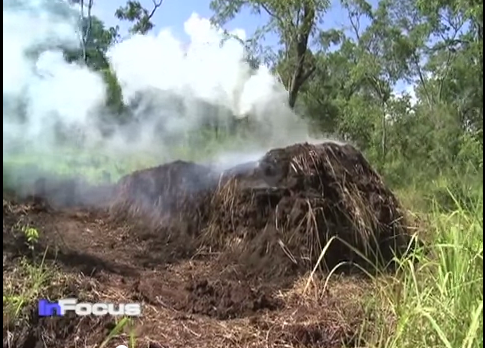
Bwindi’s fertile volcanic soils and high rainfall make it one of the most densely populated areas on earth, where people rely heavily on the forest for wood and charcoal. Mr. Jagwe says that protecting gorillas in this region is one of the smartest investments Ugandans can make.
“My expectations are that as Ugandans, as Rwandese, as Congolese that we actually become aware of these rare gift that we have… Because gorillas only exist in those three countries and no were else in the World and there are only about 720 mountain gorillas left in the entire world. So if the locals can take part in protecting and not selling these gorillas on the local black market or kill them for bush meat then we’d have made a big difference.”
Conservationists say the vast forest covering southwestern Uganda’s vast forest is in decline due to population growth, expanding farmlands and the burning of trees for fuel. The poaching of wildlife in the region has intensified recently to the point where the wildlife has been driven from their natural habitats. And over the last 10 years, some 130 park rangers have been killed while cracking down on poachers, illegal miners and rebels in the region.

3D Animated Film Showcases Mountain Gorillas in Uganda’s Bwindi National Park Speaking Luganda

By Paul Ndiho
January 12, 2012
A Ugandan independent graphic artist and animator Solomon Jagwe, has produced 3D animated Mountain Gorilla movie called Galiwango. The film’s goal is to raise awareness about the plight of mountain Gorillas in Uganda, Rwanda and the DRC. It also showcases mountain gorillas speaking in Luganda, a language widely spoken in Uganda.
Bwindi National Park in southwestern Uganda is home to almost one-third of the world’s last 700 wild mountain gorillas. The rest are in nearby areas of Rwanda and Congo. World Wildlife conservationists say that Mountain Gorillas are facing pressures that could drive them into extinction.
Galiwango film producer, Solomon Jagwe, who is based in the U.S., has teamed up with Uganda Wild life Authority to work on a new movie about conserving Mountain Gorillas in Bwindi Park.

“What I’m trying to do is raise awareness to the plight of mountain Gorillas in Uganda, Rwanda and the Congo. And one thing that I’ve noticed is that when I’ve watched the discovery channel, the national geographic all the real good programs geared towards raising awareness of all those mountain gorillas are written in English and yet the areas where these gorillas are endangered most people hardly speak or write English. So what I’m trying to do is to create a film, an animated film that is written in our native language that is Luganda.”
The film is based on a comic book about a Game Ranger, and focuses on why Mountain Gorillas are important, and their role in ecotourism, which can improve local livelihoods.
“The comic book is written around the story of a Game Ranger – who used to be a game ranger but then becomes a rebel and also a poacher because he’s trying to survive and raise his family but he’s poor… so he’s drowned into that illegal trade. And that is a danger that is actually affecting the game rangers. So I’m trying to raise awareness to the hard work that these game rangers put into protecting mountain gorillas every single day.”
Bwindi’s fertile volcanic soils and high rainfall make it one of the most densely populated areas on earth, where people rely heavily on the forest for wood and charcoal. Mr. Jagwe says that protecting gorillas in this region is one of the smartest investments Ugandans can make.
“My expectations are that as Ugandans, as Rwandese, as Congolese that we actually become aware of these rare gift that we have… Because gorillas only exist in those three countries and no were else in the World and there are only about 720 mountain gorillas left in the entire world. So if the locals can take part in protecting and not selling these gorillas on the local black market or kill them for bush meat then we’d have made a big difference.”
Conservationists say the vast forest covering southwestern Uganda’s vast forest is in decline due to population growth, expanding farmlands and the burning of trees for fuel. The poaching of wildlife in the region has intensified recently to the point where the wildlife has been driven from their natural habitats. And over the last 10 years, some 130 park rangers have been killed while cracking down on poachers, illegal miners and rebels in the region.

EYE WITNESS ACCOUNT OF A MASSACRE IN CONGO

By Paul Ndiho,
January 16, 2011
A trial is underway at the International Criminal Court looking into a massacre that left hundreds of Hema and Lendu dead in eastern Congo in 2003. More than ten years ago, Voice Of America’s Paul Ndiho was a reporter embedded with rebel groups supported by Uganda, and he recorded killings that took place in Bogoro and Nyekunde villages Bunia, Ituri province. Please be advised that this video is very graphic and viewer discretion is advised.
Two Congolese warlords are on trial at the International Criminal Court on charges they instructed their subordinates to attack civilians, rape women and enlist child soldiers in what has been called “the greatest armed conflict” since World War II. Germain Katanga and Mathieu Ngudjolo are charged with crimes against humanity and war crimes. Prosecutors say they led mobs of child soldiers and militiamen to destroy the village of Bogoro in Congo’s mineral-rich Ituri province on Feb. 24, 2003, hacking to death many of their victims with machetes. Similar attacks between other ethnic groups in Congo had been taking place for several years.
From 1999 – 2001, I was embedded with rebel factions in the Eastern Democratic Republic of Congo. But nothing prepared me for the violence I witnessed there in 2001.


One morning I was caught in the middle of the Lendu militia attacks against the Hema in Nyekunde, in a village south of Bunia. In this and other villages, scores of people were killed and thousands were driven from their homes.
What started as a land dispute between two normally peaceful groups grew into a larger clash when Ugandan forces entered the region? The Ugandan forces sided with
The Hema, and this favoritism caused a backlash from the Lendu, leading to the widespread killing.
According to eyewitness accounts, the Lendu attacked the Hema in Nyekunde at dawn, killing everyone they encountered, including women and children. A cloud of heavy smoke covered the village. The stench from the burning bodies was unbearable. That same night, the Lendu militia also invaded Nyekunde hospital, where hundreds of people were hiding and cut them into pieces. Scores of other nearby villages were burned to the ground. I saw several mass graves where a hundreds of people were being buried, and the Hema was armed with bow and arrows, ready to defend their village.
It was this kind of carnage in 2001 for which Germain Katanga and Mathieu Ngudjolo are now facing charges at the International Criminal Court. It was some of the worst violence between the Hema and Lendu in recent decades in eastern Congo.
Please Note: This is a slighted edited version of the original story that was published in January 2011

EYE WITNESS ACCOUNT OF A MASSACRE IN CONGO

By Paul Ndiho,
January 16, 2011
A trial is underway at the International Criminal Court looking into a massacre that left hundreds of Hema and Lendu dead in eastern Congo in 2003. More than ten years ago, Voice Of America’s Paul Ndiho was a reporter embedded with rebel groups supported by Uganda, and he recorded killings that took place in Bogoro and Nyekunde villages Bunia, Ituri province. Please be advised that this video is very graphic and viewer discretion is advised.
Two Congolese warlords are on trial at the International Criminal Court on charges they instructed their subordinates to attack civilians, rape women and enlist child soldiers in what has been called “the greatest armed conflict” since World War II. Germain Katanga and Mathieu Ngudjolo are charged with crimes against humanity and war crimes. Prosecutors say they led mobs of child soldiers and militiamen to destroy the village of Bogoro in Congo’s mineral-rich Ituri province on Feb. 24, 2003, hacking to death many of their victims with machetes. Similar attacks between other ethnic groups in Congo had been taking place for several years.
From 1999 – 2001, I was embedded with rebel factions in the Eastern Democratic Republic of Congo. But nothing prepared me for the violence I witnessed there in 2001.


One morning I was caught in the middle of the Lendu militia attacks against the Hema in Nyekunde, in a village south of Bunia. In this and other villages, scores of people were killed and thousands were driven from their homes.
What started as a land dispute between two normally peaceful groups grew into a larger clash when Ugandan forces entered the region? The Ugandan forces sided with
The Hema, and this favoritism caused a backlash from the Lendu, leading to the widespread killing.
According to eyewitness accounts, the Lendu attacked the Hema in Nyekunde at dawn, killing everyone they encountered, including women and children. A cloud of heavy smoke covered the village. The stench from the burning bodies was unbearable. That same night, the Lendu militia also invaded Nyekunde hospital, where hundreds of people were hiding and cut them into pieces. Scores of other nearby villages were burned to the ground. I saw several mass graves where a hundreds of people were being buried, and the Hema was armed with bow and arrows, ready to defend their village.
It was this kind of carnage in 2001 for which Germain Katanga and Mathieu Ngudjolo are now facing charges at the International Criminal Court. It was some of the worst violence between the Hema and Lendu in recent decades in eastern Congo.
Please Note: This is a slighted edited version of the original story that was published in January 2011

Egyptian Doctor Saving Lives in Somalia

By Paul Ndiho
January 6, 2012
For more than two decades, Somalia has been in turmoil – civil war has killed and injured millions of people and left the country with little infrastructure and nearly no health care. But one man is striving to make a difference by putting his own life on the line to save others.
With bullets ricocheting off nearby walls, World Health Organization trauma surgeon Dr. Omar Saleh, is on the frontlines struggling to save lives.
“I should be where I’m needed, and this is where I’m needed. I’m a trauma surgeon.
This is a conflict; trauma is every day, I must be there.”
Hundreds of thousands have fled the violence in Somalia that has killed so many people.

“When you watch the news, you see, for example, five injured, twenty injured…three killed. Those people, they are fathers, they are mothers, they are children, they are brothers, they are sons. I get to know that.”
When Dr. Saleh first arrived in Somalia in 2007, having already worked in some of the world’s bloodiest conflict zones, he thought he would stay only for six months. But as one of only 10 trauma surgeons in a country of nine million people, he knows he is desperately needed.
“My dad, he was a trauma surgeon, and even before, when I was a student, he told me “Be anything-but not a trauma surgeon!” But if I’m not going to stay here, if I’m not going to do it, who will? Nobody. Any human being has the right to have an access to health care, irrespective of sex, gender, color, clan, whatever. You have bullets, shellings, burns, mainly, pressure injuries, blast injuries, those are the main causes. Facilities are very, very much basic.”
Dr. Saleh says that when he first arrived in Somalia there were hardly any working hospitals, and many of the country’s health workers lack training in trauma management.
“When we talk about hospitals, people think that “hospitals,” is like something in the Movies it’s not. It’s like it was since like 50 years or so. You feel like your hands are tied, particularly when you know that the cure is simple and easy, but you don’t have it.
I care about people, and I have enough morals and thoughts and ideas and ideals to follow that, and to do my best to help them. That’s like an obligation, as a human being, with knowledge, that I should pass this knowledge to somebody else. My worst fear is to go to my grave with my knowledge-I need to make sure that I have passed it before I go.”
Now, Dr. Saleh has trained nearly 100 Somali doctors in trauma surgery. And he’s helped set up more hospitals. But he believes that this is only part of the solution.
If I could stop one thing in the world it would be war, because I find it a stupid thing-I mean big-time stupid. People are dying because of what? Land? Who’s more precious, the land or the people?”

Egyptian Doctor Saving Lives in Somalia

By Paul Ndiho
January 6, 2012
For more than two decades, Somalia has been in turmoil – civil war has killed and injured millions of people and left the country with little infrastructure and nearly no health care. But one man is striving to make a difference by putting his own life on the line to save others.
With bullets ricocheting off nearby walls, World Health Organization trauma surgeon Dr. Omar Saleh, is on the frontlines struggling to save lives.
“I should be where I’m needed, and this is where I’m needed. I’m a trauma surgeon.
This is a conflict; trauma is every day, I must be there.”
Hundreds of thousands have fled the violence in Somalia that has killed so many people.

“When you watch the news, you see, for example, five injured, twenty injured…three killed. Those people, they are fathers, they are mothers, they are children, they are brothers, they are sons. I get to know that.”
When Dr. Saleh first arrived in Somalia in 2007, having already worked in some of the world’s bloodiest conflict zones, he thought he would stay only for six months. But as one of only 10 trauma surgeons in a country of nine million people, he knows he is desperately needed.
“My dad, he was a trauma surgeon, and even before, when I was a student, he told me “Be anything-but not a trauma surgeon!” But if I’m not going to stay here, if I’m not going to do it, who will? Nobody. Any human being has the right to have an access to health care, irrespective of sex, gender, color, clan, whatever. You have bullets, shellings, burns, mainly, pressure injuries, blast injuries, those are the main causes. Facilities are very, very much basic.”
Dr. Saleh says that when he first arrived in Somalia there were hardly any working hospitals, and many of the country’s health workers lack training in trauma management.
“When we talk about hospitals, people think that “hospitals,” is like something in the Movies it’s not. It’s like it was since like 50 years or so. You feel like your hands are tied, particularly when you know that the cure is simple and easy, but you don’t have it.
I care about people, and I have enough morals and thoughts and ideas and ideals to follow that, and to do my best to help them. That’s like an obligation, as a human being, with knowledge, that I should pass this knowledge to somebody else. My worst fear is to go to my grave with my knowledge-I need to make sure that I have passed it before I go.”
Now, Dr. Saleh has trained nearly 100 Somali doctors in trauma surgery. And he’s helped set up more hospitals. But he believes that this is only part of the solution.
If I could stop one thing in the world it would be war, because I find it a stupid thing-I mean big-time stupid. People are dying because of what? Land? Who’s more precious, the land or the people?”

« Older Entries Recent Entries »