
Tag Archives: kenya

OBITUARY: FORMER KENYAN PRIME MINISTER RAILA ODINGA DIES AT 80

By Ndiho Media

Nairobi, Kenya – Former Kenyan Prime Minister Raila Amolo Odinga, a towering and indefatigable figure in Kenya’s political landscape, has died at the age of 80, family sources told Ndiho Media.
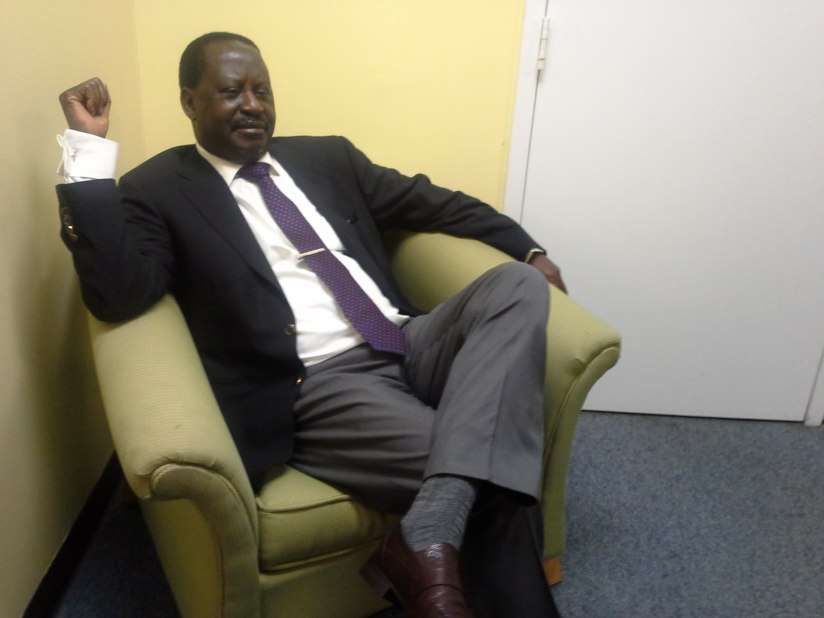
Mr. Odinga passed away on Wednesday at Devamatha Hospital in India after suffering a cardiac arrest during a morning walk. Doctors said he was unresponsive to resuscitation efforts and was declared dead at 09:52 local time.

A master political strategist, Odinga was both admired and polarizing — a lifelong crusader for democracy, social justice, and national unity. Born in western Kenya, he was the son of Jaramogi Oginga Odinga, Kenya’s first vice president. His political life was defined by resilience and sacrifice, including years spent in detention under Daniel Arap Moi’s regime for opposing one-party rule.

Odinga ran for president five times, each race leaving a mark on the country’s democratic journey. His 2007 election dispute with Mwai Kibaki plunged Kenya into its worst post-independence crisis, which ended with a power-sharing deal that made him Prime Minister. His 2017 legal challenge led to the historic annulment of a presidential election — a first in Africa.

He was affectionately called “Baba,” “Agwambo,” and “Tinga” by his loyal supporters, revered as both a symbol of resistance and a father figure to Kenya’s pro-democracy movement.

President William Ruto and former President Uhuru Kenyatta led tributes, calling him a statesman whose death “leaves a silence that echoes across our nation.” Indian Prime Minister Narendra Modi hailed him as “a cherished friend of India.”

Raila Odinga is survived by his wife, Ida Odinga, and their children. His passing leaves a deep void in Kenya’s public life — a reminder of a man who embodied the country’s long, unfinished journey toward democracy.

Courtesy: VOA, AFP, REUTERS, AP

At Least 11 Dead in Kenya Protests as Central Business District in Nairobi is Locked Down

By Ndiho Media | Nairobi, Kenya

Kenya is once again in crisis mode. At least 11 people have been confirmed dead and scores injured following a brutal crackdown on anti-government protests led essentially by Gen Z activists. The demonstrations, timed to coincide with Saba Saba Day, descended into violence as police sealed off central Nairobi, fired live ammunition, and deployed tear gas to suppress the unrest.

A doctor at Eagle Nursing Home in Kangemi confirmed to Ndiho Media that protesters brought in had died from gunshot wounds, a chilling escalation in a country once seen as a regional model of democratic progress.

For insight into the unrest, Ndiho Media spoke to Michael Agwanda, a political analyst based in Nairobi.

“By early morning, police had mounted barricades across the CBD. Shops stayed closed. The tension was thick. You could feel it,” Agwanda said.

“This wasn’t just a protest—it was a lockdown. The roads were sealed, and access to the city center was completely restricted. That kind of response only confirms how threatened the government feels by these young people.”

Agwanda emphasized that the protest movement is decentralized but robust.

“These youths are well-educated but sitting idle in their homes. They’re saying, ‘We have time. We have nothing to lose.’ And they’re determined to keep protesting until they are heard.”

He warned that the government is underestimating the resilience and desperation driving this new generation.

“Some of these kids are writing funeral notes to their families before heading out to protest. That level of commitment can’t be crushed by tear gas.”

Agwanda added that the government’s economic promises have failed to materialize, fueling frustration.

“The president’s ‘bottom-up’ economic strategy sounded good during the campaign, but it hasn’t translated into anything real. The youth feel abandoned, and now they’re fighting back.”

With Nairobi still on edge and no sign of de-escalation, observers fear the death toll may rise further. Rights groups are calling for an independent investigation, while protest organizers vow to return to the streets until their voices are heard.

“If the government doesn’t address their grievances—joblessness, corruption, inequality—these protests won’t go away,” Agwanda warned. “This is not just a moment. It’s a movement.”

Kenya’s Democracy Under Siege: A Deadly Crackdown on Protesters Raises Alarm

By Ndiho Media | Nairobi

Kenya is reeling from one of the deadliest waves of political unrest in recent years. At least 16 people were killed and more than 400 injured during mass protests in Nairobi this week, as security forces cracked down on demonstrators demanding accountability and economic justice.

Ndiho Media spoke with Hussein Khalid, a leading human rights advocate and CEO of VOCAL Africa, who painted a grim picture of the state of civil liberties in the country.

“This week was meant to commemorate comrades who were killed last year,” Khalid said. “Instead, the state responded with water cannons, tear gas, rubber bullets—and once again, live ammunition.”

The protests were sparked by growing frustrations with President William Ruto’s administration, which had campaigned on promises of economic reform and youth empowerment through a “bottom-up” agenda. Instead, young Kenyans say they feel betrayed.

“The same government that claimed to be for the hustlers is now turning its guns on them,” Khalid added. “What we are seeing is a war on dissent.”

He said the situation has become so dangerous that activists now live in fear of forced disappearances and extrajudicial killings.

“Yes, I am afraid. People are being taken from their homes. Some disappear, some are found dead,” Khalid said.

The government has blamed the unrest on “terrorists” and “looters,” but Khalid rejected that narrative, calling it a dangerous attempt to criminalize a constitutional right.

“We don’t need permission to protest. It’s a guaranteed right in our constitution,” he said. “If the government wants to ban demonstrations, they need to call a referendum. Until then, we will not be silenced.”

There’s also concern over a government-ordered media blackout during the protests. Khalid said attempts to muzzle the press are unconstitutional.

“Media freedom is non-negotiable. If the police don’t want their brutality reported, they should stop committing it,” he said.

Despite the bloodshed, the youth-led movement shows no signs of backing down.

“We’re at a standstill,” Khalid told Ndiho Media. “Protesters are mobilizing for another round, and the government refuses to listen. Unfortunately, there is no end in sight.”