The United States has made permanent a controversial visa-bond program that requires some business and tourist visa applicants to deposit up to $20,000 before entering the country.
Under the new rule, consular officers may require B-1 and B-2 visa applicants from 50 designated countries to post refundable bonds of $10,000, $15,000 or $20,000. The previous $5,000 option has been eliminated, while the maximum has risen from $15,000.
Africa bears the greatest impact, accounting for 30 of the 50 countries:
Algeria, Angola, Benin, Botswana, Burundi, Cabo Verde, Central African Republic, Côte d’Ivoire, Djibouti, Ethiopia, Gabon, The Gambia, Guinea, Guinea-Bissau, Lesotho, Malawi, Mauritania, Mauritius, Mozambique, Namibia, Nigeria, São Tomé and Príncipe, Senegal, Seychelles, Tanzania, Togo, Tunisia, Uganda, Zambia and Zimbabwe.
The other 20 countries are Antigua and Barbuda, Bangladesh, Bhutan, Cambodia, Cuba, Dominica, Fiji, Georgia, Grenada, Kyrgyzstan, Mongolia, Nepal, Nicaragua, Papua New Guinea, Tajikistan, Tonga, Turkmenistan, Tuvalu, Vanuatu and Venezuela.
The bond is returned if the traveler follows the visa rules and leaves the United States on time. However, no interest is paid while the government holds the money, and paying it does not guarantee visa approval.
The State Department says the pilot program reduced overstays among bonded travelers to nearly zero. But business and tourist visa issuance from affected countries reportedly fell by about 83 percent.
That raises a difficult question: Did the program improve compliance, or did it simply make travel unaffordable?
In many affected countries, $15,000 represents several years of income. Legitimate travelers—including entrepreneurs, researchers and families—may have strong reasons to return home but lack access to that much cash.
Critics argue that the policy risks turning visa screening into a test of wealth rather than risk. It also gives Washington added leverage when negotiating with governments over deportations, security cooperation and information sharing.
The bond may be refundable, but for those unable to raise the money, America remains financially out of reach.
Nigeria has made one of its biggest investments in the military in years. President Bola Ahmed Tinubu has approved a 30 to 80 percent salary increase for roughly 250,000 active-duty personnel, raising the annual military payroll from 660 billion to 924 billion Naira. The new pay takes effect on September 1, 2026, with the largest increases going to junior enlisted soldiers—the men and women carrying the heaviest burden in counterinsurgency operations across the Northeast, Northwest, Niger Delta, and Southeast.
At first glance, the announcement sounds like a breakthrough. In reality, it’s more of a long-overdue correction. Years of inflation and a weakening naira have steadily eroded soldiers’ purchasing power, making it harder for many to support their families. The raise helps close that gap, but it doesn’t put Nigerian troops among the continent’s best-paid forces. Soldiers in countries such as South Africa, Algeria, Morocco, and Kenya still receive stronger overall compensation packages, often including housing, healthcare, tax incentives, and other benefits.
Still, the importance of this decision goes far beyond the size of the paychecks.
Military experts have long argued that poor pay affects much more than household finances. It chips away at morale, encourages experienced personnel to leave the service, and can create opportunities for corruption when soldiers are forced to make impossible financial choices. Viewed through that lens, improving military pay isn’t simply an employment issue—it’s an investment in national security.
The salary increase also opens the door to a much broader conversation about how African militaries have been structured for decades.
Many governments across the continent have relied on what’s often called “coup-proofing”—directing the best funding, equipment, and political attention toward elite presidential guard units while conventional forces receive fewer resources. The logic has been to protect those in power. Yet history has exposed the weakness of that approach. Ironically, many of the same elite units created to safeguard governments have gone on to lead coups across West and Central Africa, highlighting the dangers of concentrating military power around the presidency instead of strengthening the armed forces as a whole.
Of course, higher salaries alone won’t solve Nigeria’s security challenges.
Building a modern, professional military requires much more than better pay. Transparent payroll systems, reliable pensions, stronger welfare programs, quality training, and sustained investment in modern equipment all matter just as much. Compensation is only one piece of a much larger puzzle.
By giving its biggest raises to junior enlisted personnel, Nigeria has acknowledged where the greatest pressures exist. That’s an important first step. The bigger test is what comes next. If this pay increase becomes part of a broader effort to strengthen military institutions, improve accountability, and invest in the people who serve, it could mark the beginning of meaningful reform. If not, it risks becoming another temporary fix in a much longer struggle to build a military capable of meeting Nigeria’s evolving security challenges.
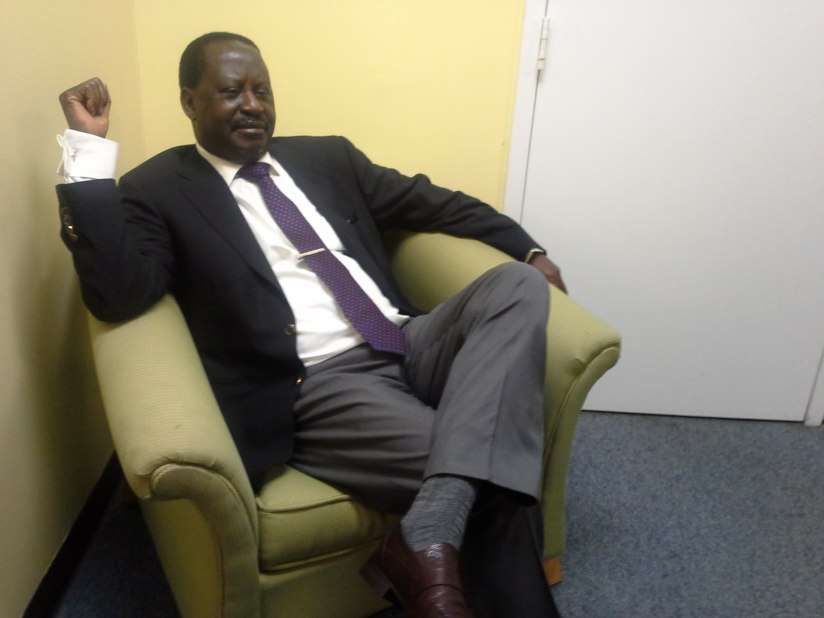
Nairobi, Kenya – Former Kenyan Prime Minister Raila Amolo Odinga, a towering and indefatigable figure in Kenya’s political landscape, has died at the age of 80, family sources told Ndiho Media.
Mr. Odinga passed away on Wednesday at Devamatha Hospital in India after suffering a cardiac arrest during a morning walk. Doctors said he was unresponsive to resuscitation efforts and was declared dead at 09:52 local time.
A master political strategist, Odinga was both admired and polarizing — a lifelong crusader for democracy, social justice, and national unity. Born in western Kenya, he was the son of Jaramogi Oginga Odinga, Kenya’s first vice president. His political life was defined by resilience and sacrifice, including years spent in detention under Daniel Arap Moi’s regime for opposing one-party rule.
Odinga ran for president five times, each race leaving a mark on the country’s democratic journey. His 2007 election dispute with Mwai Kibaki plunged Kenya into its worst post-independence crisis, which ended with a power-sharing deal that made him Prime Minister. His 2017 legal challenge led to the historic annulment of a presidential election — a first in Africa.
He was affectionately called “Baba,” “Agwambo,” and “Tinga” by his loyal supporters, revered as both a symbol of resistance and a father figure to Kenya’s pro-democracy movement.
President William Ruto and former President Uhuru Kenyatta led tributes, calling him a statesman whose death “leaves a silence that echoes across our nation.” Indian Prime Minister Narendra Modi hailed him as “a cherished friend of India.”
Raila Odinga is survived by his wife, Ida Odinga, and their children. His passing leaves a deep void in Kenya’s public life — a reminder of a man who embodied the country’s long, unfinished journey toward democracy.
When Australia’s government announced plans to ban smartphones for kids under 16, I couldn’t help but think about how different our reality is here in Africa. The news sparked heated debates across our continent about whether smartphones belong in our classrooms. Trust me, this isn’t just another policy discussion – it’s about the future of an entire generation.
I found myself speaking with journalist Sheila Ndikumana on SABC’s “African Diaries” radio show. I was miles away, but the studio felt charged with energy as we tackled the question that’s dividing parents, teachers, and policymakers: Should we ban smartphones in schools?
Here’s what I told Sheila and her global audience: Africa can’t afford to fall behind while the world moves forward. While critics worry about distractions and mental health – valid concerns, I admit – they’re missing a crucial point. For millions of African students, smartphones are more than just luxury gadgets or toys. They’re the only computers these kids will ever own.
Think about it. A teenager in rural Uganda or Ghana holding a smartphone has the same access to information as a student in New York or Tokyo. That’s not an exaggeration – it’s the reality that could transform our continent. Access to technology and smartphones has become an opportunity for employers.
The Digital Bridge
Let me paint you a picture. Across Africa, I’ve met young innovators who taught themselves coding on secondhand Android phones. In Lagos, I watched a 19-year-old create a mobile app that helps local farmers check market prices. In Nairobi, a group of students built a platform connecting tutors with struggling classmates. In Uganda, the SchoolPay platform has changed the way parents and students pay for their tuition. These aren’t isolated success stories – they’re glimpses of what’s possible when we embrace technology instead of fearing it.
The numbers back this up. Recent data shows that 65% of online learners in Sub-Saharan Africa access their courses through smartphones and tablets – the highest percentage globally. In Nigeria alone, 76% of learners use mobile devices for education. This isn’t just about convenience; it’s about necessity.
Critics often point to studies from countries like Norway and Finland showing improved academic performance after banning phones. But here’s what they’re missing: those countries already have computers in every classroom, reliable internet, and well-trained teachers. Their students aren’t relying on phones as their primary source of knowledge.
Africa’s Tech Leap
We’ve seen this story before. Africa skipped landlines and went straight to mobile phones. We pioneered mobile money while other continents were still writing checks. Now, we’re poised to leapfrog traditional education models, too.
The smartphone represents our chance to democratize learning. It can be a library for villages without books, a science lab for schools without equipment, and a creative studio for budding artists who can’t afford expensive software.
Of course, we need to address the real concerns. Cyberbullying, distraction, and mental health issues aren’t trivial. But banning phones? That’s like banning books because some people read inappropriate content. The solution isn’t prohibition – it’s education.
Teaching Digital Wisdom
What we need is digital discipline. Schools should establish clear guidelines for responsible phone use instead of imposing outright bans. Parents and teachers must work together to set boundaries. Most importantly, we need to teach digital ethics, media literacy, and online safety as core parts of our curriculum.
I shared a story with Sheila that still resonates with me. Tim Cook, Apple’s CEO, once told students that if he had kids, he’d prioritize teaching them to code over multiple languages. That stuck with me. When I got home, I introduced my two daughters to technology early – not for endless scrolling, but for creation and learning. Today, they navigate digital tools confidently and even write simple code. They’re growing up in a world where tech fluency is as essential as reading or math.
The Stakes Are High
Here’s the truth: Africa cannot afford to lock away the tools that could shape our future. Smartphones connect young Africans to global conversations, provide access to online education, and equip them with skills for tomorrow’s job market. Removing them from schools would widen the digital divide, not close it.
As I told the SABC audience, our goal shouldn’t be controlling technology but empowering students to use it wisely. If we deny them access now, we risk raising a generation that’s digitally illiterate in a world run by code and connectivity.
Africa’s young people deserve the same opportunities to innovate, compete, and contribute globally. The future is already digital – and it’s already in their hands. The question isn’t whether we should take it away, but how we can help them use it to build the Africa we all want to see.
The future isn’t something that happens to us – it’s something we create. And right now, that future is sitting in our students’ pockets, waiting to be unlocked.
Ethiopia and Eritrea are once again walking a dangerous line between fragile peace and open conflict. In a letter to UN Secretary-General António Guterres, Ethiopian Foreign Minister Gedion Timothewos accused Eritrea of “actively preparing to wage war” and collaborating with armed groups opposed to the government in Addis Ababa. Eritrea has not commented publicly, but the accusation marks the sharpest deterioration in relations between the two countries since their 2018 peace deal.
“No shots have been fired, at least not yet,” I said in a recent analysis. “But the rhetoric has hardened, the positions have deepened, and the specter of war is once again haunting a region that has already endured decades of bloodshed.”
The roots of this tension go deep. After a 30-year struggle, Eritrea gained independence from Ethiopia in 1993. The joy of liberation quickly gave way to border disputes, culminating in a brutal war from 1998 to 2000 that killed tens of thousands. The Algiers Agreement brought an end to fighting, but the border remained unsettled. For nearly two decades, both countries lived in a cold peace—neither allies nor enemies.
That changed in 2018 when Ethiopian Prime Minister Abiy Ahmed reached out to Eritrean President Isaias Afwerki. The two men signed a landmark peace agreement, reopening embassies and borders. “I remember people boarding Ethiopian flights and meeting loved ones on the tarmac,” I recalled. “For a moment, it felt like the region had finally turned a page.” Abiy went on to win the 2019 Nobel Peace Prize for his efforts.
But peace in the Horn of Africa can be fleeting. Just a year later, Ethiopia was engulfed in civil war with the Tigray People’s Liberation Front (TPLF). Eritrea, once an enemy, became Abiy’s ally. The conflict claimed hundreds of thousands of lives and left deep scars. Eritrean troops were accused of some of the worst atrocities, particularly in the ancient city of Aksum. Although a peace deal in 2022 halted major fighting, Eritrea was not a party to the agreement, and tensions soon resurfaced.
At the center of the current dispute is Ethiopia’s desire for access to the sea. Landlocked since Eritrea’s independence, Ethiopia relies on Djibouti for its trade. Abiy has argued that his country has a “right” to Red Sea access, calling it a matter of national survival. Eritrea, which controls the ports of Assab and Massawa, sees that language as a direct threat. “From Asmara’s point of view, Ethiopia’s talk of accessing the Red Sea is not diplomacy—it’s an existential threat,” I said.
If this fragile peace collapses, the consequences could be devastating. The Horn of Africa, already strained by wars in Sudan and Somalia, could face another wave of displacement and instability. The Red Sea, a vital global shipping route, could also become a new front line.
“The Red Sea doesn’t have to become a battlefield,” I said. “It could be a bridge—a shared artery of trade and connection. But that will only happen if both sides stop seeing each other as threats and start seeing themselves as neighbors with intertwined destinies.”
Paul Ndiho is a multimedia journalist and founder of Ndiho Media, covering African innovation, politics, and global affairs.
Malawians went to the polls yesterday in a crucial general election that many believe is about more than just politics—it’s about survival. With inflation rising, food prices soaring, and fuel shortages becoming the norm, voters are seeking more than just promises; they want real solutions. “This election is different,” said Lameck Masina, a freelance journalist based in Blantyre. “People aren’t voting for personalities. They are voting based on issues, especially the economy. It’s about who can really turn things around.” At the heart of this political showdown are two familiar rivals: incumbent President Lazarus Chakwera and former President Peter Mutharika. Both men have led the country in the past, and both now claim they can fix the economy. President Chakwera, who took office in 2020 after a historic court-ordered rerun, is seeking a second term under the Malawi Congress Party banner. He has touted infrastructure projects and reform efforts, but critics point to a worsening economic situation under his leadership.
His challenger, Peter Mutharika of the Democratic Progressive Party, served from 2014 to 2020. His tenure, although also marked by economic woes, is remembered by some as more stable in terms of financial management. Mutharika is now seeking a political comeback, banking on public frustration with the current administration. Masina described the contest as “a rematch,” adding, “It’s like people are choosing between three paths: go back to the old system, stick with the current one, or try something completely new.” Indeed, the ballot features 17 presidential candidates, including another former president, Joyce Banda. But despite the crowded field, the race is centered on Chakwera and Mutharika. For voters, the stakes couldn’t be higher. “Some people were literally coming from fuel queues to join voting lines,” Masina reported. “It’s queue to queue—fuel to ballot. That’s how deep the crisis runs.” Malawi’s economy has been hit hard by a combination of global shocks and domestic mismanagement. COVID-19, the war in Ukraine, and extreme weather events have all contributed to the situation. But voters aren’t letting leaders off the hook. “Yes, the president admits global issues have affected Malawi,” said Masina. “But people are saying, ‘We need local solutions, and we’re not seeing them.'” Corruption is another primary concern. Chakwera once earned praise for appointing an anti-corruption czar known as the “Iron Lady,” but her efforts were reportedly stifled. “When you fight corruption in Malawi, it fights back,” said Masina. “That’s what happened to her.” Logistical problems at polling stations were minimal but not absent. Some voter verification machines malfunctioned, forcing election officials to revert to manual methods, slowing down the process. With no clear frontrunner expected to clinch more than 50% of the vote, a runoff seems likely. The Malawi Electoral Commission has eight days to announce official results, but partial returns may begin to emerge within 48 hours. Regardless of the outcome, Malawians are hoping for more than political change—they’re hoping for economic relief. “People are tired,” Masina emphasized. “They’ve tried hope before. Now, they want results.”
The rise of artificial intelligence is sparking debates worldwide, and Africa is no exception. Governments, businesses, and citizens are asking whether AI should be regulated—and if so, how it should be regulated. For Gbenga Sesan, executive director of Paradigm Initiative in Lagos, the answer is clear: regulation is necessary, but it must not come from fear or ignorance. “Regulation has always been a tool to create standards so that society can benefit from any new thing,” Sesan told Ndiho Media. “But you can never regulate something before it starts. If you regulate something before it starts, then you kill it.” Across the continent, many governments have taken a reactionary approach to new technologies. Nigeria’s ban on cryptocurrency is one example. Citizens quickly found ways around it, and the government eventually introduced its own digital currency. Sesan argues that this approach shows a lack of understanding. “The people who are deploying emerging technologies are still learning. Regulators cannot just come in and ban something they don’t understand.” Instead, he suggests a four-step process: first, ask what the technology is; second, ask how it benefits people and the economy; third, create standards that build trust instead of seeking control; and finally, provide ways for citizens to seek redress if harm occurs. “If something goes wrong, how do people seek redress? That’s how you build trust,” he said.
Governments often legislate out of fear, using regulations to silence opposition or control citizens. Sesan warns that this approach is dangerous. “Whatever standards you create now to punish others, when you lose elections, those tools will be turned against you. That’s the law of reciprocity.” He believes the solution is openness—public hearings, consultation with experts, and engaging stakeholders, including young people who are already driving innovation. Africa’s youth are using technology to build startups, create jobs, and attract investment. “Young people are solving the unemployment problem of Africa by using new technology,” Sesan explained. “It’s high time governments listen to them and use regulation to support innovation instead of killing it.” While fears about AI taking jobs are real, Sesan says history shows the benefits outweigh the losses. Typists lost their jobs when computers arrived, but new opportunities emerged for those who adapted to the latest technology. The same principle applies to AI. “It is true AI will end some jobs, but it will create new ones. The net gain is what matters. Governments must work with citizens to reskill and prepare for this future.” From precision agriculture to telemedicine and digital classrooms, AI presents Africa with an opportunity to leapfrog into a new era. Sesan believes the continent must embrace this moment with wisdom. “This is a brilliant and bright future. We must learn, embrace, and adapt to change. Regulation should support innovation, not stifle it.”
Artificial Intelligence and Big Data are no longer buzzwords reserved for Silicon Valley. They’re reshaping industries everywhere—from healthcare and finance to education and agriculture. For the continent of Africa, they represent more than just new technology; they are an opportunity to leapfrog development hurdles and carve out a competitive niche in the global economy. Few people understand this potential better than Dr. Momar Dieng, Dean of the School of Business at the African Leadership University in Kigali, Rwanda. A mathematician by training, with a PhD from the University of California at Davis, Dieng also spends summers lecturing at Harvard University on African politics, election statistics, and quantitative methods. His passion lies in helping Africa harness data and technology to address its most pressing challenges.
Speaking to Ndiho Media, Dieng explained how generative AI is already changing the world. “The emergence of generative AI tools like Bard, from Google, and ChatGPT from OpenAI, backed by companies like Microsoft, has changed the way we think about AI in many ways,” he said. “These tools, especially for young people, are essential to master, as they are going to revolutionize the world and the way we work.”
However, while these tools offer enormous promise, Dieng cautioned that Africa has considerable ground to make up, as most AI systems rely on vast amounts of data. Most of what’s available online originates from Western sources. That leaves African languages, cultures, and knowledge poorly represented. “One of the things where Africa will have to really invest more energy is to make sure that we have more content online,” he noted. “Most African languages are not well represented, which creates a natural bias. We need to document and catalog our indigenous knowledge so it can contribute to the global corpus of knowledge that’s going to find its way into these generative models.”
The challenge, in his view, is not only technical but cultural. Many African societies rely heavily on oral traditions, meaning that vital knowledge in areas such as medicine, agriculture, and history often goes unrecorded. For AI to work for Africa, that must change. Digitizing local languages, encouraging research and publishing, and investing in content creation across disciplines are all crucial steps.
At the same time, the rise of AI is expected to shake up the job market. Some professions may vanish, while others will be completely redefined. Dieng says we should not be worried but prepared. “AI will free people from repetitive tasks so they can focus on higher-level, creative work. The key is retraining and upskilling our workforce.” He pointed out that tasks like summarizing information or drafting basic reports—once standard training exercises in schools—are quickly being taken over by machines. The question for African educators is straightforward: what should young people be taught instead?
For Dieng, the answer lies in creativity, innovation, and critical thinking. “We are going into a world where being average is not going to cut it anymore,” he said. “AI models will be able to do everything average before. That’s why innovation and excellence must become the standard.” At the African Leadership University, he and his colleagues are developing programs to prepare students for careers in data science, programming, and AI—fields that will remain essential even as technology continues to evolve.
Policy and regulation, Dieng added, are just as important as education. He pointed to elections as one area where AI could be both transformative and dangerous. Chatbots, for example, can help political parties stay connected to voters at a fraction of the cost of traditional campaigning. But the same tools can also spread misinformation and create realistic deepfakes that threaten democracy. “AI tools are going to revolutionize how politics is done—not just in Africa, but everywhere,” he said. “But we must also guard against risks like disinformation and deepfakes, which could inflame conflicts in fragile societies. Regulation is not optional—it’s essential.”
That regulation, he argued, cannot be left to individual countries alone. Most African states are too small to influence global technology companies independently. “Individual countries are still small markets with limited bargaining power,” he said. “To influence global platforms and technology providers, Africa must speak with one voice through regional or continental frameworks.”
Despite the challenges, Dieng is profoundly optimistic. Africa has the world’s youngest population, a growing talent pool, and an opportunity to leapfrog into the future. “With this fourth industrial revolution, we have a chance to reset the clock,” he said. “Young Africans no longer need to leave the continent to access world-class knowledge. With focus, ambition, and investment in education, we can leapfrog and compete globally. The next 20 to 30 years will be critical—and I strongly believe this century can be Africa’s century.”
By Ndiho Media Rwanda has received the first group of seven migrants deported from the United States—part of a controversial agreement that could see up to 250 people resettled in Kigali. The Rwandan government confirmed the mid-August arrival but withheld nationalities. Four deportees will remain in Rwanda, while three opted to return to their home countries. Rights groups warn that deporting people to “third countries” where they have no ties could breach international law, especially if those countries lack strong human rights protections. Gatebuke’s Warning: “Commodifying Human Beings”
Claude Gatebuke, a survivor of the 1994 Rwandan genocide and executive director of the African Great Lakes Action Network, told Ndiho Media that Rwanda’s role in such agreements fits a troubling pattern. “Rwanda has been used as a partner in deals where unwanted migrants or asylum seekers are sent not back to their home countries, but to Rwanda,” he said. Gatebuke called the practice “legalized human trafficking,” arguing that it commodifies people while lining the pockets of Rwanda’s ruling elite. He pointed to past deals with Israel and the UK that he says left deportees vulnerable to extortion and abuse. “It’s less about humanitarianism and more about money and political protection,” he added. Szlavik’s Defense: “Not a New Precedent” Joseph Szlavik, Partner at Scribe Strategies & Advisors and a participant in negotiations, rejects Gatebuke’s characterization. “This isn’t the first time the United States has deported people to a third host country,” Szlavik told Ndiho Media. “There are preexisting treaties and policies—like ‘Safe Third Nation’ agreements with Canada and Mexico. President Trump is not setting a new precedent here.” Szlavik stressed that the deportees are not ordinary migrants but “hardened criminals—people convicted of murder, rape, and other serious crimes.” He argues the deal is both lawful and diplomatic: “It demonstrates Africa rising as an international partner and taking part in solution-oriented approaches beyond aid.” Monda’s Rebuttal: “A Dumping Ground for America’s Rejects” David O. Monda, a journalist and professor at CUNY–Guttman Community College, disagrees sharply.
“All three countries—Rwanda, South Sudan, and Eswatini—are small, landlocked, and poor, with unstable political systems and human rights concerns,” Monda said. “It’s an elephant-and-ant situation where the U.S. holds all the leverage.” Monda warned that deporting people with no ties to Africa risks turning the continent into “a dumping ground for America’s rejects.” He pointed out that larger African states such as Kenya and Nigeria have rejected similar proposals, suggesting that the burden falls on nations least able to push back. The Legal Gray Zone International law permits transfers to third countries only if the destination is considered safe and individuals can contest their removal. In 2023, the UK’s Supreme Court blocked the UK’s Rwanda plan due to concerns about safety. And here in the U.S., a district court temporarily halted an Africa-bound deportation flight in May, before the Supreme Court allowed it to proceed without ruling whether South Sudan was “safe.” What This Means for Rwanda—and Africa Supporters argue that Rwanda is seizing an opportunity to raise its diplomatic profile. Critics say the deal reinforces damaging stereotypes of Africa as a convenient solution for Western problems. Gatebuke’s bottom line: “Development money does not erase repression. What Africa needs is justice and accountability—not to be treated as a convenient destination for those the West doesn’t want.” Szlavik sees pragmatic diplomacy. Monda sees exploitation. Rwanda’s role in this debate is likely to shape not only its image, but also Africa’s place in the broader conversation on migration, sovereignty, and human rights.
Halfway through 2025, it is another critical election year in Africa. At least ten countries, such as Cameroon, Côte d’Ivoire, Guinea, Malawi, and Tanzania, are scheduled to conduct presidential or general elections. Gabon held its elections in April. While the calendar is lighter than in 2024, when nineteen countries went to the polls, this year will test how new technologies, especially Artificial Intelligence (AI), are reshaping African democracy.
Across the continent, AI is quietly making its way into election management and political campaigns. It is being used to register voters, verify identities, analyze data, and detect cyber threats. At the same time, political actors are experimenting with AI to push targeted messages, generate disinformation, and even create deepfakes. The result is a double-edged sword: AI could help elections become more efficient and credible—or undermine trust in already fragile systems.
How AI Is Being Used
There is no single record of how many African countries employ AI in elections, since most adoption happens quietly and varies in scope. But recent studies and reports, including work by Yiaga Africa and International IDEA, point to several notable cases:
Nigeria used Automated Fingerprint Identification in 2023 to prevent duplicate registrations and now applies AI to counter cyber threats and misinformation.
Ghana introduced facial recognition technology for voter verification in its 2024 elections.
Kenya utilized natural language processing under the Umati project in 2022 to monitor online hate speech, while its electoral commission launched WhatsApp chatbots for voter education.
South Africa relied on AI for voter verification in the 2024 elections, but campaigns also used it to spread disinformation and deepfakes.
Eswatini and Madagascar reported using AI tools for voter authentication and automated chatbots.
Senegal sparked controversy after deploying AI in its “parrainage” system to screen presidential aspirants’ endorsements.
Yiaga Africa’s 2024 survey of 22 electoral commissions shows that only a handful are actively experimenting with AI. Most remain cautious, citing high costs, weak regulation, and fears of bias or misuse.
Promise and Risk
AI’s role in elections generally falls into two areas. On one hand, it helps electoral management bodies with voter registration, biometric verification, and detecting fraud or irregularities. On the other hand, political campaigns utilize it to target voters with customized messages—sometimes crossing the line into misinformation or manipulation.
International IDEA notes that AI can make elections more inclusive and transparent, but warns it is not a cure-all. Through its AI for Electoral Actors program, IDEA is collaborating with election officials, civil society organizations, and the media in cities such as Dakar and Johannesburg to enhance literacy and capacity in the use of AI in politics.
Expert Perspectives
For Zeph Shamba, Chairman of the International Political Campaigns Expo, Africa cannot afford to ignore AI.
“Africa doesn’t want to be left out … it’s a wave that’s coming. We can’t avoid it. Gone are the days when a leader was limited in reaching out to voters—AI speeds up processes. But it also poses risks. That’s why we need open, informed debate.”
Cape Town-based campaign strategist Glen Mpani agrees that AI is transforming politics, but highlights the dangers of its misuse.
“Technology is now at the center of all political campaigns. With mobile penetration, citizens can be reached directly on their phones. That changes everything. But if these tools fall into the wrong hands, they spread disinformation. Every tool is both an opportunity and a threat.” Mpani argues that regulation must reflect African realities.”We can’t just copy rules from the West.
Challenges Ahead
The integration of advanced technologies presents a range of challenges, despite its significant advantages. Throughout Africa, the implementation of these technologies remains quite limited. Several electoral bodies lack sufficient funding to support these systems. Furthermore, there are growing concerns among citizens regarding issues such as privacy breaches, surveillance, and biases in algorithms..Few countries have established regulatory frameworks for AI in elections, and the opacity of some tools raises additional concerns.
Civil society networks, such as Yiaga Africa, AfEONet, and ELOG, are pushing for broader conversations. Supported by the Luminate Group, they convened election officials and observers from 22 countries to weigh opportunities and risks. The consensus is that AI can improve elections, but without transparency and accountability, it may actually deepen mistrust.
Analysts say AI is not a silver bullet. It may help close gaps in voter verification or fraud detection, but it will not solve the structural and political challenges facing African elections. What matters most is how the technology is introduced—fairly, inclusively, and transparently.