Ballot counting is underway in the Ivory Coast after voters went to the polls Saturday in a tense and disputed presidential election. President Alassane Ouattara, 83, is seeking a controversial fourth term—despite widespread backlash, opposition disqualifications, and a muted turnout in key urban areas. To unpack what’s at stake, I’m joined by a returning guest and friend of this program, Dr. Gnaka Lagoke, an Associate Professor of History, Philosophy, and Religion at Lincoln University and a respected voice on Ivorian and African politics.
Dr. Lagoke has been sounding the alarm for years about what he calls “constitutional coups” and the erosion of democratic norms in West Africa.
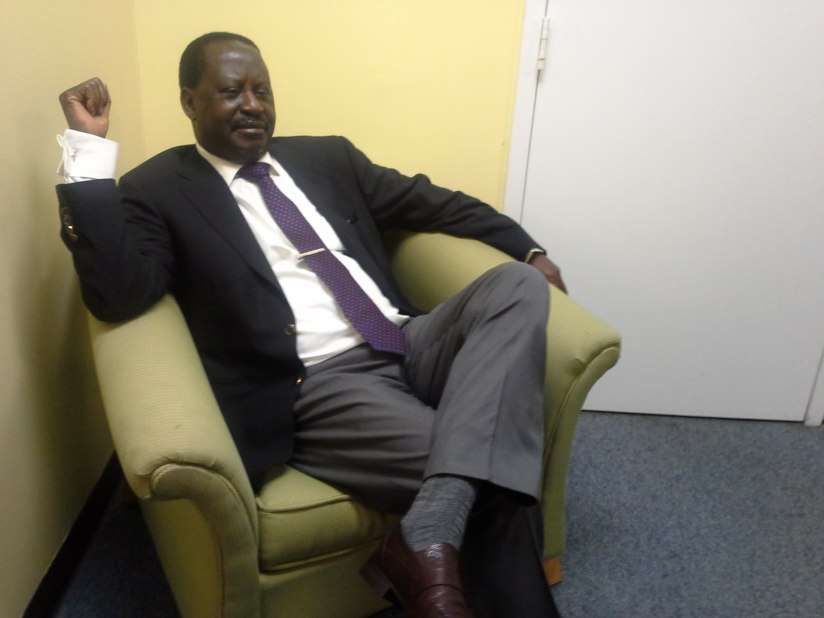
Kenya is mourning the passing of former Prime Minister Raila Amolo Odinga, who has died at the age of 80 while receiving treatment in India. For over four decades, Raila stood at the heart of Kenya’s political story — a freedom fighter, reformist, and one of the most consequential figures in the nation’s democratic journey. To help us reflect on Raila Odinga’s enduring legacy, his political journey, and what his death means for Kenya’s democracy and the region, I’m joined live from Nairobi by Professor Macharia Munene, a respected historian and scholar of international relations at the United States International University–Africa (USIU).
Nairobi, Kenya – Former Kenyan Prime Minister Raila Amolo Odinga, a towering and indefatigable figure in Kenya’s political landscape, has died at the age of 80, family sources told Ndiho Media.
Mr. Odinga passed away on Wednesday at Devamatha Hospital in India after suffering a cardiac arrest during a morning walk. Doctors said he was unresponsive to resuscitation efforts and was declared dead at 09:52 local time.
A master political strategist, Odinga was both admired and polarizing — a lifelong crusader for democracy, social justice, and national unity. Born in western Kenya, he was the son of Jaramogi Oginga Odinga, Kenya’s first vice president. His political life was defined by resilience and sacrifice, including years spent in detention under Daniel Arap Moi’s regime for opposing one-party rule.
Odinga ran for president five times, each race leaving a mark on the country’s democratic journey. His 2007 election dispute with Mwai Kibaki plunged Kenya into its worst post-independence crisis, which ended with a power-sharing deal that made him Prime Minister. His 2017 legal challenge led to the historic annulment of a presidential election — a first in Africa.
He was affectionately called “Baba,” “Agwambo,” and “Tinga” by his loyal supporters, revered as both a symbol of resistance and a father figure to Kenya’s pro-democracy movement.
President William Ruto and former President Uhuru Kenyatta led tributes, calling him a statesman whose death “leaves a silence that echoes across our nation.” Indian Prime Minister Narendra Modi hailed him as “a cherished friend of India.”
Raila Odinga is survived by his wife, Ida Odinga, and their children. His passing leaves a deep void in Kenya’s public life — a reminder of a man who embodied the country’s long, unfinished journey toward democracy.
When Australia’s government announced plans to ban smartphones for kids under 16, I couldn’t help but think about how different our reality is here in Africa. The news sparked heated debates across our continent about whether smartphones belong in our classrooms. Trust me, this isn’t just another policy discussion – it’s about the future of an entire generation.
I found myself speaking with journalist Sheila Ndikumana on SABC’s “African Diaries” radio show. I was miles away, but the studio felt charged with energy as we tackled the question that’s dividing parents, teachers, and policymakers: Should we ban smartphones in schools?
Here’s what I told Sheila and her global audience: Africa can’t afford to fall behind while the world moves forward. While critics worry about distractions and mental health – valid concerns, I admit – they’re missing a crucial point. For millions of African students, smartphones are more than just luxury gadgets or toys. They’re the only computers these kids will ever own.
Think about it. A teenager in rural Uganda or Ghana holding a smartphone has the same access to information as a student in New York or Tokyo. That’s not an exaggeration – it’s the reality that could transform our continent. Access to technology and smartphones has become an opportunity for employers.
The Digital Bridge
Let me paint you a picture. Across Africa, I’ve met young innovators who taught themselves coding on secondhand Android phones. In Lagos, I watched a 19-year-old create a mobile app that helps local farmers check market prices. In Nairobi, a group of students built a platform connecting tutors with struggling classmates. In Uganda, the SchoolPay platform has changed the way parents and students pay for their tuition. These aren’t isolated success stories – they’re glimpses of what’s possible when we embrace technology instead of fearing it.
The numbers back this up. Recent data shows that 65% of online learners in Sub-Saharan Africa access their courses through smartphones and tablets – the highest percentage globally. In Nigeria alone, 76% of learners use mobile devices for education. This isn’t just about convenience; it’s about necessity.
Critics often point to studies from countries like Norway and Finland showing improved academic performance after banning phones. But here’s what they’re missing: those countries already have computers in every classroom, reliable internet, and well-trained teachers. Their students aren’t relying on phones as their primary source of knowledge.
Africa’s Tech Leap
We’ve seen this story before. Africa skipped landlines and went straight to mobile phones. We pioneered mobile money while other continents were still writing checks. Now, we’re poised to leapfrog traditional education models, too.
The smartphone represents our chance to democratize learning. It can be a library for villages without books, a science lab for schools without equipment, and a creative studio for budding artists who can’t afford expensive software.
Of course, we need to address the real concerns. Cyberbullying, distraction, and mental health issues aren’t trivial. But banning phones? That’s like banning books because some people read inappropriate content. The solution isn’t prohibition – it’s education.
Teaching Digital Wisdom
What we need is digital discipline. Schools should establish clear guidelines for responsible phone use instead of imposing outright bans. Parents and teachers must work together to set boundaries. Most importantly, we need to teach digital ethics, media literacy, and online safety as core parts of our curriculum.
I shared a story with Sheila that still resonates with me. Tim Cook, Apple’s CEO, once told students that if he had kids, he’d prioritize teaching them to code over multiple languages. That stuck with me. When I got home, I introduced my two daughters to technology early – not for endless scrolling, but for creation and learning. Today, they navigate digital tools confidently and even write simple code. They’re growing up in a world where tech fluency is as essential as reading or math.
The Stakes Are High
Here’s the truth: Africa cannot afford to lock away the tools that could shape our future. Smartphones connect young Africans to global conversations, provide access to online education, and equip them with skills for tomorrow’s job market. Removing them from schools would widen the digital divide, not close it.
As I told the SABC audience, our goal shouldn’t be controlling technology but empowering students to use it wisely. If we deny them access now, we risk raising a generation that’s digitally illiterate in a world run by code and connectivity.
Africa’s young people deserve the same opportunities to innovate, compete, and contribute globally. The future is already digital – and it’s already in their hands. The question isn’t whether we should take it away, but how we can help them use it to build the Africa we all want to see.
The future isn’t something that happens to us – it’s something we create. And right now, that future is sitting in our students’ pockets, waiting to be unlocked.
Ethiopia and Eritrea are once again walking a dangerous line between fragile peace and open conflict. In a letter to UN Secretary-General António Guterres, Ethiopian Foreign Minister Gedion Timothewos accused Eritrea of “actively preparing to wage war” and collaborating with armed groups opposed to the government in Addis Ababa. Eritrea has not commented publicly, but the accusation marks the sharpest deterioration in relations between the two countries since their 2018 peace deal.
“No shots have been fired, at least not yet,” I said in a recent analysis. “But the rhetoric has hardened, the positions have deepened, and the specter of war is once again haunting a region that has already endured decades of bloodshed.”
The roots of this tension go deep. After a 30-year struggle, Eritrea gained independence from Ethiopia in 1993. The joy of liberation quickly gave way to border disputes, culminating in a brutal war from 1998 to 2000 that killed tens of thousands. The Algiers Agreement brought an end to fighting, but the border remained unsettled. For nearly two decades, both countries lived in a cold peace—neither allies nor enemies.
That changed in 2018 when Ethiopian Prime Minister Abiy Ahmed reached out to Eritrean President Isaias Afwerki. The two men signed a landmark peace agreement, reopening embassies and borders. “I remember people boarding Ethiopian flights and meeting loved ones on the tarmac,” I recalled. “For a moment, it felt like the region had finally turned a page.” Abiy went on to win the 2019 Nobel Peace Prize for his efforts.
But peace in the Horn of Africa can be fleeting. Just a year later, Ethiopia was engulfed in civil war with the Tigray People’s Liberation Front (TPLF). Eritrea, once an enemy, became Abiy’s ally. The conflict claimed hundreds of thousands of lives and left deep scars. Eritrean troops were accused of some of the worst atrocities, particularly in the ancient city of Aksum. Although a peace deal in 2022 halted major fighting, Eritrea was not a party to the agreement, and tensions soon resurfaced.
At the center of the current dispute is Ethiopia’s desire for access to the sea. Landlocked since Eritrea’s independence, Ethiopia relies on Djibouti for its trade. Abiy has argued that his country has a “right” to Red Sea access, calling it a matter of national survival. Eritrea, which controls the ports of Assab and Massawa, sees that language as a direct threat. “From Asmara’s point of view, Ethiopia’s talk of accessing the Red Sea is not diplomacy—it’s an existential threat,” I said.
If this fragile peace collapses, the consequences could be devastating. The Horn of Africa, already strained by wars in Sudan and Somalia, could face another wave of displacement and instability. The Red Sea, a vital global shipping route, could also become a new front line.
“The Red Sea doesn’t have to become a battlefield,” I said. “It could be a bridge—a shared artery of trade and connection. But that will only happen if both sides stop seeing each other as threats and start seeing themselves as neighbors with intertwined destinies.”
Paul Ndiho is a multimedia journalist and founder of Ndiho Media, covering African innovation, politics, and global affairs.
In a world where technology is redefining education, one Nigerian school is making waves. Glisten International Academy, based in Abuja, has established itself as a model for integrating STEM and robotics into everyday learning. Earlier this year, the school proudly represented Nigeria at the VEX Robotics World Championship in Dallas, Texas — the world’s largest robotics competition, featuring over 24,000 students from more than 60 countries.
For Abba Saidu, the Executive Director of Glisten International Academy, this journey has been about much more than building robots. “We’ve been running the school for 17 years, and technology has always been at the heart of what we do,” Saidu told Ndiho Media. “From the start, we wanted our students to have the skills and mindset for the future — to think, create, and solve problems.”
Saidu, who describes himself as a mentor and basketball enthusiast, says his motivation stems from a deep desire to see young Nigerians thrive in the technology sector. “When I see a four or five-year-old light up while building something, it melts my heart,” he said. “We’re not just teaching; we’re nurturing problem solvers.”
At the Dallas competition, Glisten’s students competed in multiple categories, representing Nigeria with three teams — from elementary to high school. “It was a life-changing experience,” Saidu recalled. “Imagine the Olympics, but for robots — countries from around the world, cheering, collaborating, and learning from one another. It showed our students that innovation has no borders.”
Saidu believes that robotics education is the key to unlocking Africa’s technological future. “We focus on robotics because we’ve seen its power,” he explained. “It teaches teamwork, coding, and creativity. These students are building robots today, but they’re really building confidence for tomorrow.”
Looking ahead, Saidu says the academy is investing heavily in makerspaces — hands-on innovation labs that let students design, test, and build. “We’ve changed the way students think,” he said. “From coding to AI to drones, they’re exploring technologies that will shape Nigeria’s future.”
For Glisten International Academy, it’s not just about winning medals — it’s about inspiring a generation. As Saidu put it, “Even if we take baby steps, every small effort helps close the gap between Africa and the rest of the world.”
Imagine spotting the next great African entrepreneur before the world takes notice. That’s precisely what 27-year-old Moroccan investor Aya Zaghnin is doing — channeling her capital, time, and passion into early-stage startups that are tackling some of Africa’s toughest challenges. In an exclusive conversation with Ndiho Media, she reflected on her path from founder to investor, and why she believes Africa’s future rests on the shoulders of its boldest innovators. Zaghnin’s journey into investing began with her own entrepreneurial leap. At just 18, she launched her first startup. It didn’t last, but instead of discouraging her, the experience lit a new fire. “The startup is no more because of some issues that I had with early-stage investors,” she explained. “But that encouraged me more to be on the investor side.” Determined to learn the ropes, she worked at a venture capital fund that focused on the Middle East and Africa before branching out independently. Today, she manages a personal portfolio of six companies, each carefully chosen not only for their financial benefits, but also for their ability to drive meaningful impact.
What often surprises people is how a woman in her twenties can finance investments that typically range from $10,000 to $50,000. For Aya, the answer is relentless determination. “Investment for me is a goal. It’s a financial goal. So, what I do is get a job whenever I want to invest. I work plus hours and I work on the weekends in order to finance my investments.” Her sweet spot is between $20,000 and $30,000, but she insists that money alone doesn’t drive her choices. She looks for real entrepreneurs with a genuine commitment to solving real problems at the bottom of the pyramid, focusing on sectors she knows best: fintech, agri-tech, health tech, and supply chain. One of her proudest investments is in Village Farms, a Nigerian agri-tech startup. After advising its founders for a year, she invested and helped them secure an additional $500,000 in funding. The impact has been tangible. Beyond growing its business, the company has also supported healthcare and education initiatives for smallholder farmers, demonstrating that the right investment can have a far-reaching impact that extends far beyond financial returns. For Zaghnin, angel investing is also about collaboration. She strongly believes in the power of African youth to pool their resources and make a greater impact together, especially as millennials and Gen Z increasingly seek ways to shape the continent’s future. “It takes a lot of commitment. It takes a lot of hard work, and it also requires a lot of patience, as you will be immersed in their problems. Whenever they’re happy, you’re happy. Whenever they’re really sad, a lot of problems would be your problems as well.” Her long-term vision is as ambitious as it is inspiring: to visit all 54 countries in Africa and invest in at least one startup in each of them. “I truly believe in the potential of all the 54 countries,” she said with conviction. It’s this belief — that Africa’s future lies in its innovators — that drives her every move. At just 27, Aya Zaghnin isn’t simply writing checks. She’s building a legacy of trust, mentorship, and belief in African talent, one startup at a time.
“Hello and welcome to Different Perspectives, where we explore bold ideas and the individuals behind them. I’m Paul Ndiho. In a world filled with constant headlines and quick takes, it’s easy to believe we have the complete picture. But what if we’re only seeing one side of the story?
Today, we are highlighting Aya Zaghnin, a 27-year-old Moroccan angel investor who is investing in Africa’s future by supporting startups before they attract global attention. From launching her own company at 18 to investing her time and money in emerging founders across the continent, Aya is part of a new generation transforming how innovation is funded in Africa. Her journey exemplifies grit, resilience, and vision—proof that you don’t have to wait until you’re wealthy or established to make a difference.”
It often starts with tenderness, a late-night chat, a promise that feels overdue. Then the ground shifts. Interpol’s continent-wide sting—more than 260 arrests across 14 African countries—pulled the curtain on a thriving marketplace of heartache, where sextortion and romance scams turn intimacy into leverage and affection into cash. Investigators say over 1,400 victims have been identified, and losses are nearing $2.8 million. But the balance sheet can’t measure what’s hardest to recover: trust.
Cybersecurity analyst Adedoyin Adedeji has watched the script unfold too many times to count. “Crime grows when there are no consequences,” he told Different Perspectives. “When people know there are consequences to doing bad things, the chances of combating it are higher.” He conducts awareness sessions with teenagers and young adults, and hears a chilling refrain: romance fraud isn’t a “crime,” it’s a “business.” As he put it, “Some don’t even consider it a crime… ‘I just told someone I love you and they gave me money.’” Publicized arrests, he says, puncture that fantasy. “These are serious offenses—you can spend your prime in prison.”
Data scientist and cybersecurity analyst Jimmy Kinyonyi Bagonza says the emotional mechanics of the con are as old as courtship—only faster and more scalable online. “Initiate contact, create rapport, then trust,” he explained. “You start exchanging photos… and it turns to blackmail: ‘If you don’t do this, I will expose you.’” He argues that measuring success only by arrests misses the point. “Waiting to have someone arrested isn’t success. Success is stopping it before it takes place.”
Why do so many people—smart, careful people—still get trapped? Partly because loneliness is patient and compliments are cheap. Partly because the continent’s digital boom, from mobile money to cloud tools, has outrun policy and protection. “Technology is growing fast, but laws and trained personnel are not matching the speed,” Bagonza said. That gap is where deceit thrives: fake courier fees, cloned job offers, perfect-looking investment dashboards, and “urgent” love that moves just fast enough to silence doubt.
The harm isn’t abstract. Victims lose savings and reputations; families splinter under shame. And the supply of perpetrators renews itself. Adedeji calls it an apprenticeship economy of deceit: older hands recruit teens with proof of quick money. “It spreads like apprenticeship,” he said. “Until we create real opportunities, the network grows.” Enforcement matters, but so does a society that makes patience and honest work feel possible.
There are ways to lower the odds. Adedeji’s basics are blunt and helpful: turn on two-factor authentication for every vital account; guard the “primary” keys—your email and phone number; routinely check where your accounts are logged in and revoke unknown sessions; and if you must share access with a contractor or “social media manager,” get ID and a paper trail first. Bagonza’s mantra is skepticism with receipts: “Always second-guess. Expand the email header, hover to see the full link, and be wary of speed—love, jobs, and investments that rush you are telling on themselves.” Even small tells help: an odd character in a web address, a too-fast job “offer,” a payout that doubles in a week.
Love should be a refuge, not a source of revenue. The fix won’t come from handcuffs alone. It will come from visible consequences, relentless public education, more innovative tools that spot patterns before they spread, and real options for young people so “I love you” stops being a business model. As Adedeji put it, “Empower youth and strengthen enforcement.” Bagonza adds the other half: “Deterrence first, then response. If we get that right, the arrests won’t be the headline—the decline will.”
This piece appears in Ndiho Media’s African CEO Series. It was published some time ago and recounts how Jumia spearheaded innovations in e-commerce in Africa. Often described as the “Amazon of Africa,” Jumia has become one of Africa’s most ambitious digital platforms. In its most significant and oldest market, Nigeria, the company broke new frontiers by expanding beyond big cities like Lagos and Abuja to connect rural communities to the digital economy. “Nigeria was the initial country in which we started,” explained Massimiliano Spalazzi, then CEO of Jumia in Nigeria, in an interview conducted by Ndiho Media before he resigned from the company. “That’s the oldest, it has the largest potential out of all the countries in which we have been operating.” Jumia built more than a marketplace. It had an ecosystem, including JumiaPay for cashless payments, Jumia Logistics for fulfillment, and Jumia Advertising for partners and merchants. It had more than 260 pickup points throughout Kenya and aimed to provide retail access to rural areas and underserved communities. “We particularly wanted to show our presence in rural areas, to provide retail where there isn’t,” said Spalazzi
One of those initiatives was Jumia Force, a series of private agents who helped consumers without internet connectivity place orders and learn about online shopping. “In case you’re in a village without access to the internet or someone who doesn’t have a telephone, there’s a Jumia Force representative who can order on your behalf. They also educate consumers on how e-commerce works,” he added. Trustworthiness and affordability made it easy for people to continue patronizing Jumia. “You have a trusted and safe haven here where you can shop. We’re obsessively focused on pricing it just right, shipping being competitive, and you having whatever it is you want as a customer. If not, you can return it as easily as possible,” explained Spalazzi. Jumia has been a significant driver of employment in Nigeria. The company directly employs hundreds of people and indirectly supports thousands of vendors, logistics providers, and agents in the digital economy. The rapid potential of digital platforms to promote growth and jobs, notably in Nigeria, can be underscored. Despite having been in Nigeria for over 11 years, Spalazzi explained that Jumia was still in its early days of life. “Although in Nigeria for 11 years, I think it’s still day one. There’s still a lot to build, and still to develop,” he explained. This overview illustrates how Jumia’s innovation has extended beyond e-commerce. It built trust, created opportunities, and showed how technology could transform communities across Africa’s largest nation.
It’s easy to see artificial intelligence (AI) as something out of a science fiction movie. However, it is currently transforming the fundamental aspects of our lives—shaping how we live, learn, and work. For Africa, this moment is not simply about keeping up with the latest trends; it represents a unique opportunity to shape our future on our own terms. It’s about much larger – a chance to leap ahead once again, as we did with the cell phone and mobile money. I recently spoke with Joshua Opoku Agyemang, of the Ghana STEM Network, who explained AI in a way that has stuck with me. As he saw it, AI is not magic, but rather the science of inventing machines capable of reproducing human thought. “They are not human,” he quickly added. “They are not flesh and blood. But it is a system that has a certain level of intelligence.” The pros here are staggering. Joshua used a straightforward analogy: think of an AI system that can read thousands of files within a minute or two—the time it would take hundreds of individuals to accomplish. Or consider face recognition, where humans will fail, but AI will identify a thousand faces in zero seconds. This is the kind of efficiency he believes Africa ought to adopt and not shun. “We’ve done it once. We went from zero landlines to cell phones”. “We went from not banking with traditional banks to Mobile Money. For example, Mpesa in Kenya was a game changer.” He said. The same types of innovations are now possible to apply to AI, transforming the face of healthcare, education, and even agriculture. But Joshua is also honest about the danger. “The same software that is in a position to create stellar content is equally able to develop advanced deepfakes. Systematic problem-solvers are similarly able to spread lethal misinformation.”
His concern is about whose information is used to train these AI systems. With the vast majority depending on Western influences, what’s the condition of the hundreds of languages and unique cultural settings in Africa? “Ghana alone has 30 to 50 or so spoken dialects,” he said. If we don’t develop our systems, our voices will be lost in the discussion. But the good possibility is too large to be ignored. “For example, picture a doctor in a rural town being given an on-the-spot opinion by a specialist in the city. Envision farmers using AI to survey their fields and be able to say definitively when it is best to plant and harvest an abundant crop. Envision classrooms in which each student has an individualized level of education.” What about the fear that AI will automate our jobs? Joshua considers it a familiar crossroads. “Going from the first industrial revolution to today, every wave of technology has killed some jobs while creating other ones,” he speculated. The solution is not to resist it but to adapt. The workforce of the future will be less about the rigid 9-to-5 and more about individual strengths and value. It’s up to all of us to consider what our careers will look like in five years. When regulating, he calls for a subtle equilibrium. Rules are necessary—we are still uncovering the full contours of AI, and we require restraints. However, the freedom to innovate must also be maintained. Regulators will need to cooperate with creators while never stopping their own education. For anyone fearful or even worried about this approaching world, Joshua’s simple mandate is this: become curious. “It’s good to be scared—it’s human nature,” he described. “But fear comes from not knowing.” Through education on these technologies, we will be able to steer them towards positive outcomes and shield ourselves against their destructive possibilities. Autonomous cars, smart cities, advanced robotics—their arrival is imminent. Our choice is whether we watch from the sidelines or create them. Finally, his vision is very positive. This Africa of his is to utilize these emerging technologies to feed itself, but to feed the globe. “We have the soil and the population and the ideas,” he described. AI is unlikely to cure all our ills tomorrow, but if we plan it with equity and a humanitarian mission, it offers a chance to leapfrog decades of catch-up. That is our time to innovate and pioneer, and not to copy.

 Ndiho Media,LLC.