
Clean Renewable Energy for Africa

The future of Africa’s industrialization depends on clean, renewable energy. In a recent interview with VOA’s Paul Ndiho, Erik Granskog, Founder and CEO of Milele Energy, highlighted the crucial role of renewable energy in Africa’s industrial future.

“Everything is powered by electricity,” Granskog explained, emphasizing the need for reliable and sustainable energy sources to drive development across various sectors.
Last month, the U.S. and Kenya established a Climate and Clean Energy Industrial Partnership in a move of global significance. This collaboration, focusing on clean energy deployment and green industrialization, reflects Kenya’s leadership in renewable energy and the U.S.’s commitment to sustainability. “The partnership aims to guide both nations towards a new green trajectory, promoting sustainable and prosperous development.”

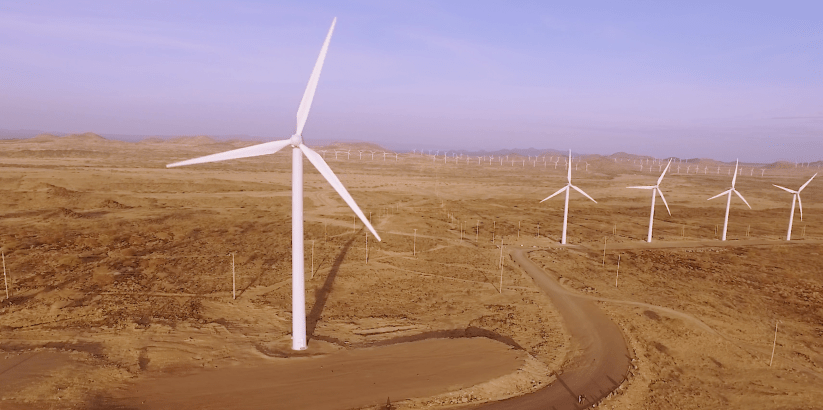
Milele Energy, a key player in Africa’s renewable energy landscape, actively invests in clean energy projects across sub-Saharan Africa. It holds a substantial stake in the Lake Turkana Wind project in Kenya, the largest wind project on the continent. “We cover Africa, developing, implementing, financing, and operating independent power projects. We have a 20% to 25% stake in the Lake Turkana Wind project and are working to expand it by adding solar, wind, and battery storage for green industrialization,” said Granskog.

The Necessity of Reliable Energy: The importance of reliable energy cannot be overstated. “You need electricity for everything, whether it’s e-mobility, data centers, hospitals, or manufacturing. The big issue is not just generation but also transmission,” Granskog explained.

Kenya’s initiatives to create independent transmission lines are a significant step forward in ensuring a reliable grid for industrial activities. “Seeing that Kenya is looking at an independent transmission program is a big step forward in ensuring the grid is reliable.” Reliable energy is paramount for setting up manufacturing facilities, whether for pharmaceuticals, green steel, or other types of refining. “Without reliability, cost doesn’t matter,” he added.

Africa’s Potential and Challenges Granskog highlighted Africa’s potential, which is driven by its youthful population, entrepreneurial spirit, and growth aspirations. “In Kenya and other parts of Africa, a highly educated workforce is underemployed. We need jobs that create value, whether it’s building, creating, refining, or any value-added activities,” he emphasized.

Despite the potential, energy issues are a pressing concern across the continent, demanding immediate attention and action.

Milele Energy aims to address these challenges. “We have a project in Sierra Leone expected to close next month with support from the U.S. government. With $412 million in finance and insurance support, that project will generate 60% of the country’s electricity and lower costs,”

The argument for clean, renewable energy in Africa is compelling. It is not just about environmental sustainability but also about driving economic growth and industrialization. With strategic investments and partnerships, Africa can harness its renewable energy potential for sustainable and prosperous development.

AI in Political Campaigns: Transforming the Landscape of Elections

By Paul Ndiho

Integrating artificial intelligence (AI) into political campaigns reshapes election management in today’s rapidly advancing technological era. By utilizing AI, political parties can significantly improve elections’ accuracy, fairness, and security while addressing potential challenges such as bias, privacy, and transparency.

Enhancing Election Management with AIAI’s potential to transform election management is exemplified in its application to voter registration. By leveraging biometric data, AI can streamline this process, enhancing its security and efficiency. This ensures that only eligible voters are registered, reducing the risk of fraud and human error. Additionally, AI-driven programs can detect fraudulent activities in real time. These integrated systems offer a level of security that manual monitoring cannot match, identifying and addressing irregularities as they occur to maintain the integrity of the electoral process.

The Dual-Edged Sword of AI in Elections Despite its numerous benefits, implementing AI in elections presents challenges. Bias in AI algorithms can lead to unfair outcomes, while privacy and data security issues are crucial. Transparency in how AI systems make decisions and accountability are critical to maintaining public trust. The integration of AI in elections necessitates the establishment of robust ethical guidelines and regulatory frameworks. These measures are crucial in addressing potential risks and ensuring that AI enhances democratic processes rather than undermines them.

Insights from Experts: VOA’s Paul Ndiho interviewed Dr. Momar Dieng, a Harvard University professor and Dean of Business at The African Leadership University in Kigali, Rwanda, about AI’s transformative potential in politics. Dr. Dieng highlighted how AI tools are already beginning to revolutionize political engagement worldwide, not just in Africa. As Dr. Momar Dieng highlighted, AI tools have the potential to revolutionize political engagement. These tools enable continuous interaction with voters, even outside campaign and election periods. Technologies like chatbots can gather voter sentiment in real-time, a task that previously required significant resources. The advent of AI has made such engagement more accessible and affordable.

Dr. Dieng emphasized that AI allows smaller political movements to reach a broader audience, creating a more inclusive political landscape. This potential of AI to democratize political engagement is a beacon of hope for the future of politics, but he also stressed the importance of regulation to prevent misuse.

The Need for Regulation: According to Dr. Dieng, regulating AI in elections is as crucial as regulating drugs and food. Governments and regulators must ensure that AI tools perform as intended and do not cause more harm than good. This includes preventing the misuse of personal information and the spread of false information.”We cannot prevent using these tools, but we must ensure that our governments and regulators are equipped to put boundaries in place. It’s not about censorship but about finding fine-grained ways to punish misuse and protect the integrity of the electoral process.”

Balancing Innovation and Regulation, some argue that regulation should follow the development of AI technologies. However, Dr. Dieng warns against this approach, especially in regions prone to conflict where misinformation can have dire consequences.”In certain areas, the spread of misinformation can quickly spiral into ethnic conflict and other types of violence. We cannot afford to run natural experiments and address the fallout later. The potential for AI to create realistic but false information makes preemptive regulation essential.”

AI holds immense promise for enhancing political campaigns and election management. However, to achieve these goals, it is crucial to address the ethical and regulatory challenges it poses. By developing comprehensive guidelines and frameworks, we can harness AI to support democratic processes and ensure fair and secure elections. The insights of experts

SOUTH AFRICA HEADING CLOSER TO FORMING A NATIONAL COALITION GOVERNMENT

South Africa is on the verge of forming a national coalition government for the first time. Partial election results indicate that the ruling African National Congress may lose its parliamentary majority after 30 years. This would require the ANC to form a coalition with other parties, marking a significant shift in the country’s post-apartheid history. VOA’s Paul Ndiho spoke with Ndumiso Cingo, a Strategic Partnerships Manager at the Council for Scientific and Industrial Research, to gain more insight.

EVA WAMBUI HANDBAGS AND BATTLING LEUKEMIA

This is an inspiring story about a Kenyan entrepreneur who battled leukemia for 15 years and used her experience to launch her leather handbag brand, “EvaWambui Handbags.” Despite adversity, she turned her passion for handbags into a successful business. She taught herself how to design and make handbags in Kenya and now exports them to the United States and beyond. Her brand is gaining attention and generating a buzz. VOA’s Paul Ndiho interviewed Eva Wambui, the creative designer and founder of “EvaWambui Handbags,” who aims to inspire other women worldwide facing life-threatening challenges.

GHANAIAN TEAM COMPETES IN 2024 VEX ROBOTICS CHAMPIONSHIPS

Earlier this month, a team of 12 Ghanaian STEM students participated in the 2024 VEX Robotics Championship in Dallas, Texas. This competition is the largest robotics competition in the world, featuring teams from across the globe. Team Ghana was proud to represent their country, among the few African teams at the event. Recently, VOA’s Paul Ndiho interviewed 12-year-old Shadrach Dakurah from Bountiful Technologies STEM Robotics, AI, and Computing Academy in Accra, Ghana, about the competition. 

U. S.-KENYA ECONOMIC TIES

Vice President Kamala Harris and Kenyan President William Ruto participated in a moderated discussion about strategic partnerships and digital inclusion in Africa at the U.S. Chamber of Commerce. The event emphasized the growing commercial partnerships between the two countries, the active businesses strengthening trade and investment relations, and the agreements solidifying these connections.

U.S. President Joe Biden welcomes Kenyan President William Ruto to the White House

U.S. President Joe Biden welcomed Kenyan President William Ruto to the White House on Thursday for a state visit. Both leaders pledged to usher in a new era of partnership on technology and security.

“Kenya and the United States stand together, committed to each other, committed to our people, and committed to building a better world,” Biden said, noting the two countries are celebrating 60 years of partnership.

Ruto responded, “Today, as we celebrate our past, we are optimistic about our future. Through this state visit, we will have the opportunity to discuss and have a conversation about building global partnership and leadership.”

Ruto’s trip marks the first state visit for an African president to the White House since 2008.

THE FUTURE AI IN AFRICA

Governments worldwide are working on AI regulations as the technology advances. Although there are concerns about job loss, misinformation, and privacy, AI has the potential to change industries and create opportunities. Amidst these discussions, African analysts advocate for a problem-driven approach to AI policy creation that could propel the continent to the forefront of this technology. Jacques Bonjawo, a renowned author, Computer Scientist, and tech entrepreneur, joins us in the studio. His pioneering work and leadership in African AI initiatives make him a key figure in this conversation.

KENYAN RETAIL STORE VIVO OPENED KENYAN-MADE PRODUCTS STORE IN THE U.S.

Kenyan President William Ruto inaugurated Vivo Fashion Group, a female-led retail fashion store, in Atlanta, Georgia. Vivo has allied with Kenyan retail brands to export products made in Kenya to the United States. The opening of Vivo’s first store in the United States is a testament to the entrepreneurial spirit of women, who have been instrumental in showcasing the potential of Kenyan entrepreneurship. Anna Njoroge, owner and C.E.O. of Ythera Beauty, spoke to VOA’s Paul Ndiho.

PROVIDING LOW-COST HOUSING SOLUTIONS TO UGANDAN WOMEN

Anne Rweyora, Co-Founder and CEO of Smart Havens Africa is one of Uganda’s most successful social entrepreneurs and a beacon of hope for women’s empowerment. She has constructed over 100 homes, providing shelter and a pathway to homeownership for low-income families, a testament to the power of social entrepreneurship.
Anne founded Smart Havens Africa, a social enterprise in 2018 in Kampala, Uganda. The company provides low-cost, eco-friendly, affordable housing solutions for low-income families, especially women. Despite frequent hardships, Anne’s ability to succeed as a social entrepreneur has significantly impacted her community.

« Older Entries Recent Entries »