For those who live in Washington DC metro area this is probably not a surprise, more than 30% of Cab drivers in the district are from Ethiopia, more than any other country. Many of them are also professionals in their own right but also do driving taxis as part-time job. Africa 54 Video Journalist Paul Ndiho recently went behind the scenes to see for himself what it takes to juggle through traffic as cab driver in one of the busiest cities in the world. And he profiles Assegid Ggossa, a professional I .T Specialist and a part time taxi driver who in his own words tells us the secrets behind the booming industry.
A study by the World Health Organization (WHO) says indoor air pollution from cooking kills 4 million people globally each year because about 3 billion people cook and heat their homes using open fires and inefficient stoves that burn solid fuels such as firewood, animal dung, agricultural residues, charcoal and coal. But Moushine Serrar, a Moroccan born engineer and designer is taking aim at that statistic with his own new fuel efficient cook stoves called “Pratki”. In an interview with Africa 54’s Paul Ndiho, Engineer Serrar said that his new cook stoves are more efficient and less polluting.
Many Africans use charcoal for cooking but the effects over the years have been disastrous for the continent’s forests. However, in Kenya, an energy saving cooking stove fueled entirely by trash is making a buzz on both the local and international scene.
A revolutionary cooker invented in Kenya and powered entirely by garbage has won several international ingenuity awards. The giant stove has transformed the lives of people living in several poor communities in the east African country. Now, orders for the cooker are flowing in from abroad, as far as Britain and Bali.
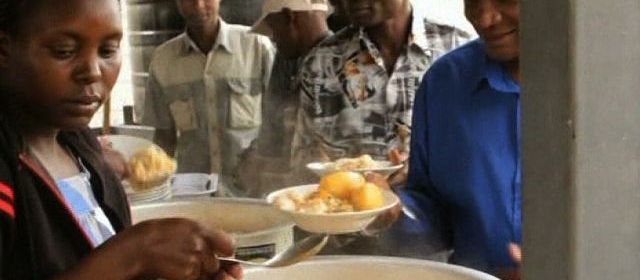
Families used to spend hours bending over a hot smokey charcoal stove preparing their meals.
The stove uses plastic bags, food cartons, cardboard boxes, old clothes and other discarded rubbish found in slums in and around Naivasha, a market town located in Kenya’s rift valley region. The giant furnace burns plastics and other garbage at 800 degrees centigrade– and the energy generated is then used to fuel a giant cooker. The home grown rubbish burning stove was introduced to the community six months ago and already it has helped to provide a cleaner environment and a faster, cheaper way for people to cook food.
“It saves me money because i don’t use paraffin. I come here with my food, I cook and then I go home.”
The stove was invented by architects at the design firm, planning systems services in Nairobi. Getting the cooker to heat the rubbish at temperatures high enough to burn off any noxious fumes took several years to perfect. A prototype for the cooker was finally built last year and since then the design has picked up several international innovation awards.
Janice Muthui, who heads the foundation set up to run the project, says the interest it has attracted internationally has been great for the company, but persuading people that garbage can be used as fuel is always a challenge.
“We know that it’s sound, that the technology is sound and we’re getting all these awards, international awards because they really do believe in the technology but now what we really need to do are get the community on board. Of course we’ve had issues, people thinking… Rubbish, cooking my food… I mean my old socks could actually be making my next meal you know. So those are the kind of things that we have to try and overcome and we’re still working on it.”
The first people to buy into the idea were the owners of a flower farm in Naivasha. The farm generates a lot of waste and many of the workers live in nearby slums where people are often forced to live alongside piles of trash.
The farm bought a cooker to help improve lives of its workers and bring the fair-trade company in line with international eco-friendly standards.
David Musyoka from the flower farm group says it has been so transformative for his community, that he hopes the idea will spread to other parts of the country.
“If it can be built everywhere in Kenya in each county if it can get this, everywhere will be clean,”
So far, there are two cookers operating in Naivasha and another one in Nairobi’s Kibera slum. Environmentalists say this could potentially change the way people use the traditional means of cooking because it’s cleaner and cheaper. Kenya is among the countries that are looking to develop its geothermal, wind, solar, hydropower– and its home grown fuel-efficient cook stoves.
The World Bank says that Kenya’s semi-arid north is enduring longer and more frequent periods of drought due to climate change. As a result, traditional cattle-herding communities who have roamed the region for centuries now have to farm vegetables as well, to provide food for their families.
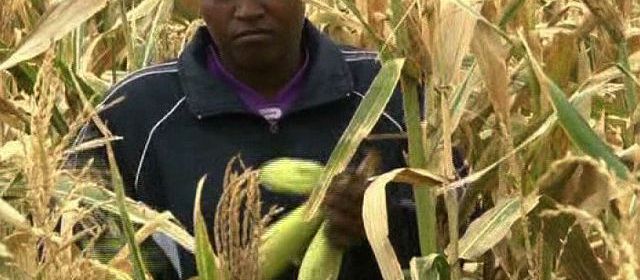
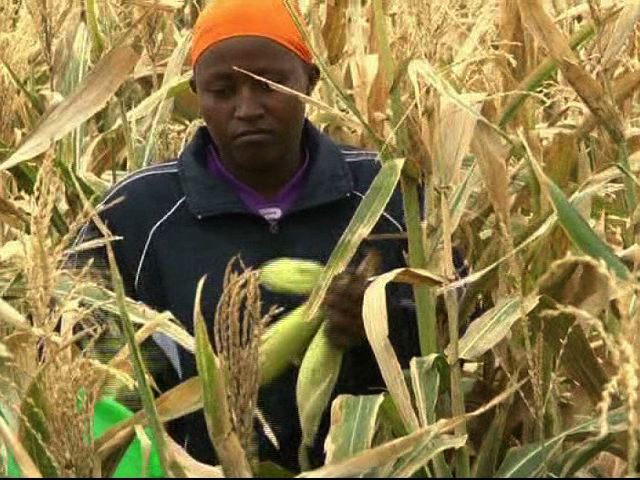
In Turkana, northern Kenya, about 15 farmers are attending a class on vegetable farming. The farmers are enrolled in a training program known as ‘furrows in the desert’ designed to teach communities to grow more vegetables, fruits and crops to improve food supply for their families.
The project was started by Kenyan and Israeli volunteers in 2012 to better prepare communities for the effects of climate change.
In recent years, severe droughts have vastly reduced the region’s water supply, so the pastoralists are learning how to set up irrigation systems to take advantage of the water they have, and ensure that crops get the proper amount of water.
“i didn’t know the importance of manure but now i understand its benefits. I will go home and educate others on its use and show them how to farm and weed and make sure they understand the importance of manure.”
The people of Turkana traditionally keep livestock as a way of life, and have lived in this semi-arid part of the country for centuries, but over the years, dry spells and violent cattle raids between them and their neighbors has been a major threat to their herds.
Turkana remains one of the poorest regions in Kenya, and the government, as well as various aid agencies, is trying to get more pastoralists to farm over 300 acres of land in addition to keeping their animals.
The farmers are also taught how to control pests, trap water, create dams and determine the best methods of rehabilitating land for future harvests.
The project is targeting about 140-thousand people who live in Turkana, hoping that they can quickly replicate the farming model in their communities so they can grow crops.
Residents are beginning to reap benefits and some like Lucy Mutunga say the difference is obvious and that the quality and quantity of crops harvested is encouraging.
“I planted on the 2nd of January but now I’m harvesting, my crop yield is fair. During the first planting season, i harvested 30kgs for a plot of 250 meters square.”
For now, the food production remains for subsistence, but over time farmers hope to increase their returns and find a marketplace in Kenya for their produce.
By farming and keeping livestock, the people of Turkana will be in a better position to increase their food stocks, and ensure that their families are not hungry.
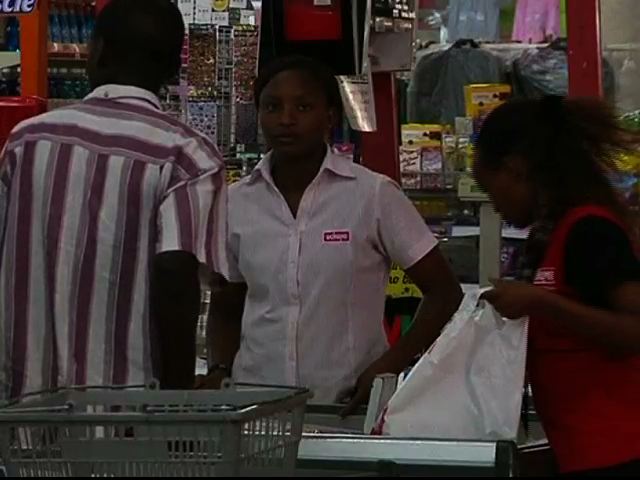
One of Kenya’s biggest stores – Uchumi, is planning to spread its footprint across east Africa. The retail giant is bouncing back several years after it was declared bankrupt. Uchumi hopes to open at least eight new branches by 2014, as it expands into Rwanda and South Sudan to tap into the growing middle-class market.
The African development bank says Africa has the one of the fastest growing middle class populations in the world. Some financial experts attribute the growth to increased investments in the service sector– and sound economic and business policies. As a result, both foreign and local investors are considering investing in Africa, especially in retail stores. Kenya’s Uchumi supermarkets is one of a kind, it is the only stocks-listed supermarket group in east Africa.
Jonathan Ciano, Uchumi’s chief executive officer says the company is preparing to tap into the growing middle class, and take the supermarket concept to communities that have never had one.
“We have cast our eyes even further, saying we want to have at least five more branches in Tanzania, additional branches in Tanzania, three more in Uganda and approximately six or seven in Kenya in the next two years. Minimum and that is what it is, we are counting on those that we have precipitated their growth, or they are building up or be determined.
Economic forecasters say investors expect Uchumi to perform better in the medium term, after making significant investments in branch expansion in the region over the past two years.
The company emerged from a four-year receivership in early 2010 and its shares were re-admitted for trading on the stock exchange in mid-2011.
The firm is still working on how it will get into Rwanda and south Sudan, but the first six stores to be opened elsewhere this year have been approved by the board of directors. The C.E.O. says that the opportunities for retailers are not confined to big cities like Kampala, the Ugandan capital.
“Most of us are spoiled because we have been brought up in the cities – Kampala, Dar es Salaam, but we have our brothers and sisters who are 300 kilometers in the hinterland, who have never seen a supermarket and you open one there and you can see the excitement as they all get employed and embodied into it, quite interesting,”
Critics say that Uchumi’s sluggish sales in the last two months of 2012 sent pretax profits plunging by 35 percent– to $1.56 million dollars, for its fiscal first-half year that ended December.
However, Ciano dismisses those claims and says that the sales have been going on well, adding he expected that trend to continue and that the growth of the company showcases the numerous opportunities available in Africa.
“Africa was called the dark continent. They didn’t know the sun was right in the middle of Africa. It is a very bright continent, when you come to the infrastructure; it’s an ongoing development that is why we are developing countries.”
Some analysts say that both foreign and local investors have nearly tripled their shares in Uchumi since last year and the demand for quality products in supermarkets will continue to climb because more and more people are rising into the middle class.
One of Africa’s largest mobile phone companies is working on expansion plans that could see the firm spend billions of U.S. Dollars on the continent. MTN telecommunications group, which has a market value of over 30 billion dollars, is eyeing Africa’s data market– a market that has yet to be fully tapped.
Incorporated in 1994, MTN is arguably Africa’s biggest mobile phone company, operating in 21 countries. It also provides internet service to businesses in 13 countries, spanning three continents. The Tele-communications giant is set to spend up to 8 billion dollars in acquisitions and investments on the continent.
MTN is also one of 15 telecom providers to make the cut to a second-round of bidding for an operating license in Burma, also known as Myanmar, according Sifiso Dabengwa, its chief executive.
“We still are looking at growth in terms of mergers and acquisitions opportunities; there are areas which we are keen on getting licenses. We are participating in the Myanmar licensing processes where they will license two operators, between now and June this year. There are some countries in Africa on the north coast that we would still be interested in going into and also other countries stand alone, which we believe have good opportunities which we can create value from.”
The south african-based mobile operator which has a market value of $34 billion is interested in acquiring a North African provider, to help diversify its earnings. MTN expects to repatriate nearly 135 million of its funds tied up in Iran this year– and the company has been talking with the Iranian central bank and U.S. Authorities on returning its dividends without violating sanctions.
A U.S. Court has delayed a $4.2 billion lawsuit against it by Turkish rival Turkcell, pending a separate Supreme Court decision. Turkcell alleges that MTN used corrupt practices to win an Iranian operating license.
However, an external committee appointed by MTN has, found the allegations to be false and that the company’s lawyers are confident that the Washington, dc court will throw out the case because it did not fall under its jurisdiction.
Still– the top executive says the data market in Africa is not being maximized and there is room for growth.
“Most of our markets are still under 10 percent, the key issue is that the penetration of devices that would drive data is still low, i think affordability of the devices is still a problem and as devices become more affordable, as prices come down, we will have more 3g handsets, more limited functionality smart phones, and that will definitely drive data. Internet penetration is still below 10 percent in most countries, so the opportunity is still very big.”
In 2010, MTN invested in fiber-optic cables, as well as growing its access to broadband capacity on undersea cables. Analysts say that MTN predominantly uses independently owned outlets to distribute its products and services, but it also has its own branded stores. The Tele-communications giant employs more than 34-thousand employees.
MTN recently received a license in Ethiopia to provide essentially all services other than standard voice calls. The east African nation has a very limited Tele-communications industry.
Last months, the African Union Mission in Somalia (AMISOM) welcomed its new member from the republic of Sierra Leone, Sierra Leone’s Armed Forces (RSLAF). The advanced team joined Uganda, Kenya, Burundi and Djibouti in the fight against al Shabaab. The 850-strong contingent will be deploying shortly into southern Somalia where they will operate alongside the Kenyan contingent.
Sierra Leone became the fifth African Country to join Amisom forces in Somalia, in the fight against al Shabaab a hardline Islamist group with links to al Qaida which has risen from obscurity to international prominence in the last couple years.
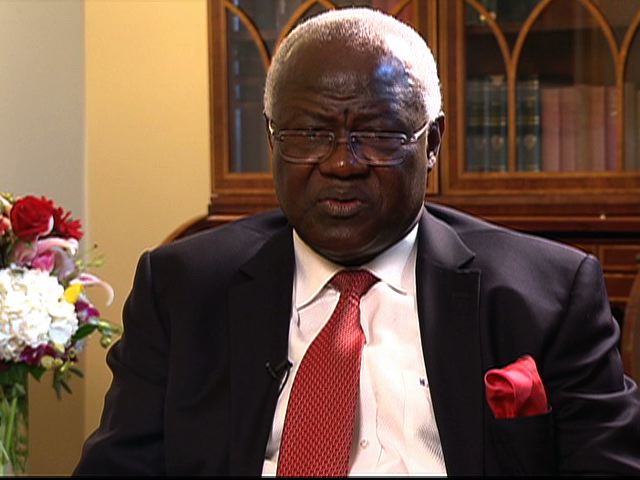
Critics of the Sierra Leonean government say the soldiers are needed back home to prevent possible violence, since they contend that their country is still recovering from the civil war that ended in 2002. Last month, while speaking to VOA, President Ernest Bai Koroma dismissed those critics and said that it was his country’s time to payback time to the international community.
“Now if we have gotten to a point wherein we have transformed our country from a warring country to a country that is moving on in development and growth, there is a need for us to support other countries who are now in the position that we were in some years back.”
The Sierra Leonean deployment will permit the Kenyan troops in Southern Somalia, to withdraw one battalion from the sector as per UN Security Council Resolution 2036 that was passed in 2012.
“We will be joining in the rest of the other contingents in AMISOM to ensure that we will be able to implement the African Union mandate in Somalia. The peace process is currently on enforcement; however the news is telling people that Somalia is getting back to where it was, so our main focus now is to assist in the stabilization of Somalia.” Said Lt. Colonel Abubakar Conteh, Sierra Leone Contingent, AMISOM:
Sierra Leone was engulfed in a civil war for more than a decade that left more than 50,000.00 people dead and hundreds of thousands displaced. It was regional forces under the umbrella of The Economic Community of West African States Monitoring Group or ECOMOG that intervened and restored calm. Now Sierra Leone’s Armed Forces feel that it’s their turn to partake in such missions.
“We are now partakers of global peace enhancement, and of course during our own ten years of civil war, people came from different countries to support our peace achievement, and now that we have the opportunity to reciprocate that particular aspect, we are very happy:”
A resident of Free Town share the same sentiments.
“I’m happy because this shows that our country is improving, we are now members of the international community, our soldiers are being called up for peacekeeping missions, it makes me really happy,”
The AU Peace and Security Council authorized the integration of a contingent of RSLAF into AMISOM early last year. Since then, AMISOM troops, in support of the Federal Government of Somalia, have pushed Al-Qaeda affiliated al Shabaab terrorists from much of south-central Somalia.
Over a decade ago, representatives from more than 100 member states gathered in Rome to establish the international criminal court. The court investigates and tries cases of war crimes and crimes against humanity. The International Criminal Court has recently come under scrutiny because it appears to be primarily focused only on African conflicts.
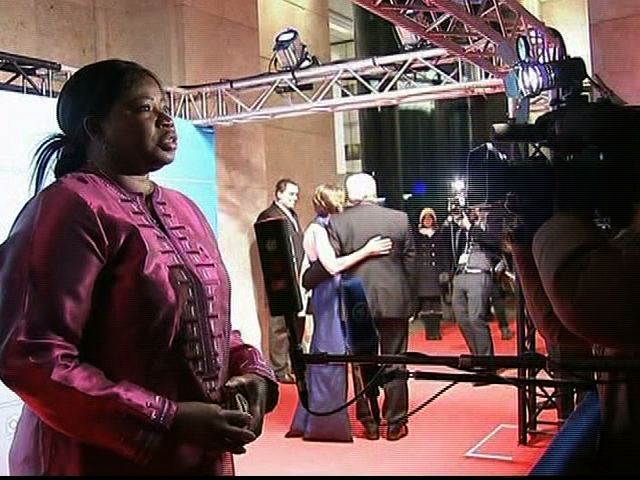
All eyes are on Fatou Bensouda, a Gambian national who was elected in December 2011 to serve as the first African prosecutor for the I.C.C. Initially, Bensouda was overwhelmingly supported by African countries, but now critics say the court is biased because the majority of its investigations and indictments are seemingly centered on Africa and its leaders. But the chief prosecutor is not taking the charges lightly.
Africans are beginning to pay more attention to the ICC’s interest in their continent, according to David Bosco, an assistant professor at American university’s school of international service in Washington, dc. Bosco authored the book International Criminal Court, “Rough Justice” and he recently penned an article in the Washington post questioning “why the ICC is picking only on Africa”.
“Well it is very striking that were now more than a decade into the ICC’s operations and every investigation and every person indicted has been African. And that doesn’t mean that these conflicts that the ICC has investigated shouldn’t be investigated. But i think many African officials and leaders are wondering why this court, which is international has only focused on Africa, to this point.
The election of Uhuru Kenyatta as Kenya’s president and William Ruto as vice president in March, is yet another test for the international criminal court. Many Kenyans are questioning the validity of Uhuru’s case at The Hague. And his lawyers want the charges of crimes against humanity against him dropped, after the ICC case against former Kenyan ambassador Francis Muthaura collapsed, after a key witness was discredited.
But prosecutors say President Kenyatta has to answer for allegedly orchestrating violence after the 2007 election, when some 1200 people were killed. Like many critics, Bosco notes that the court’s decision to put President Kenyatta on trial is likely to have far-reaching consequences in Kenya.
“It’s going to be very interesting to watch now with Kenya where an indicted individual, two individuals, the president and the vice president have been indicted and they have now been elected. There’s a question with what’s going to happen with their trials, whether they are going to participate in their trials. But it seems very possible that the Kenya situation is going to accentuate that already existing tension in-between the court and African governments.”
Some analysts say President Kenyatta’s case is an important test for the heavily criticized Hague court, because he could become the first head of state to be actively defending charges at the ICC.
Despite all the condemnation, the ICC has managed to secure one conviction. Last July, the court jailed Congolese warlord Thomas Lubanga Dyilo for 14 years for recruiting child soldiers under the age of 15 and forcing them to fight in a war in the democratic republic of Congo in 2002 and 2003.
Dyilo’s co-accused Bosco Natanga also known as “the terminator,” evaded arrest on war crimes charges for more than seven years before unexpectedly giving himself up to diplomats at the U.S. Embassy in Rwanda last month. Ntaganda is accused of murder, rape and other crimes over a 15-year-period of fighting in Rwandan-backed rebellions in eastern DRC.
“It seems that what happened is the m23 fractured from within, one faction of the group wanted to turn him over, he didn’t feel comfortable obviously seeking refuge with the Rwandan government. And so he seems to have thought that the ICC was his best option. But it’s an important case; it will be a difficult trial i think. It will be a long trial, often evidence in these cases is difficult and they’ll be a lot of disputes about what evidences is used.”
Ntaganda’s appearance in court is a much-needed success story for the ICC. With many of the court’s suspects, including Ugandan warlord Joseph Kony and Sudanese president Omar Al-Bashir, still-at large– and beyond its reach, Ntaganda’s arrival is especially welcome to prosecutors and activists.
The U.S. Congress is keeping a close eye on the situation in Mali. Representative Karen Bass, (D-CA) Member of the House Foreign Affairs Sub Committee on Africa, was part of a U.S delegation that recently traveled to Mali and other Africa countries.
VOA’s Paul Ndiho recently talked with Representative Bass about the challenges faced by the interim government in Mali and potential solutions.
The latest peace agreement signed in Ethiopia offers the democratic republic of Congo a fresh and much needed glimmer of hope, but the country still faces many challenges.
U.S Representative Karen Bass was asked about the situation in the Democratic Republic of Congo and her hopes for Congolese citizens, suffering from two decades of violence.
A clinic in London is treating more than 100 patients a year, who are receiving counseling. A study last year by the University of Chicago suggested social media addiction can be dangerous.
Earlier this year, a study found that social media is more addicting than alcohol and cigarettes. Millions of people around the world are getting addicted social networking websites such as Facebook, twitter, and Instargram. Users can join networks organized by city, workplace, school and region to connect and interact with other people. Users can also add friends and send them messages, and update their personal profiles to notify friends about themselves.
Despite the obsession, some researchers are suggesting that these social networking sites are very addictive. Gemini Adams is a self-confessed addict. She says its drugs, not alcohol, but Facebook and she uses Yoga is part of digital detox. She won’t use Facebook now for more than half an hour at a time – and once a week she’ll go 24 hours straight without internet altogether.
“I’d signed up to every aspect of Facebook and was utilizing every sort of part of it. Checking in wherever I went and I remember just feeling really kind of revolting and just, you know, gnarled up inside physically because I hadn’t been exercising. And I was just in this position, hunched over a computer and you know my eyesight was worse.”
Despite these concerns, more and more people are flocking to facebook to catch up with old friends make new ones, build up their social networking skills and even shopping.
Social media is now a recognized addiction. According to a study published last year by the University of Chicago found it can even be more addictive than cigarettes and alcohol. Research shows likes and re-tweets give users a burst of the addictive neurotransmitter dopamine. But a lack of endorsements can provoke jealousy and anxiety. So how much is too much?
“Psychiatrists say the alarm bells start to ring if you’re looking at Facebook, Twitter and all the other Social Media Networks more than 10 times a day. And if that amounts to more than 5 hours, then you might have a problem or see a doctor.”
You’d be surprised to know what people use the social networks for and how much time they spend on it.
Critics say no one is more addicted to social media right now than the media. But some media executives could not disagree more.
Consultant psychiatrist Dr. Richard Graham treats around 100 social media addicts a year at this clinic in London. His patients range from young to old people.
“They start to miss or avoid doing the necessary things in life, even at a fundamental level of self-care. They delay eating or avoid eating or drinking, delay sleep, miss meetings or delay getting into work or college. There are certainly some young people easily passing 9, 10 hours a day using social media.”
In today’s increasingly connected world, switching off may be a lot harder than it sounds. A study commissioned by ESET, almost half of internet users worldwide connect to the web using portable devices as the primary connection device: laptops, ipads, smart phones, and tablets. And that this is indicative of the demand for Wi-Fi hotspots and the need to stay connected at all times.
Technology experts warn that staying connected might be convenient, but users should guard against criminals prowling networks or some people using social media to saying the wrong things. And for addicts — treatment begins with complete abstinence. And for avid users, the sky is the limit.

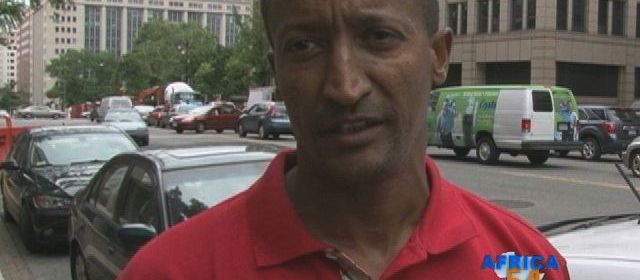
 Africa 54 Video Journalist Paul Ndiho recently went behind the scenes to see for himself what it takes to juggle through traffic as cab driver in one of the busiest cities in the world. And he profiles Assegid Ggossa, a professional I .T Specialist and a part time taxi driver who in his own words tells us the secrets behind the booming industry.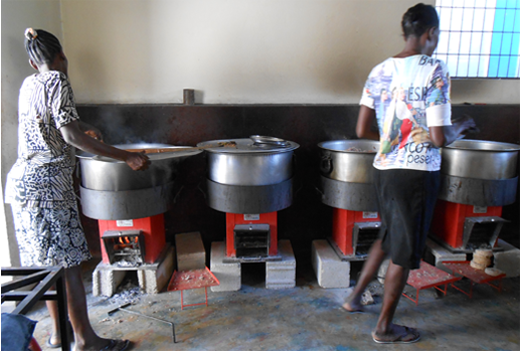









 Ndiho Media,LLC.