Young African Artists Use Their Work To Address Social Issues

By Paul Ndiho
April 5, 2012
The second annual international festival of drawing known as “pencil lead” brings together artists and cartoonists from Benin, France, Ivory Coast and Togo. The workshop aims to promote various forms of drawing and encourages young artists to use their work to help address social issues.
Emmanuelle Gabled, is working on her latest drawing at the French institute in Lome Togo. The 35-year-old is a cartoonist and designer who works for the country’s weekly ‘Pipo magazine’, and likes to use subjects around her to bring out ideas in her drawings and caricatures.


Emmanuelle says she would like to see more upcoming artists joining the field because, compared to other professions, it is not getting enough attention.
“I think it’s great, it’s good for all young people and for those who think that women can’t draw or those who think they are useless at drawing; they should know it’s for everyone.”
The festival brought together artists from West Africa and Europe to share ideas, and showcase some of their best work. The event attracted both amateur and professional artists; art work exhibited included graffiti, music, comics and paintings. Washington-based artist Kristopher Mosby says that artists from this region of West Africa need to keep studying, drawing and sketching to perfect their skills.
“It takes certain energy and dedication that the youth have and i remember being young and having that kind of drive, that kind passion and it’s good to see it amongst them because they are only going to get better at their craft. Even the ones that are very good right now would be even better three, four, five, six years from now and that great. It’s really wonderful to see that.”
Many participants were particularly taken by classes in caricature drawing and spent time exploring techniques.
Donald Aklassou an editorial cartoonist says cartoons appeal more to readers in Togo because they summarize ideas well.
“Editorial cartoons can easily express what we mean, given that many readers are lazy, they do not read, cartoons are short, they can have what they have on one or two pages in a drawing. i think in fact that the newspaper cartoon has its place in the world press.”
Organizers also want to bring about 30-thousand students across the country to their workshops to help nurture talent and hold courses on artistic entrepreneurship.
“I really think Togolese artists are very talented but that talent must be accompanied and promoted in order for them to make a living. So what they have here is fabulous, it’s very interesting.”
Kristopher Mosby also stresses the need for African artists to do more to promote their work abroad, take advantage of internet and eliminate the middle-men because they don’t need big companies to sell their art work.
“Well, just get your name out there, it’s a competitive field like anything else and to make money from it that’s a challenge. A lot of people nowadays go independently, which is a little bit of an advantage. Twenty, thirty years ago, you really had to be with some type of a company. Maybe a big company or a small company because it was very difficult financially to go at it alone whereas nowadays with the internet you can do web publishing, or you can do print on demand and you can literary just sell it yourself.”
The workshop organizers emphasized that cartoonists should be respected, because they play a key role in forming public opinion, bringing about desired change and promoting peace.

Young African Artists Use Their Work To Address Social Issues

By Paul Ndiho
April 5, 2012
The second annual international festival of drawing known as “pencil lead” brings together artists and cartoonists from Benin, France, Ivory Coast and Togo. The workshop aims to promote various forms of drawing and encourages young artists to use their work to help address social issues.
Emmanuelle Gabled, is working on her latest drawing at the French institute in Lome Togo. The 35-year-old is a cartoonist and designer who works for the country’s weekly ‘Pipo magazine’, and likes to use subjects around her to bring out ideas in her drawings and caricatures.


Emmanuelle says she would like to see more upcoming artists joining the field because, compared to other professions, it is not getting enough attention.
“I think it’s great, it’s good for all young people and for those who think that women can’t draw or those who think they are useless at drawing; they should know it’s for everyone.”
The festival brought together artists from West Africa and Europe to share ideas, and showcase some of their best work. The event attracted both amateur and professional artists; art work exhibited included graffiti, music, comics and paintings. Washington-based artist Kristopher Mosby says that artists from this region of West Africa need to keep studying, drawing and sketching to perfect their skills.
“It takes certain energy and dedication that the youth have and i remember being young and having that kind of drive, that kind passion and it’s good to see it amongst them because they are only going to get better at their craft. Even the ones that are very good right now would be even better three, four, five, six years from now and that great. It’s really wonderful to see that.”
Many participants were particularly taken by classes in caricature drawing and spent time exploring techniques.
Donald Aklassou an editorial cartoonist says cartoons appeal more to readers in Togo because they summarize ideas well.
“Editorial cartoons can easily express what we mean, given that many readers are lazy, they do not read, cartoons are short, they can have what they have on one or two pages in a drawing. i think in fact that the newspaper cartoon has its place in the world press.”
Organizers also want to bring about 30-thousand students across the country to their workshops to help nurture talent and hold courses on artistic entrepreneurship.
“I really think Togolese artists are very talented but that talent must be accompanied and promoted in order for them to make a living. So what they have here is fabulous, it’s very interesting.”
Kristopher Mosby also stresses the need for African artists to do more to promote their work abroad, take advantage of internet and eliminate the middle-men because they don’t need big companies to sell their art work.
“Well, just get your name out there, it’s a competitive field like anything else and to make money from it that’s a challenge. A lot of people nowadays go independently, which is a little bit of an advantage. Twenty, thirty years ago, you really had to be with some type of a company. Maybe a big company or a small company because it was very difficult financially to go at it alone whereas nowadays with the internet you can do web publishing, or you can do print on demand and you can literary just sell it yourself.”
The workshop organizers emphasized that cartoonists should be respected, because they play a key role in forming public opinion, bringing about desired change and promoting peace.

Managing Africa’s Electronic Waste

By Paul Ndiho
March 29, 2012
Hungry for information technology, but with a limited capacity to manufacture it, Africa has increasingly become the world’s latest destination for obsolete electronic equipment. Several African nations and a bevy of groups have agreed on a set of actions to better manage the electronic waste.
Old mobile phones, televisions, computers and refrigerators are among the most common kinds of e-waste worldwide– and in Africa the waste is piling up fast. Thousands of vendors are crowding into bustling markets across the continent where imported used electronics like computers, fax machines, cell phones are repaired and sold. But beyond the thriving storefronts and the mounds of refurbished wares, a darker picture is emerging. Up to 75 percent of the old electronics shipped to Africa are beyond repair.
Nigerian environmentalist Miranda Amachree says, Africans are increasingly responsible for a large amount of this waste, which can release harmful substances such as mercury and lead into the environment that damage human health.
“Electronic-waste is one of the highest volumes of waste streams we have in Nigeria because of the high use of telephone handsets, so many people have more than one handset.”

Many African countries also import e-waste. Together with rising domestic demand this means that the continent could generate more e-waste than Europe by 2017.
“Nigeria allows importation of used electrical and electronic equipment. Some of them they come and they are almost at the end of their life, so it becomes a problem for us in the country.”
To address the problems of e-waste, many experts and nations are focusing on the economic potential of e-waste to the African economy. Katharina Kummer Peiry, executive secretary of the Basel convention, UNEP observes that old electronics contain precious materials such as gold, silver and other rare earth metals.
“One tone of mobile phones, obsolete mobile phones that tone of mobile phones contains roughly 350 grams of gold… “If you consider the value of these materials, there you have the economic opportunities.”
During the first-ever pan-African forum on e-waste, held in Nairobi, Kenya last week, a call for action on Electronic-waste was issued underlining the possible economic benefits of e-waste.
“We at UNEP would like to see in this partnership that has been involving with more and more representatives from governments, but also from the private sector, from the manufacturers but also those who perhaps can be pioneers in bringing new technologies to processing that waste – really being a partnership that speaks to this notion of green economy where you turn a problem into an opportunity.”
The agreement also prioritized need to improve the collection, transport and storage of e-waste in Africa, since most it currently takes place informally at dumpsites or landfills.
A move towards a formalized sector, using international standards would limit risks to the environment and the health of people working at the dumpsites.
“Let’s start to see e-waste move away from informal recycling practices and to proper remanufacturing and to proper methodologies for recycling with the right kind of standards which is obviously protecting health and protecting the environment.”
Representatives from 18 African states, and multiple stakeholders issued a “call to action” that outlines 8 priority areas to improve the environmentally-sound management of this waste stream in Africa. They recognized that safe and sustainable recycling of e-waste provides an opportunity for green jobs and poverty reduction. Forum participants also noted the importance of having awareness-raising activities on environmental and health hazards linked to the unsound management of Electronic-waste.

Managing Africa’s Electronic Waste

By Paul Ndiho
March 29, 2012
Hungry for information technology, but with a limited capacity to manufacture it, Africa has increasingly become the world’s latest destination for obsolete electronic equipment. Several African nations and a bevy of groups have agreed on a set of actions to better manage the electronic waste.
Old mobile phones, televisions, computers and refrigerators are among the most common kinds of e-waste worldwide– and in Africa the waste is piling up fast. Thousands of vendors are crowding into bustling markets across the continent where imported used electronics like computers, fax machines, cell phones are repaired and sold. But beyond the thriving storefronts and the mounds of refurbished wares, a darker picture is emerging. Up to 75 percent of the old electronics shipped to Africa are beyond repair.
Nigerian environmentalist Miranda Amachree says, Africans are increasingly responsible for a large amount of this waste, which can release harmful substances such as mercury and lead into the environment that damage human health.
“Electronic-waste is one of the highest volumes of waste streams we have in Nigeria because of the high use of telephone handsets, so many people have more than one handset.”

Many African countries also import e-waste. Together with rising domestic demand this means that the continent could generate more e-waste than Europe by 2017.
“Nigeria allows importation of used electrical and electronic equipment. Some of them they come and they are almost at the end of their life, so it becomes a problem for us in the country.”
To address the problems of e-waste, many experts and nations are focusing on the economic potential of e-waste to the African economy. Katharina Kummer Peiry, executive secretary of the Basel convention, UNEP observes that old electronics contain precious materials such as gold, silver and other rare earth metals.
“One tone of mobile phones, obsolete mobile phones that tone of mobile phones contains roughly 350 grams of gold… “If you consider the value of these materials, there you have the economic opportunities.”
During the first-ever pan-African forum on e-waste, held in Nairobi, Kenya last week, a call for action on Electronic-waste was issued underlining the possible economic benefits of e-waste.
“We at UNEP would like to see in this partnership that has been involving with more and more representatives from governments, but also from the private sector, from the manufacturers but also those who perhaps can be pioneers in bringing new technologies to processing that waste – really being a partnership that speaks to this notion of green economy where you turn a problem into an opportunity.”
The agreement also prioritized need to improve the collection, transport and storage of e-waste in Africa, since most it currently takes place informally at dumpsites or landfills.
A move towards a formalized sector, using international standards would limit risks to the environment and the health of people working at the dumpsites.
“Let’s start to see e-waste move away from informal recycling practices and to proper remanufacturing and to proper methodologies for recycling with the right kind of standards which is obviously protecting health and protecting the environment.”
Representatives from 18 African states, and multiple stakeholders issued a “call to action” that outlines 8 priority areas to improve the environmentally-sound management of this waste stream in Africa. They recognized that safe and sustainable recycling of e-waste provides an opportunity for green jobs and poverty reduction. Forum participants also noted the importance of having awareness-raising activities on environmental and health hazards linked to the unsound management of Electronic-waste.

Boko Haram A Threat To U.S National Security

By Paul Ndiho

March 19, 2012

Insecurity in Nigeria’s Oil-producing Niger Delta region has long dominated American concerns about the stability of the West African nation. Now, the emergence of the Al-Qaeda linked Islamic militant group Boko Haram, in the predominantly Muslim North, is sparking even more concern in Washington.
Since 2009, the Islamist sect known as Boko Haram has escalated its attacks across Nigeria, targeting the country’s security forces, politicians and civilians – both Muslims and Christians.
Initially, Boko Haram was not taken seriously by some in the international community even though U.S intelligence and the United Nations confirmed their links to Al-Qaeda. When Boko Haram bombed the United Nations headquarters in Abuja last august, Washington began to pay more attention to this emerging threat to U.S. national security. In November 2011, the sub-committee on counterterrorism and intelligence of the house homeland security committee, chaired by Congressman Patrick Meehan, released a report on Boko Haram’s threat to America.

“Boko Haram’s repeated displays of brutality, their intent to committee terror attacks against lists of targets and their expanding relationships with Al-Qaeda affiliates in the country are of strategic significance to the United States and are an enormous counter terrorism and intelligence challenge.”
Meehan says Boko Haram has evolved from a locally focused group with machetes– to a transitional and trans-national organization capable of conducting coordinated truck bombings against western targets.
“Their ambition, body counts, and targets continue to expand and I’m deeply concerned that Boko Haram maybe targeting American interests in Nigeria at some time in the near future.”
Over the last three years, areas in northern Nigeria have endured sustained attacks by Boko Haram– prompting the government to deploy its military– and institute curfews. Both critics and sympathizers have accused the Nigerian government of not doing enough to halt the violence and initiate a development strategy for the region. Ricardo Rene larémont, professor of political science and sociology, at the state university of new York-Binghamton, believes that the government needs to do more for the people in the north.

“The problem is that the north does not have any development whatsoever. Either educationally, or because of the luck of an electrical greed you know… when i was spending time in Kano, there was no power. You have the national power company called northern electric power administration (NEPA) – or locally known as (no electric power anytime). In the north everyone is off the electrical power greed. But there are parts of Nigeria that have particularly made considerable progress over the last ten years but the north has not been part of that.”
Some analysts say the bombing campaign has raised fears that Boko haram is trying to ignite a sectarian conflict in Nigeria– which is evenly divided between Christians and Muslims. Elders from Nigeria’s north met in Abuja earlier this month, to discuss the regional insecurity that has claimed hundreds of lives and destroyed property worth millions of dollars.

Boko Haram A Threat To U.S National Security

By Paul Ndiho

March 19, 2012

Insecurity in Nigeria’s Oil-producing Niger Delta region has long dominated American concerns about the stability of the West African nation. Now, the emergence of the Al-Qaeda linked Islamic militant group Boko Haram, in the predominantly Muslim North, is sparking even more concern in Washington.
Since 2009, the Islamist sect known as Boko Haram has escalated its attacks across Nigeria, targeting the country’s security forces, politicians and civilians – both Muslims and Christians.
Initially, Boko Haram was not taken seriously by some in the international community even though U.S intelligence and the United Nations confirmed their links to Al-Qaeda. When Boko Haram bombed the United Nations headquarters in Abuja last august, Washington began to pay more attention to this emerging threat to U.S. national security. In November 2011, the sub-committee on counterterrorism and intelligence of the house homeland security committee, chaired by Congressman Patrick Meehan, released a report on Boko Haram’s threat to America.

“Boko Haram’s repeated displays of brutality, their intent to committee terror attacks against lists of targets and their expanding relationships with Al-Qaeda affiliates in the country are of strategic significance to the United States and are an enormous counter terrorism and intelligence challenge.”
Meehan says Boko Haram has evolved from a locally focused group with machetes– to a transitional and trans-national organization capable of conducting coordinated truck bombings against western targets.
“Their ambition, body counts, and targets continue to expand and I’m deeply concerned that Boko Haram maybe targeting American interests in Nigeria at some time in the near future.”
Over the last three years, areas in northern Nigeria have endured sustained attacks by Boko Haram– prompting the government to deploy its military– and institute curfews. Both critics and sympathizers have accused the Nigerian government of not doing enough to halt the violence and initiate a development strategy for the region. Ricardo Rene larémont, professor of political science and sociology, at the state university of new York-Binghamton, believes that the government needs to do more for the people in the north.

“The problem is that the north does not have any development whatsoever. Either educationally, or because of the luck of an electrical greed you know… when i was spending time in Kano, there was no power. You have the national power company called northern electric power administration (NEPA) – or locally known as (no electric power anytime). In the north everyone is off the electrical power greed. But there are parts of Nigeria that have particularly made considerable progress over the last ten years but the north has not been part of that.”
Some analysts say the bombing campaign has raised fears that Boko haram is trying to ignite a sectarian conflict in Nigeria– which is evenly divided between Christians and Muslims. Elders from Nigeria’s north met in Abuja earlier this month, to discuss the regional insecurity that has claimed hundreds of lives and destroyed property worth millions of dollars.

Paul Ndiho Speaks Out Against The “Kony 2012” Youtube Video

An international aid group called “Invisible Children” is defending a video it produced that vividly documents the crimes of Ugandan fugitive warlord Joseph Kony and his Lord’s Resistance Army, responsible for decades of atrocities and the use of child soldiers. Will the “Kony 2012” campaign help or hurt efforts to improve life in Northern Uganda?
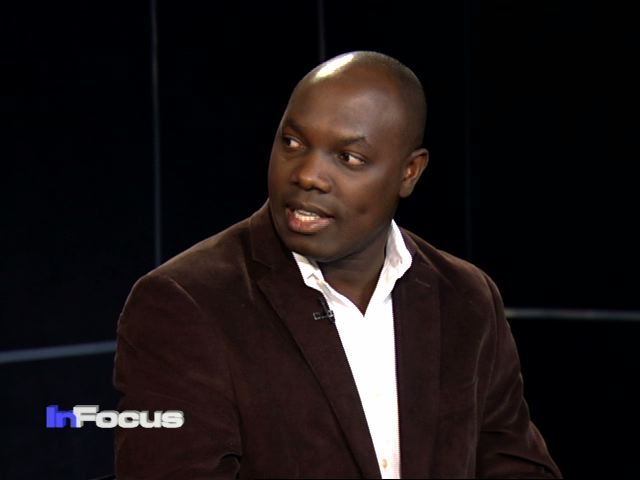
Paul Ndiho, VOA ‘s TV to Africa and Catherine Bond, a Nairobi based Journalist; Writing a book on the origins of the Lord’s Resistance Army analyze the plusses and minuses of “Kony 2012” style activism.

Paul Ndiho Speaks Out Against The "Kony 2012" Youtube Video

An international aid group called “Invisible Children” is defending a video it produced that vividly documents the crimes of Ugandan fugitive warlord Joseph Kony and his Lord’s Resistance Army, responsible for decades of atrocities and the use of child soldiers. Will the “Kony 2012” campaign help or hurt efforts to improve life in Northern Uganda?
Paul Ndiho, VOA ‘s TV to Africa and Catherine Bond, a Nairobi based Journalist; Writing a book on the origins of the Lord’s Resistance Army analyze the plusses and minuses of “Kony 2012” style activism.

Paul Ndiho Speaks Out Against The “Kony 2012” Youtube Video

An international aid group called “Invisible Children” is defending a video it produced that vividly documents the crimes of Ugandan fugitive warlord Joseph Kony and his Lord’s Resistance Army, responsible for decades of atrocities and the use of child soldiers. Will the “Kony 2012” campaign help or hurt efforts to improve life in Northern Uganda?
Paul Ndiho, VOA ‘s TV to Africa and Catherine Bond, a Nairobi based Journalist; Writing a book on the origins of the Lord’s Resistance Army analyze the plusses and minuses of “Kony 2012” style activism.

Paul Ndiho Speaks Out Against The "Kony 2012" Youtube Video

An international aid group called “Invisible Children” is defending a video it produced that vividly documents the crimes of Ugandan fugitive warlord Joseph Kony and his Lord’s Resistance Army, responsible for decades of atrocities and the use of child soldiers. Will the “Kony 2012” campaign help or hurt efforts to improve life in Northern Uganda?
Paul Ndiho, VOA ‘s TV to Africa and Catherine Bond, a Nairobi based Journalist; Writing a book on the origins of the Lord’s Resistance Army analyze the plusses and minuses of “Kony 2012” style activism.

« Older Entries Recent Entries »