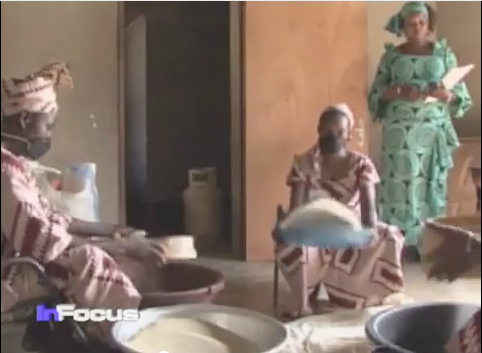
Opportunity International providing small loans to businesses in DRC

By Paul Ndiho
November 16, 2011
Opportunity International provides financial products and strategies to millions who are working their way out of poverty.
In the Democratic Republic of Congo there are providing small loans to emerging entrepreneurs to start or expand small businesses. And over the years, the microfinance sector has expanded its financial service offerings to better meet client needs.
I recently talked with Gilbert Lagaillarde, Chief Executive Officer of Opportunity International – DRC.

Opportunity International providing small loans to businesses in DRC

By Paul Ndiho
November 16, 2011
Opportunity International provides financial products and strategies to millions who are working their way out of poverty.
In the Democratic Republic of Congo there are providing small loans to emerging entrepreneurs to start or expand small businesses. And over the years, the microfinance sector has expanded its financial service offerings to better meet client needs.
I recently talked with Gilbert Lagaillarde, Chief Executive Officer of Opportunity International – DRC.

Hotel Rwanda Hero Awarded The Tom Lantos 2011 Human Rights Prize

By Paul Ndiho
November 16, 2011
The Lantos Foundation for Human Rights and Justice today awarded its 2011 prize for human rights. It was established in 2009 to honor heroes of the human rights movement. It is awarded annually to an individual or organization that best exemplifies the Foundation’s mission for the world.
Throughout his tenure in Congress, Tom Lantos was the leading advocate for human rights, calling attention to thousands of individual cases of torture, denial of rights, and abuse. Founder and Co-Chairman of the bipartisan Congressional Human Rights Caucus, Lantos was a voice for the rights of persecuted racial, religious, and ethnic minorities worldwide. He died in 2008 at age 80. This year, the Lantos Foundation is honoring Paul Rusesabagina, widely hailed as a hero of the Rwandan genocide. An estimated 800,000 Rwandans were killed in 1994 after extremists in the majority Hutu population turned on the Tutsi minority and moderate Hutus. A luxury hotel manager, Rusesabagina provided shelter to more than 12-hundred Hutus and Tutsis, saving them from certain death. His efforts are chronicled in the 2004 award winning film, “Hotel Rwanda,” and his autobiography, “An Ordinary Man.”
In 2005, then-U.S. President George W. Bush awarded to Rusesabagina the Presidential Medal of Freedom, the United States’ highest civil award.
“He was a hotel manager in his native Rwanda when the horror began to unfold in 1994. The hotel soon became heaven amidst carnage, with Paul, his family and more than 1000 other men women and children inside the compound. Without that shelter every one of them would almost surely been killed during those weeks and months of merciless terror.”


I spoke to Paul Rusesabagina recently, and he said he fears for his life because of threats from President Paul Kigame’s government. Rusesabagina and Kagame don’t have kind words for each other, and they challenge each other’s actions during the genocide:
“I never told you anything for ins-tense threats from the Rwandan Government… I noticed that from the very day Hotel Rwanda came out, that was in September 2004. President Kagame, the president of Rwanda himself was the only person who felt very much threatened… Because he thought that Rwanda had one person and only he was supposed to be called a hero. Because he had talked to the international community, he had friends all over the world, he had made each and every one of them understand that he was the savior of the Rwandan nation, he had stopped the genocide and this was his message.”
In 2006, Rwandan President Paul Kagame, in a VOA press conference, played down Rusesabagina’s heroism. Kagame said that Rusesabagina’s story of saving hundreds of people is misleading.
“He claims to have saved people in hotel Millcoline. One he had no possibility of saving them in the first place and secondly including our prime minister of Rwanda who was also there, including the lady here Senator Ordate – she was there in fact and she is the only one who can maybe say she was saved by Rusesabagina’s on the basis that they knew each other. Because while others were freeing going to the hotel to seek refuge, he contacted her and brought her to the hotel to seek refugee with others who were there.”
Paul Rusesabagina, dubbed by some as the “Oskar Schindler of Africa,” questions Paul Kagame’s claims that Kagame stopped genocidal killing in Rwanda.
Oskar Schindler was a German Industrialist who outwitted Hitler and the Nazis to save more than 1200 Jews from the gas chambers by employing them to work for him in his factories during World War II.
“My whole question is this… Is President Kagame apart of the genocide solution or the genocide problem? Kagame has been a part of the genocide problem.”
Paul Rusesabagina, winner of the Lantos Foundation’s 2011 award for Human Rights, the annual prize that commemorates the late Congressman Tom Lantos, the only Holocaust survivor ever elected to the U.S. Congress. Former recipients of the Lantos Prize include another Holocaust survivor, Nobel Laureate and writer Elie Wiesel, and His Holiness the Dalai Lama, who has dedicated his life to fighting for equality and basic human rights in Tibet.

Hotel Rwanda Hero Awarded The Tom Lantos 2011 Human Rights Prize

By Paul Ndiho
November 16, 2011
The Lantos Foundation for Human Rights and Justice today awarded its 2011 prize for human rights. It was established in 2009 to honor heroes of the human rights movement. It is awarded annually to an individual or organization that best exemplifies the Foundation’s mission for the world.
Throughout his tenure in Congress, Tom Lantos was the leading advocate for human rights, calling attention to thousands of individual cases of torture, denial of rights, and abuse. Founder and Co-Chairman of the bipartisan Congressional Human Rights Caucus, Lantos was a voice for the rights of persecuted racial, religious, and ethnic minorities worldwide. He died in 2008 at age 80. This year, the Lantos Foundation is honoring Paul Rusesabagina, widely hailed as a hero of the Rwandan genocide. An estimated 800,000 Rwandans were killed in 1994 after extremists in the majority Hutu population turned on the Tutsi minority and moderate Hutus. A luxury hotel manager, Rusesabagina provided shelter to more than 12-hundred Hutus and Tutsis, saving them from certain death. His efforts are chronicled in the 2004 award winning film, “Hotel Rwanda,” and his autobiography, “An Ordinary Man.”
In 2005, then-U.S. President George W. Bush awarded to Rusesabagina the Presidential Medal of Freedom, the United States’ highest civil award.
“He was a hotel manager in his native Rwanda when the horror began to unfold in 1994. The hotel soon became heaven amidst carnage, with Paul, his family and more than 1000 other men women and children inside the compound. Without that shelter every one of them would almost surely been killed during those weeks and months of merciless terror.”


I spoke to Paul Rusesabagina recently, and he said he fears for his life because of threats from President Paul Kigame’s government. Rusesabagina and Kagame don’t have kind words for each other, and they challenge each other’s actions during the genocide:
“I never told you anything for ins-tense threats from the Rwandan Government… I noticed that from the very day Hotel Rwanda came out, that was in September 2004. President Kagame, the president of Rwanda himself was the only person who felt very much threatened… Because he thought that Rwanda had one person and only he was supposed to be called a hero. Because he had talked to the international community, he had friends all over the world, he had made each and every one of them understand that he was the savior of the Rwandan nation, he had stopped the genocide and this was his message.”
In 2006, Rwandan President Paul Kagame, in a VOA press conference, played down Rusesabagina’s heroism. Kagame said that Rusesabagina’s story of saving hundreds of people is misleading.
“He claims to have saved people in hotel Millcoline. One he had no possibility of saving them in the first place and secondly including our prime minister of Rwanda who was also there, including the lady here Senator Ordate – she was there in fact and she is the only one who can maybe say she was saved by Rusesabagina’s on the basis that they knew each other. Because while others were freeing going to the hotel to seek refuge, he contacted her and brought her to the hotel to seek refugee with others who were there.”
Paul Rusesabagina, dubbed by some as the “Oskar Schindler of Africa,” questions Paul Kagame’s claims that Kagame stopped genocidal killing in Rwanda.
Oskar Schindler was a German Industrialist who outwitted Hitler and the Nazis to save more than 1200 Jews from the gas chambers by employing them to work for him in his factories during World War II.
“My whole question is this… Is President Kagame apart of the genocide solution or the genocide problem? Kagame has been a part of the genocide problem.”
Paul Rusesabagina, winner of the Lantos Foundation’s 2011 award for Human Rights, the annual prize that commemorates the late Congressman Tom Lantos, the only Holocaust survivor ever elected to the U.S. Congress. Former recipients of the Lantos Prize include another Holocaust survivor, Nobel Laureate and writer Elie Wiesel, and His Holiness the Dalai Lama, who has dedicated his life to fighting for equality and basic human rights in Tibet.

Rights Activists warn that poll in DRC could spark off new violence

By Paul Ndiho
November 16, 2011
Tensions are high in the Democratic Republic of Congo ahead of this month’s presidential election, with several people injured after supporters of the main opposition party clashed with supporters of incumbent President Joseph Kabila, during a rally earlier this month.
The national elections are due to be held on 28 November 2011 and will mark only the second time since its independence in 1960 that the DRC will be holding democratic elections. But human rights activists warn that the poll could spark off new violence. Ravina Shamdasani, is the Spokesperson, Office of the High Commissioner for Human Rights.
“We are very worried about security in the upcoming election and this is why we are sounding an alarm bell at this point. To try and prevent the kind of violence that accompanied the previous election in 2006.”
Incumbent president Joseph Kabila is favored to be re-elected. But Kabila facing stiff competition from tweleve other candidates Human rights activist Yussa Bunzigiye Prosper, says the opposition is prepared to take their political struggle to the streets.
“This time around the guy who is the leading opponent of Kabila has no blood, has no crime on his hands, he has never used army, he has never been a rebel, this guy he has been an advocate of people’s rights and good governors for the past 30 years… he did it during Mobutu time. The only difference is that during Mobutu’s time is he was only advocating. But this time around the world environment is different; he has been given the chance to go to the battle… So what does that mean? It means that when the elections are over and it’s clear that Kabila has rigged the election, Tshisekedi Is going to run a parallel administration from the street.”

The human rights report released this week notes that the situation in the East of the country is of particular concern. Political parties have reportedly been targeted and their members detained, ill-treated and threatened. Most of the violations committed are said to involve elements of the Congolese National Police, or the National Intelligence Services.
“We’ve seen people destroy voting cards of citizens of the DRC so that they will not be able to vote. We’ve seen police prevent demonstrations from taking place; prevent press conferences from taking place from opposition political leaders. This has to stop and the Government has to send a clear message that there will be accountability for such violations. According to Ravina Shamdasani, Spokesperson, Office of the High Commissioner for Human Rights.
Violations have targeted the Union for Democracy and Social Progress (UDPS) and the Union pour la Nation Congolaise (UNC) parties.
President Kabila faces a struggle to hold onto the eastern provinces that sealed his victory in 2006, where voters now blame Kabila for failing to provide peace and security.
The Human Rights report calls upon the international community to step up efforts to train security forces and judicial officers, and to promote monitored, free and fair elections.
In Katanga Province, Governor Moise Katumbi supports the Kabila government, which he says has made great strides in the troubled east in just one term.
“In my view, we need to start a system of rotation. What has ruined Africa today are presidents who want to stay in power indefinitely or politicians or governors who want to stay in office for life. Thankfully, our constitution here only allows for two terms in office.”
But human rights activists say that President Kabila has failed to deliver for Congo.
“There is no peace in the Kivu region I come from there … One of the biggest challenges Kabila has, is that he has failed to live up to the standards of his father.”
Kabila promises that he will improve road infrastructure and higher education. The president’s support base is in the east of the country, where he was born, and an area rich in minerals. Congo has about 4 percent of the world’s copper reserves, about half its cobalt and is the largest supplier of tin ore in Africa.

Rights Activists warn that poll in DRC could spark off new violence

By Paul Ndiho
November 16, 2011
Tensions are high in the Democratic Republic of Congo ahead of this month’s presidential election, with several people injured after supporters of the main opposition party clashed with supporters of incumbent President Joseph Kabila, during a rally earlier this month.
The national elections are due to be held on 28 November 2011 and will mark only the second time since its independence in 1960 that the DRC will be holding democratic elections. But human rights activists warn that the poll could spark off new violence. Ravina Shamdasani, is the Spokesperson, Office of the High Commissioner for Human Rights.
“We are very worried about security in the upcoming election and this is why we are sounding an alarm bell at this point. To try and prevent the kind of violence that accompanied the previous election in 2006.”
Incumbent president Joseph Kabila is favored to be re-elected. But Kabila facing stiff competition from tweleve other candidates Human rights activist Yussa Bunzigiye Prosper, says the opposition is prepared to take their political struggle to the streets.
“This time around the guy who is the leading opponent of Kabila has no blood, has no crime on his hands, he has never used army, he has never been a rebel, this guy he has been an advocate of people’s rights and good governors for the past 30 years… he did it during Mobutu time. The only difference is that during Mobutu’s time is he was only advocating. But this time around the world environment is different; he has been given the chance to go to the battle… So what does that mean? It means that when the elections are over and it’s clear that Kabila has rigged the election, Tshisekedi Is going to run a parallel administration from the street.”

The human rights report released this week notes that the situation in the East of the country is of particular concern. Political parties have reportedly been targeted and their members detained, ill-treated and threatened. Most of the violations committed are said to involve elements of the Congolese National Police, or the National Intelligence Services.
“We’ve seen people destroy voting cards of citizens of the DRC so that they will not be able to vote. We’ve seen police prevent demonstrations from taking place; prevent press conferences from taking place from opposition political leaders. This has to stop and the Government has to send a clear message that there will be accountability for such violations. According to Ravina Shamdasani, Spokesperson, Office of the High Commissioner for Human Rights.
Violations have targeted the Union for Democracy and Social Progress (UDPS) and the Union pour la Nation Congolaise (UNC) parties.
President Kabila faces a struggle to hold onto the eastern provinces that sealed his victory in 2006, where voters now blame Kabila for failing to provide peace and security.
The Human Rights report calls upon the international community to step up efforts to train security forces and judicial officers, and to promote monitored, free and fair elections.
In Katanga Province, Governor Moise Katumbi supports the Kabila government, which he says has made great strides in the troubled east in just one term.
“In my view, we need to start a system of rotation. What has ruined Africa today are presidents who want to stay in power indefinitely or politicians or governors who want to stay in office for life. Thankfully, our constitution here only allows for two terms in office.”
But human rights activists say that President Kabila has failed to deliver for Congo.
“There is no peace in the Kivu region I come from there … One of the biggest challenges Kabila has, is that he has failed to live up to the standards of his father.”
Kabila promises that he will improve road infrastructure and higher education. The president’s support base is in the east of the country, where he was born, and an area rich in minerals. Congo has about 4 percent of the world’s copper reserves, about half its cobalt and is the largest supplier of tin ore in Africa.

Empowering the next generation of Women leaders

By Paul Ndiho
November 15, 2010
Earlier this year the U.S. Government, in partnership with Century Entrepreneurship Development Agency or CEDA a Ugandan based NGO launched the “Rising Stars Mentoring Program.” The program seeks to empower girls and women to become economically independent and socially responsible. The program enables girls to focus and re-frame their thinking, transform their lives, take charge of their destiny, and improve their communities. VOA’s Paul Ndiho recently spoke to Rehmah Kasule founder of CEDA International. She says Women in Uganda lack confidence, self-belief, negotiating skills, and have limited access to mentors and role models to inspire them.

Empowering the next generation of Women leaders

By Paul Ndiho
November 15, 2010
Earlier this year the U.S. Government, in partnership with Century Entrepreneurship Development Agency or CEDA a Ugandan based NGO launched the “Rising Stars Mentoring Program.” The program seeks to empower girls and women to become economically independent and socially responsible. The program enables girls to focus and re-frame their thinking, transform their lives, take charge of their destiny, and improve their communities. VOA’s Paul Ndiho recently spoke to Rehmah Kasule founder of CEDA International. She says Women in Uganda lack confidence, self-belief, negotiating skills, and have limited access to mentors and role models to inspire them.

Africa’s Next Cheap Source of Light

By Paul Ndiho
November 8, 2011
As power cuts persist, many Africans who can’t afford expensive generators or solar panels have resorted to torches made of discarded computer discs, strips of wire and wood to light up their homes.
Many homes and businesses are forced to rely on generators for electricity because of the lengthy and frequent power cuts that happen regularly in most African countries. Some areas go for days at a time without electricity. Millions who cannot afford generators use kerosene lamps or candles. In order to solve this problem I have invented a new environmentally friendly source of light, and I’d like to produce it on a large scale to help out struggling families in my country, Uganda, or across the continent.


My home-made torches have become popular with people looking for cheap sources of light. The torches cost between (1-3 US dollars) depending on the configuration of the bulbs. People who have tried it in my rural village in southwestern Uganda say the three-battery kind lasts for a month, and is much cheaper than kerosene lamps.
The idea for the torch started as a result of the lengthy and frequent power cuts I experienced when I was in Africa. As a young kid growing I was always bothered by the “frequent power cuts” or “road shading” I decided to apply my simple knowledge of generating more light from my High School science project. Several years later, it became a reality and many people have benefited from this clean source of light.
Students in remote villages use the torch to study at night and others use it to see while cooking. At the moment there is no mass production of the torch, but the people I have entrusted with the business of assembling the torch and selling it say they are able to sustain their families and the extra money is spent on taking their kids to school.
Environmental experts who have used it say it’s a solution for dealing with the frequent power cuts in most rural communities, it’s a change from the norm, and does not burn fossil fuels.
“Africa’s Next Cheap Source of Light” is an alternative source of lighting for poor people; it’s made from recycled products, is affordable and is a ready remedy for Africa’s unreliable electric power delivery.

Africa’s Next Cheap Source of Light

By Paul Ndiho
November 8, 2011
As power cuts persist, many Africans who can’t afford expensive generators or solar panels have resorted to torches made of discarded computer discs, strips of wire and wood to light up their homes.
Many homes and businesses are forced to rely on generators for electricity because of the lengthy and frequent power cuts that happen regularly in most African countries. Some areas go for days at a time without electricity. Millions who cannot afford generators use kerosene lamps or candles. In order to solve this problem I have invented a new environmentally friendly source of light, and I’d like to produce it on a large scale to help out struggling families in my country, Uganda, or across the continent.


My home-made torches have become popular with people looking for cheap sources of light. The torches cost between (1-3 US dollars) depending on the configuration of the bulbs. People who have tried it in my rural village in southwestern Uganda say the three-battery kind lasts for a month, and is much cheaper than kerosene lamps.
The idea for the torch started as a result of the lengthy and frequent power cuts I experienced when I was in Africa. As a young kid growing I was always bothered by the “frequent power cuts” or “road shading” I decided to apply my simple knowledge of generating more light from my High School science project. Several years later, it became a reality and many people have benefited from this clean source of light.
Students in remote villages use the torch to study at night and others use it to see while cooking. At the moment there is no mass production of the torch, but the people I have entrusted with the business of assembling the torch and selling it say they are able to sustain their families and the extra money is spent on taking their kids to school.
Environmental experts who have used it say it’s a solution for dealing with the frequent power cuts in most rural communities, it’s a change from the norm, and does not burn fossil fuels.
“Africa’s Next Cheap Source of Light” is an alternative source of lighting for poor people; it’s made from recycled products, is affordable and is a ready remedy for Africa’s unreliable electric power delivery.

« Older Entries Recent Entries »