Author Archives: Paul Ndiho

Ugandan Entrepreneur Soybeans into Tofu


By Paul Ndiho

Have you ever thought about how different foods are made? I’m always asking myself this question and wondering how different foods are made too.Turning Soybeans into Tofu PKG

This fascinating story is about Martin Ssali a Ugandan born, food scientist at Makerere University in Uganda — Upon completion of the Mandela Washington Fellowship; he moved back to Uganda to start the National Soybean Network and Smart Foods Limited. Mr. Ssali has turned his passion into a profitable business with the introduction of new soy foods, soy value chain, which involves stimulation of soya production, chain market improvement, and industrial soybean utilization.

“The idea of doing tofu and different soy innovations came during my final year as a student of food science and technology at Makerere University, where we are encouraged to come up with new ideas that would move Uganda’s food industry to the next level. I looked at the industry, and I looked at different industries and what was not going on well and what gaps we had in the industry.”

Tofu, or bean curd, is a favorite food derived from soybeans. It is made by curdling fresh soya milk, pressing it into a solid block and then cooling it – in much the same way that traditional dairy cheese is made. It starts with getting dried soybeans from the farmers, washing the beans to separate the good ones from the bad ones, soaking the beans for a couple of hours, and then transferring the beans to a food processor or high-powered blender to get soymilk.

Tofu is a delicacy widely enjoyed around the world, and it is an excellent example of how a simple food like soybeans can be woven into human food traditions in a way that is natural, inexpensive, and nourishing.

“There was the idea of doing innovations in soybean, where we can make tofu and be able to spice it up for the market, the soy milk, and spice up the soy milk to taste

Tofu is a surprisingly versatile form of soybeans that is made by curdling soymilk so that its proteins become coagulated and then pressed into a sliceable cake.

Even though little tofu sold in the Uganda – Ssali says through his start-up, he able to change peoples mindset as they get to know that Tofu is an excellent source of protein.

“As a scientist what’s my contribution to this country. I chose soybean because it’s great in protein. However we, have so little attention to the crop in the country. That’s why I decided to focus on the soybeans.”

Furthermore, Nutritionists say that Tofu has an excellent source of iron, calcium, magnesium, and other minerals.

Besides being the ideal food source for many vegetarians and vegans, it also packs an enormous amount of health benefits into those thin white blocks including its ability to increase the blood circulation in the body, thanks to its iron and copper content.

“Imagine you eating meat, but you’re not eating meat because it’s coming from soy bean…. we’ve been able to innovate very well to be able to deliver to them something they can be able to enjoy. So what we are trying to do here is an equivalent to meat, because tofu has, all the same, properties regarding nutrition just like meat.”

Nutritionist say if adults replaced meat and dairy intake with soy, tofu and other soy products, they would also lower cholesterol, in turn, would reduce the risk of several chronic diseases, including cardiovascular diseases.

Martin Ssali was part of the 2015 Mandela Washington Fellowship — U.S. President Barack Obama’s initiative that brings five hundred of Africa’s brightest minds to America, to learn new skills and new experiences.
FIGHTING HIV/AIDS IN UGANDA

By Paul Ndiho

HIV/Aids continues to be a major global public health issue, having claimed millions of lives so far. Sub-Saharan Africa is the most affected region according to W.H.O. The East African Nation of Uganda has made remarkable progress in respect to addressing the epidemic, but experts worry that numbers of those living with HIV are surging again.

HIV:Aids PKG

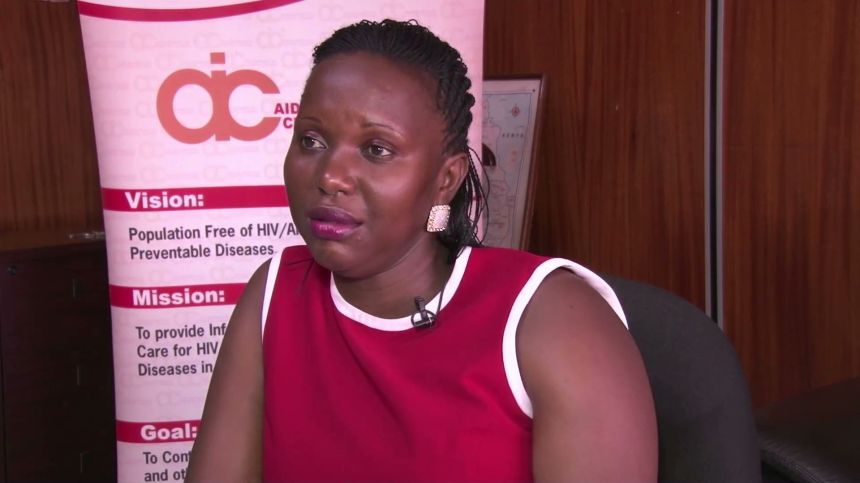
The United Nations says an estimated 34 million people worldwide are living with HIV, and some 30 million people around the globe have died from AIDS-related causes in the 30 years since the first cases reported. Sub-Saharan Africa accounts for almost 70% of the global total of new HIV infections. Sheila Birungi Gandi, acting executive director, Uganda AIDS Information Centre a Non-Governmental Organization established in the 1990s as a result of growing demand from people who wanted to know their HIV status says the organization continues to play a critical role.

“We started with basically with laboratory services testing for HIV and providing services, but given the strength of HIV in the country we progressed into HIV comprehensive healthcare center, and we are established in eight regions of this country in places of the central region with the state of excellent compliance in the city.

Since the 1990s, Uganda was hailed by many as a success story in respect to addressing the HIV/AIDS epidemic; compared to most Sub-Saharan countries. However, critics say the recent AIDS indicator survey (2014 – 2015) showed the country sliding back into double digits. But Ms. Gandi dismisses those claims saying that they have interventions that are geared towards capacity building and able to fight the HIV.

“We have interventions that help us to prevent HIV from testing for HIV and aids, screening of the cervix, taking males through male circumcision, and lots of treatment and care services with the medical background, the medical interventions and behavior interventions.”

Analysts say the fight to end the HIV and AIDS epidemic, has a small window of opportunity opening. Efforts have almost reached the half-way point of stopping the disease but the number of those in treatment, 1.7 million people, is on track to surpass the number of new annual infections, about 2 million.

For Uganda, the stakes could not be higher if the country stays ahead of surging numbers according to Marion Natukunda, advocacy and research manager, Uganda Aids information Center.

“Without testing your HIV status, there’s no way you’re going to know if you’re okay or not. So know HIV situation and let’s take it on from there. We’ve launched campaigns, charity walks in the city center, and even at bars. Yeah, we had what they called moonlight testing. We would go extremes just to make sure at least a Ugandan knows their HIV status.”

On the heels of a landmark visit to Kenya and Ethiopia, where President Barack Obama declared “Africa is on the move,” he honed the message, this time to 500 young leaders visiting from sub-Saharan Africa.

“The continent has archived historical gains in health from fighting HIV/AIDS to making childbirth safer for women and babies. Millions have been lifted from extreme poverty. So this is extraordinary progress,”

In July this year, the 21st International AIDS Conference will be held in Durban, South Africa. A campaign dubbed “AIDS 2016” is an opportunity to show the progress Africa has made in implementing and funding evidence-based prevention and treatment interventions. Scientists, policymakers, world leaders and people living with HIV will discuss together successes and challenges to that country and the current global epidemic trends.

UGANDAN TECH HUB HELPS EMERGING ENTREPRENEURS TO THINK OUTSIDE OF THE BOX

By Paul Ndiho

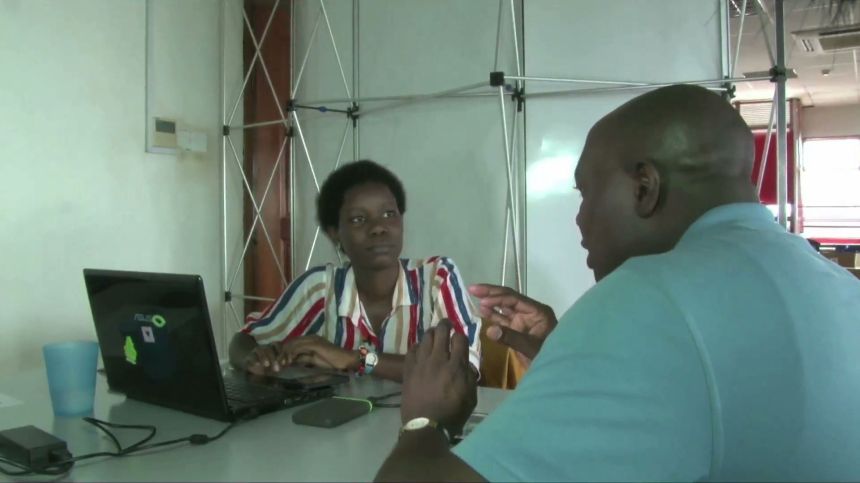
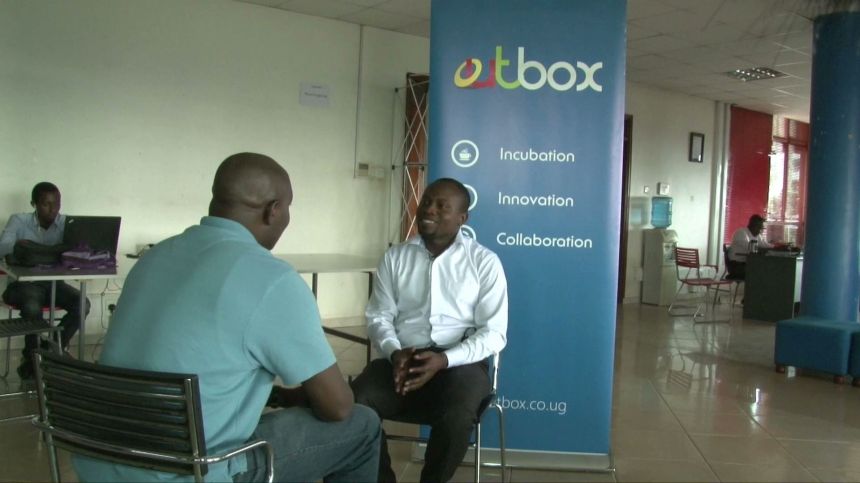
The success of internet connectivity in Uganda is exciting the nation’s young people to create tech hubs like Outbox – a business incubator focused on providing rising entrepreneurs, students, developers, researchers and organizations the opportunity to build inclusive communities that they can tap into for talent and collaboration.

Outbox pkg

As of January 2016, the population of    Uganda’s population is estimated to be more than 41 million people – According to Uganda’s population and census bureau.  Youth unemployment in the country is at all-time high, and the nation has one of the world’s largest percentages of young people under 35, according to the State of Uganda Population report by   the United Nations Population Fund.

More than 40,000 young people graduate from Ugandan universities each year, but the Ugandan job market can provide only 8,000 jobs annually.  But initiatives like Outbox, a highly creative tech hub for ideas   are changing that narrative by challenging young entrepreneurs interested in using technology to think outside the box. Richard Zulu is the lead developer for Outbox.

“Outbox started as a combination of many efforts, and so what we do now is we work with upcoming African entrepreneurs, and give them a work space,  get them into shape and we offer them training. We also have partnerships to raise funding for them, and expose them to new markets.”

Outbox launched in 2012, with an ambitious goal of changing Uganda’s entrepreneur community through a program that spans three to six months and so far, Outbox has an outstanding success story.

“The amount of success stories that we’ve had are quite a number. Currently, we are working with up to seven startups that we are supporting in different verticals and then we have up to five more affiliated with us or that are very interested in collaborating within our networks.”

Zulu says helping emerging entrepreneurs is something he does because he believes it will spur development.

“We don’t take equity or anything like that from the companies that are here. We just ask them to subscribe as members to benefit from our services, and so for us currently we run activities that give us the income, but with regards to the startup it’s what we love doing, and that’s our way of giving back to the community.”

Other start-ups taking advantage of the office space include Kola Studios, creators of the popular two-player card game dubbed “Matatu”. The goal of the game is to play all your cards before your opponent. Sharon Rwakatungu explains.

Apps are all the rage for a growing number of mobile devices. And young people are taking advantage of this revolution. Bryan Lamtoo is behind the NTV mobile app called “NTV GO” and explains how the app works. NTV Go enables citizen journalists to engage and contribute breaking news content to the station.

Tech analysts say Uganda’s apps industry has been on a major upswing in the past few years, driven primarily by advances in mobile phone technology. And Ugandan government officials are keen to capitalize on that technology too.


UGANDAN STUDENTS DESIGN AN BVKIT TO DIAGNOSE VAGINAL INFECTIONS

By Paul Ndiho

Ugandan app developers have created a mobile-based service called BVKIT that helps diagnose vaginal Infections. Although it is still in trial stages, the BVKIT application is already receiving mixed reviews. BVKIT REDO

A group of five female university students at Makerere University in Kampala Uganda has come up with an application dubbed “Her Health BVKIT” that they say helps early diagnosis of vaginal infections.

Nanyombi Margaret is one of the developers of the mobile based application. She says the BVKIT tests specifically for the most common vaginal infections women face.

“Bacterial vaginosis can stay in your body for a very long time. The causes are not known, but some people say its caused showering with different perfumed soaps, having so many sexual partners, having unprotected sex, sharing public toilets people have different infections..”

Like a yeast infection, bacterial vaginosis is linked to an imbalance of “good” and “harmful” bacteria in a woman’s vagina.  The U.S.-based Centers for Disease Control says bacterial vaginosis is the most common vaginal infection in females age 15 to 44.  Margaret and her team say early detection of infections goes a long way in treating the disease.

“We put possible signs and symptoms, common infection signs and symptoms that affect women’s reproductive health. Then if you find the application will give you home remedies on how to continue being healthy at home. If you have a mild infection, it will show you possible signs and symptoms, if your results are severe, a map will show up showing where the nearest doctor is so that you can get tested.”

According to experts, bacterial vaginosis is not considered a sexually transmitted disease or STD, but having BV can increase your chances of getting an STD. BV rarely affects women who have never had sex, and you cannot get BV from toilet seats, bedding, or swimming pools. Margaret explains how the APP works

“What a women does, if you have the hardware and the software, the software is free for download then the hardware is for purchase. You collect a urine sample in a clean pee cup then you put the device in the urine sample and then the hardware is going to pick up values and then sent to the phone application. The phone application will process and then a diagnosis where it tells a person pH.”

Besides early diagnosis, the application is also helping health care providers look for signs of bacterial vaginosis and perform laboratory tests on a sample of vaginal fluid to determine if BV is present

“A women can check herself every two weeks, in the long run so that the women is not affected by miscarriages. Many women don’t like talking about their reproductive health they like to keep this information private; women wait until it is so sad that is when the women get attention to go to the doctor.

Experts say that bacterial vaginosis will sometimes go away without treatment. But if you have BV symptoms, you should be checked and treated as soon as possible.  It is important that you take all of the medicine that your doctor prescribes for you — even if your symptoms go away. Some medical professionals question the viability and reliability of such apps. But BV KIT developers advise their users that consultation with a doctor must follow diagnosis generated from the application.

NAIROBI BASED START-UP ZURI IGNITE EVENTS MANAGEMENT STANDS READY TO FULFILL YOUR NEEDS


By Paul Ndiho

If you live in Nairobi, Kenya and are planning to host an event, like a wedding, corporate meeting, party or a gala, then the start-up company Zuri Ignite Events Management stands ready to fulfill your needs. Zuri Ignite Events Management PKG

Zuri Ignite was created nearly five years ago with one goal in mind, to produce events that connect people with their vision, to make sure clients had memorable experience and to connect individuals with each other.  Zuri is a full-service brand management firm and Kezy Mukiri is the founder and Chief Executive Officer.

“The one thing that stands out in the process of how we do our business and that separates us from the competition is the relationships that we build with our customers. We are not just interested in putting on an event for the client. We begin by understanding what their objective is, which means we are literally on board their teams.”

Mukiri is lawyer by trade, who quit her well-paying job to follow her passion and become a social entrepreneur. She also wanted to do something good for her community by empowering women.

“What I am very passionate about is providing an opportunity for female entrepreneurs. Kenya has made certain advancements in making certain opportunities available, and there are a lot of global institutions that are making those opportunities available, but I must say a lot needs to be done, not just in the area of providing finances or access to markets, but also capacity development.

Through Mukiri’s flagship program, there is training for women entrepreneurs, on issues of financial management, how to access markets, and how to package and brand their businesses to become successful.  Mukiri says that what drives her most, is the belief that she can make a difference in young people’s lives.

“Young people have a lot of potentials, and we have to encourage ourselves to keep moving and get away from the vices that we see on the continent, vices of corruption and lack of integrity. Young people have got what it takes to change the face of Africa.”

Marketing manager Betty Mabya, details some of the firm’s services.

“We help them to identify their brand or brand development: where we have to come up with a logo the bigger picture of this brand. We do concept development for them; we develop every concept with them from event management.

Zuri Ignite employs more than 15 full-time workers and has positioned itself among Nairobi’s best places to work.

Africa’s Scenic Beauty


By: Paul Ndiho
When it comes to emerging economies, Africa is receiving a lot of positive coverage, especially in the western media. Perhaps, it is because the continent boasts some of the fastest growing economies, best tourism spots, abundant natural resources, rich culture, great music, and a growing middle class.Africa's Scenic Beauty
If you were to read any economic forecast on Africa written by the World Bank, IMF, African development bank or other multinational corporations in the last couple years you would notice that Africa’s narrative is changing.
Many economists say in 2016 Sub-Saharan Africa’s GDP is expected to grow at 4.5%, making it the fastest-growing economic zone in the world. As a result, many international firms are setting up local and regional operations.


Tourism on the continent is set to spur more economic growth and directly employ more than 7 million people by 2021, according to a World Bank report.
Another study, titled “Millionaire Tourism in Africa,” says that around 43,000 multi-millionaires visited Africa. South Africa was the most visited destination for the super-rich. Other major destinations include Cairo in Egypt, Nairobi in Kenya, Masai Mara in Kenya, the Serengeti in Tanzania, Gorilla safaris in Bwindi Forest and Bujagali Falls in Uganda. Other places include Swamps in Botswana and Victoria Falls in Zimbabwe and Zambia.
The U.K based World Travel and Tourism Council, says the influx of tourists means more money coming into the continent, accounting for nearly US $50 billion in revenue in 2015.
The continent prides itself on having the best land for exploring real beauty, for example, Africa’s mountains, savannahs and rivers, are by far the natural assets found in the continent.
The hospitality sector is experiencing unusually rapid growth. According to the report, Sub-Saharan Africa, is benefiting most from the expansion of hotel chains and the corresponding increase in the number of available rooms.
The vast continent is so rich and diverse in its culture. This is not only from one country to another but within individual countries, where many different cultures can be found.
Africans are rocking the Fashion runways in New York, Paris, and London, primarily promoting Africa’s fashion industry and Lifestyle brands. Perhaps even, more importantly, Nigeria’s Nollywood film industry is rising in popularity. It’s a $5 billion dollar industry churning out nearly 3,000 movies each year.
Since its inception, over 20 years ago, the Nigerian movie industry has remained one of the largest employers in the country, and analysts say the industry earns the third highest revenues in the world after Hollywood and Bollywood.
We certainly cannot talk about Africa’s Beauty without talking about Music, which is very much a part of the continent’s culture.
If you appreciate authentic African food, then you have something in common with a lot of Africans. They are passionate about making Africa’s mouth-watering food locally and even continental dishes that has earned them the title of “best cooks in the world.”
Africa has a rich culture, one that it has managed to hold onto for centuries, especially African cuisine. It features traditional dishes from each ethnic group, tribe and clan. Most African dishes comprise of a rigid portion and sauce or fish, goat meat or beef soup. This trend is evident everywhere go in Africa.

UGANDA’S LONGTIME LEADER RE-ELECTED

By Paul Ndiho

Uganda’s electoral commission declared President Yoweri Museveni the official winner of the 2016 Ugandan presidential election. But the country’s main opposition party, the Forum for Democratic Change has rejected Mr. Museveni’s victory. Museveni-yellow-tie
Uganda’s longtime leader President Yoweri Museveni won a disputed presidential election, cementing his 30-year hold on power in the East African nation. His win comes amid heavy criticism of the voting process by local and international electoral observers.
President Museveni won nearly 61 percent of the vote, while his main challenger Kizza Besigye secured 35 percent, according to Ugandan Electoral Commission Chairman Badru Kiggundu.
“Total number of votes cast in his or her favor being more than 50 percent of the valid votes cast at election. The commission declares Yoweri Kaguta Museveni elected president of the Republic of Uganda at the presidential election held on 18th February 2016.”
Eduard Kukan, Chief Observer for the European Union mission, criticized the ballot process and says the election was conducted in an intimidating atmosphere and that the nation’s electoral commission is not independent.


“According to our assessment, electoral commission lacks independence, transparency and the trust of the stakeholders. It knowingly interpreted its mandate by limiting it to the organization of the technical aspect of the elections. Moreover the commission lacked transparency in its decision and failed to inform the voters and contestants on key elements of the electoral process in a timely and comprehensive manner.”
Observers also questioned the government’s motive in deploying security forces throughout the country during and after the elections. The government says it did so to ensure a peaceful outcome. But some voters dispute that, saying the government was trying to intimidate them.
“Museveni has not won, the election was not free and fair, they have brought the army here, policemen here, they are trying to threaten people and we don’t know why.”
Opposition leader Kizza Besigye, who has been detained multiple times since the election results were announced, has now called on his supporters to protest the election.
“If the regime continues to restrict me, to detain me in my home illegal as it is, I call upon all of you citizens to protest this, at the very minimum let us also stop them from moving. And our people should remain firm, should remain strong. This is our country. We must have rights in our country. We must be treated with dignity in our country.”
The opposition had tried to tap into mounting support among young voters, especially in urban areas, where unemployment is high and many are frustrated by the poor state of schools and hospitals. But the ruling National Resistance Movement party says Museveni’s victory shows that the opposition failed to offer any serious alternative governing plan, apart from empty promises.
Although President Museveni, 71, has presided over a period of strong economic growth, he is accused by critics at home — and abroad — of repressing dissent through intimidation and failing to tackle rampant corruption in the nation of 37 million people.

Uganda Decides 2016


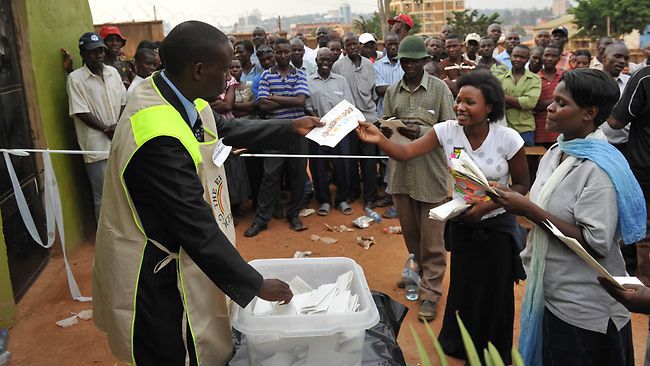
Stakes are high in Uganda as election officials are counting the votes from presidential and parliamentary elections that took place today February 18th. Despite 30 years of relative stability, many Ugandans are concerned about the state of democracy in their country. Previous campaigns have been characterized by intimidation of the opposition from the government of President Yoweri Museveni and some of those accusations are surfacing again. 498061-uganda-elections-voting
Ugandans are voting in general elections. Ugandan President Yoweri Museveni is on the ballot for the fifth time, running against seven other candidates as the choice of the ruling National Resistance Movement party. President Museveni took power in 1986 and nearly two decades later in 2005, he changed the constitution to end presidential term limits.
A report on campaign financing released in January by the Alliance for Campaign Finance Monitoring states that Uganda’s longtime leader has spent more than $7 million on his 2016 presidential election bid in just two months. The report also notes that the 71-year-old incumbent has spent 12 times more money than his top two rivals combined.


Museveni has come under fire by his critics, who say he is spending taxpayer money for his personal use — but Museveni’s camp is dismissing those claims.
Political observers believe the president may be facing his stiffest competition yet, from his long-term rival Kizza Besigye and from former Prime Minister Patrick Amama Mbabazi.
Besigye, the Forum for Democratic Change candidate, whose political fortunes declined between 2011 and 2015, has made a remarkable comeback onto the national stage for his fourth attempt at the presidency.
Besigye has drawn mammoth crowds throughout the campaign season, in district after district, repeating his campaign slogan of “defiance, not compliance.” Besigye’s supporters are spontaneously offering him campaign contributions. I recently caught up with him on a campaign trail in Western Uganda, and he told me, that unlike previous elections, ordinary people are funding his campaign.
“The energy in the population is extremely exciting, for the first time we see Ugandans, coming up the thousands with a lot of vigor giving me money, you are and telling me that you are doing the right thing and here is our small contribution. And people feel like for the first time they’re invested in this campaign. ”
Despite the enthusiasm of Besigye’s supporters, Mr. Museveni has defeated Besigye in three past elections, in 2001, 2006 and 2011.
The third major presidential candidate is former Prime Minister Amama Mbabazi, of the independent “Go Forward” party. He has performed better than expected during the campaign season. Initially, assumptions were made that Mbabazi was one of those privileged figures that rode on Museveni’s coat tails and, who, once they stepped out of Museveni’s shadow, would fade away, unable to flourish independently of the president.
“What I am proposing is that it is time for a change, and I am offering myself to lead that process of change. The transition from the old generation to the new and I don’t think there is anyone better suited.”
Other presidential contenders include Abed Bwanika, who is running for the third time, representing the People’s Development Party, retired Major General Benon Biraaro, of the Uganda Farmers Party, Venansius Baryamureeba, a former Vice Chancellor of Makerere University, Joseph MabirizI, and Maureen Kyalya Walube, the only female candidate.
Pundits say that there is lot of anger in Uganda tied to the way the political process has been managed so far, and that the population is watching closely to see if the upcoming elections are free and fair.

UGANDA UNVEILS SOLAR-POWERED BUS CODE-NAMED“KAYOOLA”

By Paul Ndiho
After a successful launch of the Kiira EV and Kiira EV Smack – Ugandan engineers at Kiira Motors Corporation have done it again. They recently unveiled the first solar-powered bus, a 35 seater dubbed Kayoola. Kayoola 2
For those who thought that it’s impossible to manufacture anything in Africa – Think again. Kiira Motors Corporation, earlier this month, unveiled its 35-seater Kayoola bus. The Ugandan car manufacturer is slated to start commercial production of the Kiira brand vehicles and Kayoola passenger buses by 2018. The cost of the bus is estimated cost about $58,000 and is expected to create more than 7,000 jobs.
“Perhaps this is another remarkable example of products built by talented Ugandans. It’s designed right here in the Ugandan capital Kampala.”


The bus code-named ‘Kayoola, with its striking design is one passenger service vehicle that commands attention. It has a range of 80km when fully charged and it also has solar panels on its roof, which give it a daily range extension of 12km.
Last year Kiira Motors Corporation gave the Voice of America, an exclusive behind the scenes access. So let’s take you inside.
It drives and feels like any regular passenger bus on the market — for those who had any doubts. It’s time to let everyone know this Kayoola has arrived.
Dr. Sandy Stevens Tickodri – Togboa, Minister of state for Higher Education and Technology says Kiira Motors is a Ugandan government initiative aimed at establishing a framework for commercial production of Ugandan made cars.
“We are now targeting the third quarter of 2018, when we think that we will begin to roll out these cars and buses off the assembly line. But we are creating a capacity of about 850 per year.”
The 35-seater Kayoola bus is powered by a rechargeable battery in addition to the solar panels on its roof.
Paul Isaac Musasizi, Chief executive Officer, Kiira says the Kayoola bus has Impressive power, and was designed to thrill and intended for urban areas rather than inter-city use because of the restrictions on how far it can travel.
Once in mass production, Kayoola bus will be available in different packaging options; this bus was recently taken on a test drive, debuted at a public exhibition in Kampala.

Analysts say Kiira Motors sets a good precedence and inspiration trend for the technological future of urban mobility for East and Central Africa and Ugandans must be proud to be championing a technology that represents clean energy with many positive reactions to the test drive.
As for my review, Kayoola presents itself well. What distinguish the bus’s exterior design from most buses on the market are the details, leather interior and smooth transition from glass-to-sheet metal that makes it look sleek.
Paul Isaac Musasizi, observers that the creative team at Kiira Motors has the capacity, drive and passion to make this dream a reality.
Economists say Uganda is trying to position itself as a regional automotive force by producing the passenger buses. Kampala, like in many African capital cities, has a fast growing population and rapid urban development that has meant more cars on the road. So it’s beneficial to have locally manufactured passenger buses that could ease roads jammed with traffic.

KENYAN START-UP GEARBOX LAUNCHES ITS HARDWARE INCUBATION CENTER

By Paul Ndiho
Are you an engineer, an inventor or someone who likes to use your hands to create and build? Well, ask no more. A Kenyan start-up – Gearbox hardware incubation center is looking for you. The state-of-the-art facility dedicated to designing, prototyping and fabrication of industrial and consumer electronics. gearbox
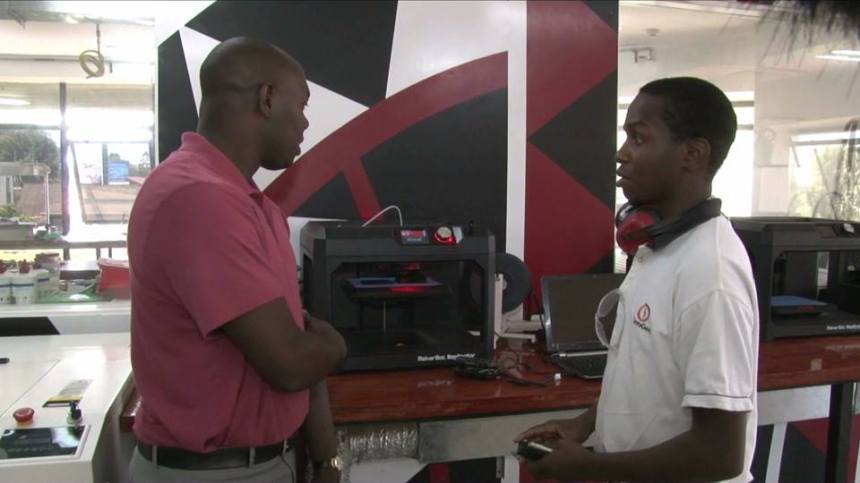
Launched last year, Gearbox, a maker space incubators, used its laboratories, combined its resources and talent to help African innovators learn how to move ideas more rapidly from lab to the marketplace is generating a buzz in Nairobi. Gearbox provides a platform for innovative youth to harness their artistic skills in computer technology, 3D printing, industrial art and robotics towards building a more robust and powerful electronics manufacturing sector in Kenya. Dr. Kamau Gachigi is the executive director Gearbox.


“We want to make it possible not only for the large multinationals to succeed in Kenya but for our homegrown innovators to design things that we need here. You know, what we do normally we import generic items. It may or may not fit what our needs because it’s made in China or some of the huge manufacturing centers. But if you manufacture something that is custom-made for our needs likelihood of success in the business is much higher.”
Mr. Gachigi says that Gearbox is maker space where communities of people who like to make physical products, who design everything from electronics gadgets to plastic toys meet and work.
“Gearbox does plastics, electronics, things that NMC doesn’t do, we do composite fiberglass, and so on, therefore, the way forward is real to start getting a lot of small companies get the international best standard. When you think about African or Kenyan products, typically people will think of jua-kali, they will think of something where the finishing is not very good but they kind of just accept it. We want to bring things to a superb finish, world-class performance.”
Speaking at the launch of the new Gearbox LITE facility, Kenya’s Industry, trade and investment cabinet secretary, Adan Mohamed said, the government is keen to promote the spirit of entrepreneurship to provide employment and requisite skills to create an industrial renaissance.
“I am really impressed at what gearbox is doing to make it possible for people to learn, to design, to prototype before they go into production stage and be able to sell their products in the market.
Kenneth Odhiambo an electronics engineer says Gearbox provides a unique space for members to showcase innovative ideas and share skills while also providing a platform for capacity building.
We’re building circuits for Kenyan engineers instead of them exporting their schematics to other countries, and waiting for their boards for several weeks, or even months, we make them here in minutes or hours depending on the complexity of the circuits.”
Kenneth Explaining the process:
“The partner transferred from the computer to the box to the machine – its CNC machine, and the computer numerically controls the machine, and it will follow our path.”
The information communications technology is one of the fastest growing business sectors in Kenya; it’s the regional leader regarding mobile value-added services, most notably Safaricom’s M-Pesa mobile banking service, which has brought about a revolution in access to financial services for Kenyan citizens.
Perhaps, even more, interesting is Simon Mauri Kimani, a self-taught engineer, and uniquely talented individual making his mark in the tech community. He’s made several innovations and created cutting edge vehicle tracking systems, that has been installed in hundreds thousands of vehicles in Kenya.
“I have about 500 vehicles using my system. I have my fleet management system. Lately, I am designing a house management system – whereby the system can be able to arm itself automatically. You can be able to see the status on your phone and any intrusion that happens in your house, you can be able to activate any appliances in the house, and that’s what currently I am doing.”
Kenya has the strongest industrial base, and it has been successful in attracting private equity capital. For example, foreign companies are investing in the country and setting up local and regional operations.
Gearbox CEO, Kamau Gachigi, observes that a paid monthly membership fee gives you access to software design tools, as well as rapid prototyping equipment such as 3D printers, 3D scanners, laser cutters, industrial sewing machines and vinyl cutters instead of outsourcing expertise in China. Kenya is successfully attracting private equity capital and international firms are setting up local and regional operations.

« Older Entries Recent Entries »