Author Archives: Paul Ndiho

KENYA’S HOMEGROWN SPEED LIMITERS SAVING LIVES

By Paul Ndiho
The label “made in Kenya” is not something you often see on high-tech speed governance recorders. But a young Kenyan technopreneur is trying to change that with his Omata Speed Limiter registered under the trademark of Dalcom Kenya limited.

Nairobi Kenya 2015-1
The Omata road speed limiter, or cruise control — commonly known in Kenya as the speed governor, is a state – of – the – art micro-controller technology that assures accurate, smooth operation of the vehicle. The speed limiter computes the speed of the vehicle and continuously monitors the car. Once the vehicle reaches the set maximum speed it stops the car from going beyond the required speed limit.
The Tech Company was started 2006 by David Kiarie, a Nairobi-based “technopreneur”, who wanted to do something good for his community and make money.
“We make the speed governors ourselves, and we are manufacturers of the same brand. We manufacture them here in Kenya.”


Dalcom’s business is booming. It has gone from selling and installing just a few gadgets in vehicles to partnering with government agencies, Matatus the primary means of public transportation in Nairobi and other vehicles.
“So we have come a long way. We started with the fast one, which we call it analog, and now we have the digital one, which records generated the speed, and keeps the record for 72 hours of what the driver has been doing. So even if you disconnect, or remove the data, it will tell you that at least for last 72 hours the driver has been doing this and that.
Dalcom wants to become Kenya’s biggest manufacturer for road safety gadgets. Omata speed device is a digital standalone vehicle speed data logger. David Kiarie says his company wants to create a product by Kenyans — for Africans– thereby creating an avenue for young men and women with the skill in craftsmanship and arts to explore their talents and abilities to fulfill their dreams.
Richard Maina is one of the company’s technicians.
“Most of us are technicians, but we all have the innovative spirit in us. So basically most of us are self-taught, we didn’t go university to study, most of us learned on the job. And that’s how we go to be as good as we are.”
Omata speed governor is among those technologies approved by the Kenya Bureau of Standards for use in vehicles and Installation of the speed control gadgets is among measures spearheaded by the Ministry of Transport to help curb road accidents. The regulations require that public service vehicles and commercial trucks with weight of over 3,048 kilograms be fitted tamper-proof speed recording devices. Maina explains how it works.
Just like in a regular vehicle when a vehicle is in neutral, even if you press the gas pedal, the car will not move. But you can see the revs are moving. So after you engage the first gear, that’s when you can start moving. Then gear two, even the speed increases, gear three the speed goes a bit faster, now in gear four, that’s where you get 80km per hour now that where the car needs to be limited. It gives you a warning buzzer so that you can know that you are going beyond the speed limit.
The tech company continues to do very well in a market that is highly competitive because their technology is saving lives.
“We took it upon ourselves to work together with the government, and I think even the records speak for themselves. Since the speed limiters were introduced, our roads have been safer.”
Analysts seem to agree — they say since Kenya government started enforcing the use of digital speed limiters, like Omata the number of accidents on the roads has reduced drastically. And for “technopreneurs”, like David, whose Omata brand is becoming a household name- hopes to stay competitive. But, whether it can sustain the growth, keep the price point low and continue to employ workers at higher wages than its counterparts will, ultimately, be the true test.

NAILAB KENYAN BUSINESS INCUBATOR

By Paul Ndiho, Nairobi, Kenya
The success of internet and mobile connectivity In Kenya is inspiring the nation’s young people to initiate tech hubs like Nailab – a business incubator focused on providing the right ingredients to turn business ideas into viable start-ups, which can compete on a global scale. NAILAB KENYA - PKG
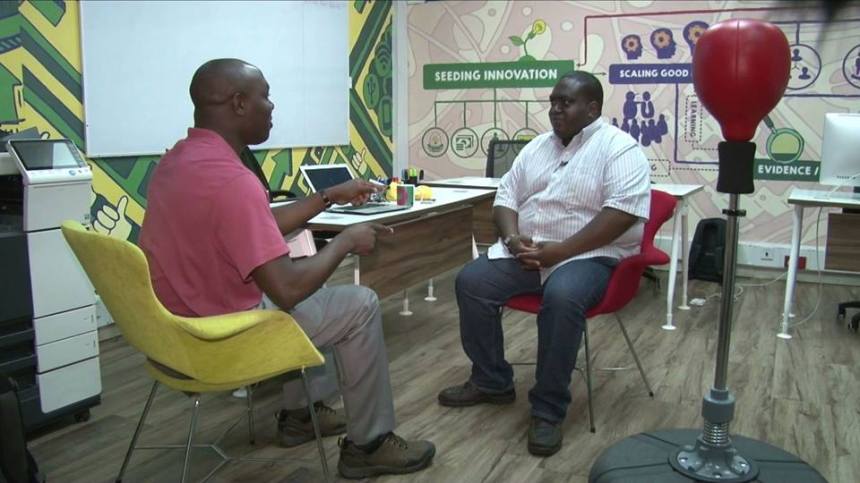
Nailab is a highly creative space where young entrepreneurs meet, develop and share ideas. It’s a business incubator and support center that provides innovators with the infrastructure for business growth, and where budding entrepreneurs can see their concepts take off. Sam Gichuru is the CEO Nailab
“Nailab is a space where our innovators to come and try to see where their ideas can become businesses. And so we play the facilitation role of trying to work with young people who are thinking in a certain way and how can we move them from one point to the next point and mainly focus on that is heavily ICT.”


Nailab was launched in 2011, with an ambitious goal of changing Kenya, one start-up at a time through an entrepreneurship program that spans three to six months.
“We’ve helped over 40 companies; most of those are still in business. A few have done a few successful things here and there. We have created a lot of jobs, serving customers in hundreds of thousands, been able to raise money in debt, almost in the millions of dollars.”
Gichuru says helping emerging entrepreneurs is something he does because he believes it will spur development.
“What inspires me has been to help people who have grown up in the same environment like I did to just have a better life. That inspires me, the ability to give people hope and to see them move from nothing to actually something. Most are very tech; I’m a very techy person so I really like creating things. And when I find other people look and create things then I have resources, I can alter their creations and just make it work.”
Other start-ups taking advantage of the office space include, Kuhustle, a platform that allows skilled freelancers to find digital jobs across Africa. Billy Odero is Kuhustle’s co-founder.
“I’ve been working in the industry for quite a while and one thing that you realize is that a lot of people always coming to you and asking you do you know of someone who can do this, do you know someone who can do that. And one thing we realize is that there is a lot of demand for people who can do certain jobs but people don’t really know where to find them. So I figured why not come up with a platform that can connect them to them.”
Apps are all the rage for a growing number of mobile devices. And young people are taking advantage of this revolution. Beverly Mbeke is Chief of Operations at Kuhustle.
“At the moment, we’re kind of focusing on marketing towards tech jobs. So you know people need apps, people need websites, but you also have …… creative, so you know people who want to design logos, want to come up with new landing Pages, want to have new …. Experiences for their applications, but we also have people who are looking for, say someone wants to do writing or something like that.”
Analysts say Kenya’s IT industry has been on a major upswing in the past few years, driven largely by advances in mobile phone technology. And Kenyan officials are keen to capitalize on that technology too.
2015 was a year brimming with insightful innovations, it will be exciting to see what Nailab has to offer this year — and how high will Kenya’s technology revolutions eventually reach.
Paul Ndiho is a Ugandan – American video journalist/ executive producer, Africa Innovations & Technology based in Washington D.C with interests in innovation, technology and entrepreneurship in Africa. He is passionate about mentor-ship and developing the next generation of Africa’s young leaders. Email:pndiho@gmail.com, Facebook: Paul Ndiho and Twitter: @pndiho

KENYA’S MOBILE MONEY TRANSFER MPESA CHANGING LIVES

By Paul Ndiho
For years, mobile money, possibly Kenya’s most successful invention, has been leading the way with an innovative mobile phone technology called mPesa. That technology has transformed the lives of millions of people.Kenya's Mpesa PKG
Paying for merchandise through your mobile phone has been made extremely easy, thanks to Kenya’s world-leading mobile money transfer system, mPesa. Launched in 2007 by Safari-com, the country’s largest mobile-network operator, it is now used by over 15 million Kenyans, equivalent to more than two-thirds of the adult population; around 25% of the country’s gross national product flows through it.
“mPesa is not just a mobile money transfer service. Especially here in Nairobi, it has revolutionized the way business is done. People are using mPesa to transact nearly any kind of business you can think about from paying their utility bills to paying for merchandise in a corner store.


Basil Omondi a student at Kenyatta University says mPesa is the best thing that has happened to Kenyans in a long time.
“mPesa is a money transaction system whereby someone sends money and someone can do transactions through the phone, whereby I can even pay bills from my phone, I can even send money, receive money and or deposit to my account and stuff like that…”
mPesa was originally designed as a system to allow micro finance-loan repayments to be made by phone, reducing the costs associated with handling cash and thus making possible lower interest rates. But after pilot testing, it was broadened to become a general money-transfer scheme.
“I usually do the transactions. I help the customers withdraw or deposit their money— In a day I can get about two hundred customers in a day.”
The success of mPesa has no doubt taken the whole world by surprise. Operators in some other countries are doing an increasingly good job of imitating it. William Baraya Nyagweso is a regular customer and explains how it works.
“I use it almost daily. Like today, I have used it three times and sometimes I can do much more transactions… explaining the how it works…”
Baraya Nyagweso says that Mpesa’s business model is particularly useful in a country where many people don’t have access to banks. Those who work in cities often send money back home to their families in rural villages.
“So what Safaricom has done particularly on the transfer – is that it has had a significant impact you can say. And so the small enterprises, the women, and you know the technology that Safari-com is using is something that you don’t need to go to class to learn – an old woman can send you a hundred thousand shillings just a click on the phone. So the technology has made the banks bend low to the informal business sector.”
Philip Muganda, a resident of Mombasa, says mPesa is the new reliable way to send and receive money. Some Kenyans say storing money on mPesa is safer than the banks.
“I think mPesa has brought money to ordinary people’s pockets and it saves us the hustle of going to the bank and Que all the time and I think it’s a good thing. Personally, I bless the person who came up with mPesa.”
Economic analysts say some of the factors behind mPesa’s success cannot be copied; but many of them can, which means it should eventually be possible for other countries to follow Kenya’s pioneering example. Several countries, including Uganda, Tanzania, Afghanistan, and India have jumped on the bandwagon and are using mPesa.
Last November, the Kenyan operator Safaricom, reported a 24 percent jump in mPesa revenue — it’s active user base has also climbed to 15.7 million people, accounting for nearly $190 million dollars in transactions.
Paul Ndiho is a Ugandan – American video journalist/ executive producer, Africa Innovations & Technology based in Washington D.C with interests in innovation, technology and entrepreneurship in Africa. He is passionate about mentor-ship and developing the next generation of Africa’s young leaders. Email:pndiho@gmail.com, Facebook: Paul Ndiho and Twitter: @pndiho

IHub KENYA’S SPACE FOR INNOVATION

By Paul Ndiho
An innovations revolution is unfolding in Africa, and the East African nation of Kenya is taking the lead. Young people are creating new technologies and applications that are driving the country’s economic growth and turning Kenya into a tech hub12346307_10153738237127270_7456493777607525318_n

African innovation is not receiving the level of global recognition and support it truly deserves. The continent is brimming with a rising new generation of bold, creative thinking innovators and entrepreneurs, who are inventing and developing new technologies that are simplifying lifestyles and transforming societies.

“If you are an aspiring entrepreneur, the young innovator on the African continent, perhaps you should consider moving to Nairobi — that is if want to see you your dreams come true. So many small companies started minuscule right here in the capital city but have grown into multi-million dollar businesses.”

Five years ago, there was nowhere for developers to come together and grow, today, iHub is setting the pace for Africa’s tech revolution and putting Kenya on the global innovations map.

It’s early afternoon in the community space, and techies are doing their thing, hitting cyberspace, tapping away on laptops, iPads, and smartphones.

“The objective was to create a space for the local tech community to find a home. And over time, our primary goal has been to catalyse the growth of the Kenyan tech community. We have been doing that by connecting people, supporting startups and surfacing information. Over the years, we have seen a very fast-growing, and evolving startup community in Nairobi and are glad to have been and still be a part of it.”

Innovation centers in Kenya like iHub are helping to nurture technopreneurs to launch their startups and access markets.

“There is this operative and collaborative space that allows entrepreneurs to find their own and be able to grow together, and we feel that’s part of the reason it has been easy for businesses to find a home here.”

Qn: There are a lot of tech hubs in Kenya especially here in Nairobi, but iHub stands out of all these places. What make you guys unique?

“We offer an ecosystem to boot. Through our initiatives: iHub Consulting, iHub UX Lab and iHub Research and sister organisations Gearbox and m:lab East Africa, we offer startups first-hand access to a vast pool of expertise and resources. If they want to learn more about being better software engineering, they can attend the Craftsmanship Series by Consulting. If they would like design thinking walkthroughs, the UX Lab offers Tajriba among other learning opportunities. Research caters to the data scientists and research-oriented folks; Gearbox to hardware enthusiasts; and m:lab to mobile-first startups. Membership is a gateway to networks, opportunities and growth.”

Already, more than 152 companies have grown out of the iHub; many are dedicated to applying technology to Africa-specific problems. On a typical day, about 80 members stop by, allowing a corps of software engineers to team up, exchange ideas, and sometimes make business deals. As the tech giants interest in the African market grows, iHub has become the place where technology executives gather, decamp, declaim, and debrief when visiting the region. Above all, it has helped dispel the notion that Africa’s tech community is somehow lacking in ideas, talent, or ambitions.

Tech analysts say some possible IPO-startups are growing in Africa. You will see tech companies coming out of Africa with a lot of money; enough to support a public launch on a local exchange or even trade on NASDAQ.

Paul Ndiho is a Ugandan – American video journalist/ executive producer, Africa Innovations & Technology based in Washington D.C with interests in innovation, technology and entrepreneurship in Africa. He is passionate about mentor-ship and developing the next generation of Africa’s young leaders. Email:pndiho@gmail.com, Facebook: Paul Ndiho and Twitter: @pndiho

KENYAN CROWDSOURCING SOFTWARE USED AROUND THE WORLD

By Paul Ndiho
Ushahidi is a crowd-sourcing company that originated during Kenya’s 2007 and 2008 post-election violence. It is having an impact on the world and it may also help African voters protect their votes.  12376433_10153738236807270_4572978566068172523_n
Ushahidi’s crisis-mapping software was first used in early 2008 to track violent outbreaks related to the disputed Kenyan election of 2007, and it has been used since to coordinate everything from disaster relief following the earthquakes, elections in Nigeria, to snow cleanup in New York City.
Ushahidi’s executive director Daudi Were explains.
“Now 6 – 7 years later Ushahidi has over 90,000 deployments around the world. It’s been used in over 150 different countries, it has been translated into more than 50 different languages, and we’re talking about 6.5 million people with direct impact and indirect impact of over 17 million people. We truly are global technology company but made in Africa.”


Citizens may use any mobile device to send information to a volunteer technical team responsible for mapping data. Ushahidi offers products that enable local observers to submit reports using their mobile phones or the internet while simultaneously creating a temporal and Geo-spatial archive of events.
“The biggest user cases are about 73 -75% deployments are in the areas of citizen-government engagement, so people doing things link election monitoring, there are in the area of disaster response, for example, there was a big Ushahidi deployment that was used to coordinate response around the Nepal earthquake earlier this year. So we have maps for example in Egypt which has been monitoring incidences of sexual harassment on the streets of Egypt for the last 5 years.”
Ushahidi’s executive director, Daudi Were says the Kenyan technology company continues to do very in a market that is highly competitive is simply because their technology is having an impact in the world. For example, their software was used to monitor the election in Nigeria.
Ushahidi builds and utilizes digital tools and runs programs to give marginalized people a voice. Since 2008, the Ushahidi platform has grown to be a world-class open source tool for human rights activism, crisis response, and civilian empowerment.
“This is a place where you can have a positive impact on the world. You talk about building and utilizing tools for marginalized voices, we build stuff that allows people to raise their voice, people who may not have the opportunity to engage in important conversations or maybe marginalized from those conversations. So people come here because they’re passionate about their communities, they want to have a positive impact and want to do meaningful stuff in an innovative space to move and develop quickly.”
Ushahidi has experience in building tools for anti-corruption initiatives around the world. From Brazil to Morocco — and Indonesia to Kosovo people are using Ushahidi to increase transparency and accountability in their communities.
“If we talk about a Kenyan example, a couple weeks ago our president reached out to the Kenyan Tech community and said can any of you innovators help us build platforms that can tackle corruption. As Ushahidi, our tool has been used to fight corruption in numerous countries around the world. So we are working to customize it so that we can build partnerships and the networks so that we can deploy it right here in Kenya and that way we contribute to our society from the platforms and the tools we build.”
Ushahidi has never accepted government funds; instead, it relies on grants from philanthropic organizations and generating revenues through custom deployments of its software for clients worldwide.
The company recently launched a cloud-based version of its basic mapping platform that can be deployed quickly and easily and is hosted on Ushahidi’s servers. The basic service is free but the company has developed plug-ins and upgrades that will have a cost.
Analysts say advances in technology and crowd-sourced data only help in dealing with a crisis. Daudi Were says the most important facets remain to have a community, both local and international, to identify and respond to a crisis and then having the commitment to help those affected.

PIRACY HOLDS BACK NIGERIA’S LUCRATIVE FILM INDUSTRY

By Paul Ndiho
Nigeria’s Nollywood film industry is rapidly growing in popularity, churning out nearly 3000 movies each year. Many of the films address issues that Africans across the continent can identify with. However, due to piracy, many filmmakers say they are struggling to make a profit.
Nollywood is a $5 billion dollar industry. Film producer, Sam Boye is on set taking his actors through their paces before shooting begins on his latest production, a soap opera series about family feuds. Boye has been involved in Nollywood films for more than 30 years. He says rampant piracy is the main reason film producers are barely making any money.
“A producer was in China, and he said he saw our movie. They call it 20 in 1. That is, you have 20 movies in 1 DVD in China and he saw Osofia speaking Chinese. That means it’s been dubbed into a Chinese language without the consent of the producers here. So when we say piracy has gone deep into this industry and it has been another major challenge.
Nollywood is best known for the quantity of films it produces, but not the quality. But there are those who are trying to change things. Producer-Director, Kunle Afolayan is the filmmaker behind “October 1”, Nollywood film set in 1960, against the backdrop of Nigeria’s Independence from Britain. The movie tells the story of a detective, who is dispatched by the British colonial masters to a remote town in the Western region of Nigeria to solve a series of murders that caused outrage in the community. With three films under his belt, Afolayan has earned a reputation in Nollywood for producing high quality movies.
“It’s a nightmare, it’s a universal problem but the kind of … the way it’s being done here is alarming when your film gets pirated and people flashes it in your face and no one is doing anything and when you even complain, they beat you up like there is no law in the land. All my films have been pirated but the most painful one is October 1 which has not been released on DVD.”
Every week, in Lagos alone, millions of pirated Nollywood and Bollywood movies – the Hindi language film industry based in Mubai, India, compete for customers against the original product. The pirated copies are sold everywhere, on sidewalks, street corners, under bridges and even on top of wheelbarrows for about one U.S. dollar per DVD — undercutting the production house price of the DVD.
Nigeria’s Copyright Commission, says the government is doing all it can to combat piracy. Afam Ezekude is the Director General of the Copyright Commission.
“The last four and a half years. We have actually reduced the rate of piracy, we are not boasting of trying to eliminate or eradicate piracy in this community but we have done a lot in terms of trying to limit the impact of piracy especially on the Nigerian economy.”
Still, industry analysts like economist David Omidiran believe Nollywood could be much more profitable and grow even further to boost the oil-producing economy if piracy was curbed.
“When all the piracy issues are resolved and there is more use of cinematography and we already have the likes of some cinema airing Nigerian movies, the industry has great potential.”
Since its inception, over 20 years ago, the Nigerian movie industry has remains one of the largest employers in the country, and analysts say the industry earns the third highest revenues in the world after Hollywood and Bollywood.

SOUTH AFRICAN YOUTH LEARN TO CODE

By Paul Ndiho
Sihle Tshabalala spent more than a decade in prison for armed robbery, but he now teaches township kids who are at risk of turning to crime I-T skills. He was recently highlighted by the World Economic Forum for his project which is giving disadvantaged youth, a new lease on life. VOA’s Paul Ndiho has more
Former inmate, Sihle Tshabalala spent nearly 11 years behind bars. He was just 19 when he was incarcerated — and while in prison, he taught himself how to write computer code and it helped to turn his life around. Today, Tshabalala is using those skills to touch other lives. He has partnered with another former inmate to start the “Brothers for All” center in Langa Township, Cape Town. It is a non-governmental organization that works to alleviate poverty and crime in South Africa.
The duo dual empowers disadvantaged children by them teaching basic computer skills. As the students get better, they learn more complex coding, which makes it possible to create computer software, apps
“I always tell people that we are in the business of selling hope even though the price tag is free but we sell hope to the people that have lost hope. Now the demographic of the people we work with, we work with high school dropouts, teenage mothers, unemployed youth and employed youth and also ex-offenders and offenders that we teach coding.”
According to the polling organization, “Statistics South Africa”, poverty, drugs and crime are rife in the country’s poor communities. But initiatives like the coding project can help to empower the youth who live in the poor townships to get life skills.
Gilbert Duquzumuremy is a volunteer who works with the “Brothers for All.” He is an IT graduate who immigrated to South Africa from Rwanda.
“I did computer science when I was in my country. I did it from 2012 to 2015 but I did not get a job because there is a problem of jobs, no job creation. I decided to come to South Africa. By intervention of one of my friends, he gave me a lead to “Brothers for All” and when I came there I said this is my place to be because I know how to code, I did coding then I decided to help them out as a volunteer.”
Those who attend the coding classes say they have not only gained valuable new skills but the classes also keep them away from more negative activities.
“It does help me a lot because in Khayelitsha there are a lot of gangsters there when you go outside there are lots of guys sitting on the corners smoking, and when you come across them you just get scared of them so computer programming it helps me a lot as I spend my time here programming it keeps me out of a bad mind.”
Tshabalala says his work is receiving recognition both locally and abroad including at the World Economic Forum earlier this year. Recently, the organization began the first coding program at a prison just outside of Cape Town. He says working with disadvantaged communities is his driving passion.
“Now, the response has been quite amazing because these are people that thought they would never do something magnificent with their lives but because they are now given the opportunity they then see something different and light at the end of the tunnel,”
The “Brothers for All” initiative is giving young people from Cape Town’s poorest communities the opportunity to turn their lives around. Still, with few job opportunities and little education, many more youth continue to struggle, resorting to crime and a life of violence.

A UGANDAN 3D ANIMATOR CREATING CONTENT FOR LOCAL TV STATIONS

By Paul Ndiho, Washington DC

The Animation Industry in Africa is still in its infancy. They are very few animated TV series or 3D movies originating from the continent. However, the growing demand for locally produced content is bringing about change. Solomon Jagwe, a Ugandan – American animator and 3D graphics artist, is leading way.Special Delivery for Nankya from Grandpapa Muzeeyi Mukulu

Mr. Jagwe is arguably one of Uganda’s most sought after animators. He’s the producer and creative director of the hit animated TV Series adventures Nkoza, Nankya.

“Right now the two main projects that I am working on are one has been going on for a long time that is Galiwango the animated film, but my main focus right now is the animated TV series the adventures of Nkoza and Nankya.  It’s about this little girl and a boy who are based in Uganda, Africa. The inspiration comes from having two kids a boy and a girl, my daughter called Jasmine and my son is Solomon.

Jagwe says he wants to create content that young children in Uganda or elsewhere in Africa can relate too. He hopes to take advantage of what experts say is an untapped market opportunity in the region.

“The setting of the series is in Uganda. Nkoza’s character is that of a little boy who is very inventive, he likes to create things. It reminds me of myself when I was kid. We did not have a lot of toys, so I used to make my own toys from wires, Colgate boxes and even little reels to make like TV screens… And Nankya on the other hand, she is very ambitious, very creative, she loves to read, and she loves to travel and also has an artistic background.

With a keen interest in animation, 3D graphics design and web development, the Ugandan-born Jagwe says the industry is not without its difficulties especially as he’s trying to make his mark in a burgeoning industry.

“The challenge is the time it takes to render 3D environments and characters but also funding you know because when you have the money, you can invest in more team members so that you can create more things, 3D animation is very labor intensive, the character animation its self, the modeling, the texture mapping, the rigging its extremely labor intensive and right now I have a team of people who are volunteering I would love to be able to hire more people to help with the work load.”

Solomon Jagwe  began the production of “adventures Nkoza and Nankya. ” nearly two years ago, taking on an intricate process that involved drawing images on paper, scanning them and turning them into digital renditions.

“I usually try to use like quick strokes, I put a smile on a character, the nose, I try to draw the eyes real quick, put the eye brows and then I try to emphasize on the eye lashes and I always try to capture the emotion. So it doesn’t take long to do the sketching.”

Besides creating the animated series, he is also an avid painter – and likes to donate his paintings for social causes. The animation industry is booming and television broadcasting houses are looking for originally produced local content.

Industry analysts say that for budding animators on the continent the sky is the limit because broadcasting houses are always yearning for local content.

A Smart Mobile Solar Kiosk Changing lives in Rwanda

By Paul Ndiho
A Rwandan start-up firm that uses a mobile solar kiosk to provide low-cost phone charging, airtime sales and mobile money transfers is generating interest and rapidly becoming the leading distributor of renewable energy solutions to rural and urban communities.AEC+Entrepreneurs-79
“My name is Henry Nyakarundi; I’m the owner of ARED, we developed a patent technology that can deliver key services to the end user.
Henri Nyakarundi is Rwandan innovator who has developed a cutting edge technology which offers a one-stop shop for mobile phone users looking for low-cost and convenient phone charging services.
“We do charging, we sell airtime, we can do mobile money transfers and very soon we will be able to do data connectivity for the end user. We are using a franchise business module to promote entrepreneurship at the base of the pyramid.
Nyakarundi grew up in Burundi and moved to the United States in 1996 to pursue further studies in computer science. After graduation, he ventured into other business pursuits including transportation and real-estate development. In 2013, has returned to his native country Rwanda to start ARED a grassroots social enterprise that empowers the local community.


“We are working on the next generation kiosk, which is doing data connectivity with internet, as well as content distribution using a built in WiFi network.”
ARED makes use of a franchise model for its kiosks, allowing people with little capital to start their own business.
“I actually believe this is one of the entrepreneurial and innovative businesses that you will find right now in Africa.”
Started under the African Renewable energy distribution, ARED is already making their mark on the global stage. The Tech firm has so far attracted both national and international attention — winning the American Society for Mechanical Engineer’s Innovation award, a global competition for hardware-led social ventures.
“We can charge up to thirty five (35) phones at one time on this system. The agents working out of these kiosks run their own business so to speak. And we have twenty four (24) kiosks on the ground right now in Rwanda.”
As an experienced entrepreneur, Nyakarundi knew a good opportunity when he saw one and he’s part of talented group of Rwandans trying to find home grown solutions to some of the problems Rwandans are facing. He says thinking out of the box is what is drove him to be innovative. He says that his business model has the potential create jobs, for unemployed people in the country.
I built this business to have a social impact, and when you work at the end user the Base of the Pyramid, their revenue are so small, they make $2 to $5 a day, so they cannot afford this kiosk. So I have to create a module where partnership was a key.”
“We design the technology in Rwanda and do the manufacturing in China, but in the future, most parts will be manufactured in Africa. The problem of Africa is, if you not manufacturing huge volumes, the cost is very high and in China it’s different.
Despite THE challenges the young innovator is focused on perfecting his brainchild.
“You know when you develop a technology, you always have to change different modules, so this is the fourth module we have, it’s a fourth generation kiosk and what you looking at, for example it doesn’t have a door, so we added a door for security reasons.”
Furthermore, ARED has partnered with Airtel offset the cost of the kiosk.
“If you look at the kiosk for example, it brings visibility; so companies that we partnered with are very interested because we can brand the kiosks, as you can see they are all red because of Airtel.”
ARED is already planning to expand the brand to sell on the regional market in Burundi, South Sudan and Uganda. Tech analysts say Rwanda’s fast growing population and rapid urban development means they’re more people likely to use the technology. Therefore, having a mobile smart solar kiosk could ease the burden for people in rural areas with no access to electricity.

Paul Ndiho is a Ugandan – American video journalist/ executive producer, Africa Innovations & Technology based in Washington D.C with interests in innovation, technology and entrepreneurship in Africa. He is passionate about mentor-ship and developing the next generation of Africa’s young leaders. Email:pndiho@gmail.com, Facebook: Paul Ndiho and Twitter: @pndiho

IMPLEMENTING SOUTH SUDAN’S PEACE AGREEMENT

BY Paul Ndiho
One month after the peace agreement was signed between the government and the rebels to end the 20-month conflict in South Sudan, UN Secretary-General Ban Ki-moon urged parties to reaffirm their commitment to the deal. Speaking at a high level meeting during this year’s U.N. General Assembly, he called for the implementation of the agreement without delay. SOUTH SUDAN PEACE AGREEMENT (STA -TV)
Citing a new window of opportunity for peace in South Sudan, Secretary-General Ban Ki-moon last week called on all parties to demonstrate a genuine commitment to the peace agreement signed last August, by immediately halting military operations and forming the Transitional Government of National Unity.
“South Sudan’s leaders have a chance to correct their grave mistakes and focus on the well-being of those who entrusted them with this role – the people of South Sudan. The road ahead will be difficult. I urge the signatories to honor their solemn commitment and implement the agreement without delay. Reverting to war yet again cannot be an option.”
Speaking at a high-level meeting on South Sudan, held on the sidelines of the United Nations General Assembly, the Secretary-General noted that it is “a pivotal moment” in the history of the world’s youngest nation. He noted that long-term reforms are essential for South Sudan to transcend ethnicity and rebuild a truly national identity, adding that every effort must be made to promote a more equitable distribution of power and wealth.
“Horrific crimes have been committed against civilians in this war. The social fabric of South Sudan has been shattered. To mend it, the provisions in the peace agreement related to justice, accountability and reconciliation must be implemented in full.”


The security situation in South Sudan has deteriorated steadily over the past year and a half since political in-fighting between President Salva Kiir and former Vice-President Riek Machar, and their respective factions, erupted in December 2013.. The hostilities subsequently turned into a full-fledged conflict, resulting in reported atrocities and possible war crimes.
Addressing the meeting via video link, President Salva Kiir stated that he had signed the agreement with some reservations, which he said were not meant to be conditions, but indicators of problem-areas that the parties involved need to address, to facilitate a credible implementation of the peace accord.
He then added, “Nevertheless I proceeded to sign the agreement in order to stop the war and give peace a chance”.
“I reiterate before all of you that I am deeply committed to the full and timely implementation of the agreement and I have the moral and concessional responsibility to restore peace and development for my people who have suffered for more than 50 years of liberation wars.”
The South Sudanese leader said he was “deeply committed to the full and timely implementation of the agreement and he called on all those gathered at the meeting to prevail on the armed groups so that they respect the permanent ceasefire and assist in the successful implementation of the agreement.
“When I decided to join the liberation struggle three decades ago, I did not expect to liberate my people in order to take them back to war amongst themselves,” Therefore, I am determined to stop this senseless war and make sure that, together with my brothers in the armed opposition, we will build a democratic, united and harmonious country by implementing the agreement.”
Dr.Riek Machar the First Vice President Designate, attended in person as diplomats from several countries urged both sides to end a conflict that has killed thousands and displaced millions. Speaking exclusively to VOA, Dr. Machar thanked the secretary general for convening a special meeting on south Sudan, and putting South Sudan on the global stage and urged the international community to support them in implementing the peace deal.
“So we want resources for assembling, containment of forces. We want resources for dissemination of the peace agreement. We want resources for this important process of reconciliation and healing.
Reacting to President’s Salva Kiir’s speech, Riek Machar called on him to remove his reservations.
“He still talks of reservations. He signed the peace agreement with reservations. This gives people doubts of his seriousness to implement the peace agreement.”
Last week President Salva Kiir signed a decree establishing the 28 new states. He said his decision was guided by the Transitional Constitution and to decentralize power. But the opposition leader Riek Machar says President Kiir’s decision to establish 28 new states is a violation of the recently signed peace agreement. He farther called for the immediate withdrawal from South Sudan of all foreign troops.
South Sudan gained independence from Sudan in July 2011 as the outcome of a 2005 Comprehensive Peace Agreement that ended one of Africa’s longest-running civil war becoming the world’s newest country.

Paul Ndiho is a Ugandan – American video journalist/ executive producer, Africa Innovations & Technology based in Washington D.C with interests in innovation, technology and entrepreneurship in Africa. He is passionate about mentor-ship and developing the next generation of Africa’s young leaders. Email:pndiho@gmail.com, Facebook: Paul Ndiho and Twitter: @pndiho

« Older Entries Recent Entries »