Category Archives: P

THE CONFLICT IN SUDAN’S DARFUR REGION


By: Paul Ndiho

Sudan’s Darfur region continues to be an extremely dangerous place. Amnesty International says it has “credible evidence” that the Sudanese government used chemical weapons against civilians there as recent as September.  The escalation of violence by the Sudanese government threatens to deepen an ongoing humanitarian crisis.

Sudan’s Darfur region is again in the international headlines because the regime in Khartoum is desperate to end one of three active rebellions in the country.  Conflicts that have caused a major humanitarian crisis, and according to United Nations estimates, caused more than 300,000 deaths.  The UN also says that 2.7 million people are displaced as a result of the conflict.

The Washington DC-based NGO, Darfur Women Action Group, founded in 2009, by a Darfuri genocide survivor, is trying to make a difference by amplifying the voices and empowering the affected communities.

In September, Amnesty International, accused the Sudanese government of carrying out at least 30 chemical weapons attacks in Darfur since the beginning of this year.

Tirana Hassan, Amnesty International’s director of crisis research, estimated that up to 250 people might have died as a result of exposure to the chemical weapons agents.

“During these attacks, hundreds of civilians have been shot at, tens of thousands have been displaced, and in one of the most sickening twists in the conflict in Darfur is we have discovered credible evidence that the Sudanese government has been using chemical weapons on the civilian population.”

Hassan says her team used satellite imagery, conducted more than 200 interviews and obtained expert analysis of images showing injuries.

“We gave all of the evidence that Amnesty International collected to two independent experts,” Hassan explained, “who viewed the evidence, and said that there is credible evidence that there has been the use of some chemical agent and in particular, there is a high possibility of the use of a vesicant, or a blistering agent such as lewisite, or sulfur mustard gas.”

The Sudanese government has refuted these claims made by displaced persons in the Jebel Marra area of Darfur, that they suffered chemical exposure at the hands of the government.  A joint African Union-United Nations force, known as UNAMID, has been stationed in Darfur since 2007.  Security remains fragile in Darfur, where mainly non-Arab tribes have been fighting the Arab-led government in Khartoum, and the government is struggling to control rural areas.

Meanwhile, Sudan’s national dialogue conference, held last week, approved a final document that will act as the base for the country’s permanent constitution aimed at ending the conflicts. Representatives of the political parties, armed groups, and civil society organizations signed the document before it was handed to the Sudanese President Omar Al-Bashir.

“I declare here that we will strictly follow this document and exert zero tolerance over the acts that damage our political development.”

However, the main political parties and Darfur armed groups, including SPLM/Northern refused to participate in the conference.  The International Criminal Court issued two arrest warrants against President Al-Bashir in 2009 and 2010 for alleged war crimes, crimes against humanity and genocide committed in Darfur.  However, he continues to travel freely in Africa, across Arab countries, and Asia, defying the ICC arrest warrants.

CONGO POLITICS AND DEADLY ANTI- GOVERNMENT PROTESTS


By Paul Ndiho

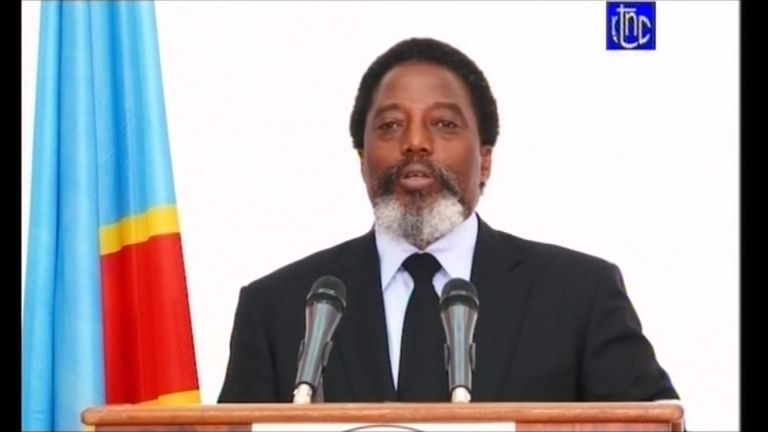
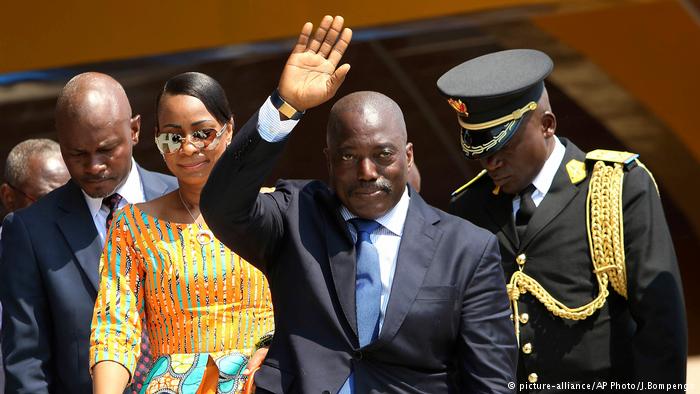
In the Democratic Republic of Congo, dozens of people have died in clashes between government security forces and protesters angered by what opposition groups say is President Joseph Kabila’s plan to postpone the presidential election in an attempt to retain power beyond the constitutional two-term limit.

The streets of Kinshasa are calm following anti-government protests last month that killed nearly 50 people. For months the country has suffered simmering anger over what opponents of President Joseph Kabila believe are his efforts to hold on to power beyond his constitutional term limit, either by delaying elections or revising the constitution. As other African leaders in neighboring countries including Uganda, Rwanda, Congo Brazzaville and Burundi have done.

The United Nations has voiced great concern and called on all sides to exercise restraint. The spokesman for the U.N. High Commissioner for Human Rights, Rupert Colville, says the international body is “deeply worried” by the violence.

“We call on all sides to show restraint and we urge the authorities to ensure that existing national and international standards on the appropriate use of force are fully respected by all security personnel. We call for a credible and impartial investigation to bring those responsible of human rights violations and criminal acts to justice.”

Since attaining independence from Belgium in 1960, the massive, resource rich nation has experienced dictatorship, poor governance, poverty, and insecurity. Congolese President Kabila has been in power since 2001.  He won disputed elections in 2006 and 2011.

Political observers say Kabila’s government has delayed elections scheduled for November, for logistical reasons. Opponents fear that Kabila intends to hold on to power beyond the constitutional mandate. Taking a cue from other African leaders neighboring countries.

In June, Moise Katumbi, a popular opposition candidate and former governor of the Katanga province was sentenced in absentia to 36 months in prison on what he says were trumped up charges (what were the charges?). Despite the charges, the opposition leader has vowed to return to Congo from Europe to run for the presidency with the backing of seven opposition parties.

“The population are ready already for election, which is important. Ninety-nine percent are ready for the election and they are waiting for the right time. You don’t want to make a putsch, you don’t want to make a coup-d’etat, you want to follow our constitution and if they don’t call for election, then the people of Congo are going to say ‘Mr. President, you didn’t respect what you are supposed to respect, it’s time to go. Bye-bye Mr. President, bye-bye the government of Congo’. Demonstration are going to be always peaceful demonstration, you don’t want any blood to flow.”

Katumbi and others want the international community to step in and pressure the Congolese government to allow a peaceful transition of power.

It remains unclear when elections in the DRC will be held, if not in November.  Kabila’s second term in office expires on December 19 and Congolese appear split on whether he should remain in office until elections are organized. A recent “national dialogue” was boycotted by many opposition parties and failed to resolve the issue.

The electoral commission says that it needs until December 2018 to complete the work of registering all voters and readying the country for an election. The opposition rejects that timeline, and the international community – including Belgium and the United States – have called for an earlier election date, potentially in 2017.

President Kabila’s office has issued a statement calling for calm — and inviting “the entire population to go about their daily activities, now that security is again fully ensured”.

The international community, especially the United States, are pressuring Kabila to respect the constitution and hold elections on time. They are also growing increasingly concerned over what they say are efforts to stifle peaceful protest.

SOUTH SUDAN’S CONTINUED CONFLICT


By Paul Ndiho

The government of South Sudan has directed all of its institutions to comply with the resolution of the United Nations Security Council for the deployment of a regional Protection force in Juba. The announcement comes amid new calls for aggression against the government from former First Vice-President Riek Machar.

The security situation in Juba and other parts of South Sudan is tenuous after former First Vice President Riek Machar, and his allies ordered their forces to regroup for “armed resistance” in an apparent attempt to topple President Salva Kiir’s government. The announcement follows the collapse of the transition government of national unity, once headed by President Kiir and Machar.

Although the two men signed a shaky peace deal a year ago, fighting has continued since Machar fled the country in July. He is now living in Khartoum, in neighboring Sudan.

South Sudan is facing a mountain of challenges, including deepening humanitarian crisis that has claimed hundreds of civilian lives and forced 2.5 million citizens from their homes. Appearing VOA’s Africa 54 news program, Stephen Parkuol, Member of the Political Bureau, Sudanese People’s Liberation Movement – In Opposition said that declaring war was a sentiment shared by many people in South Sudan.

South Sudan’s government has asked Sudan and other nations in the region not to let Machar launch a new rebellion, after he threatened a return to the battlefield unless his demands to revive a peace deal were met. President Kiir fired Riek Machar in July from his First Vice-president post in violation of the peace agreement that gave both men equal powers.  He then named former opposition negotiator Taban Deng Gai as first vice president.

“It is unacceptable to the peoples of South Sudan to even contemplate, let alone be threatened with, a return to armed conflict. Threatening to return to war, my predecessor has made clear he places his own political ambitions above the government’s ambitions for peace and security.”

The United States is strongly condemning recent remarks by Machar for a return to conflict against the government of President Kiir.

“We find it inexcusable that he would continue to promote armed resistance,” Kirby told reporters. “It indicates a lack of concern for the well-being of the South Sudanese people, many of whom continue to struggle just to survive and just as much want to see peace.”

In September, “The Sentry” an initiative of the Enough Project, Not on Our Watch and other partners released a report accusing both Mr. Kiir and Riek Machar of benefiting financially from the continuing war and have effectively ensured that there is no accountability for their human rights violations and financial crimes.

The report says, that the pair unlawfully acquired wealth, as well as extensive commercial holdings in both public sector and oil services operating in South Sudan. Their immediate families lived luxuriously outside of South Sudan, and hold significant stakes in companies that operate in South Sudan’s most profitable commercial sectors.

INNOVATIVE POULTRY FARMING IN ETHIOPIA


By Paul Ndiho

Poultry farming is big business in Ethiopia and it is growing at a staggering pace. Ethiochicken is leading the way, creating opportunities in this vast and potentially lucrative market by increasing production more than thirty-fold among poultry farmers, who struggle to earn their living through subsistence farming.

Founded nearly six years ago, Ethiochicken has since expanded into four regions in Ethiopia, with production centers nationwide, reaching farmers in small communities. The company developed innovative, economically viable models to reach rural households. David Ellis, the CEO of Ethiochicken says his company will soon reach more than 700,000 smallholder farmers with improved poultry breeds.

“Our vision is to reach one per person per year in Ethiopia by 2020 and what we do is we sell better breeds of chicken to smallholders in Ethiopia, for them to achieve more food security, earn more money and also empower women.  Women are the ones typically keeping chickens at the rural level, and we do this through a network of agents where we hatch their chicks, produce feed, and then we sell a full package inputs to agents, who raise the chicken for 45 days, and sell them to smallholder farmers.”

Ellis says that Ethiopia was an attractive country for them, because the poultry market is experiencing a boom as a result of its rapid population, and economic growth.

Each of those farmers will benefit by at least $100 per year so that’d be an impact of about $100 million per year on smallholder farmers in Ethiopia.

Ethiochicken has partnered with Feed the Future Partnering for Innovation (Fintrac), a Washington DC – the USAID-funded program that helps the private sector to scale and market agricultural technologies for smallholder farmers through investing in technology commercialization and knowledge exchange. Robert Rabatsky is the director Fintrac.

“We partnered with Ethiochicken through a competitive process, and we’ve run to date six of these competitive processes where we’ve put out calls for proposal – David and his company submitted a proposal, we evaluated that along with probably 50 or 60 other projects. It became shortlisted; it was a high-quality proposal and so we determined that it was eligible for consideration for funding.”

Brenna Carmen McKay, Technology Commercialization lead at Fintrac says the program invests in public-private partnerships that make agricultural products commercially available to smallholder farmers.

Feed the Future Partnering for Innovation was designed to engage private sector companies that have game-changing technologies in agriculture. Our program incentivizes these companies, who may not already be in smallholder markets, by giving them a grant as the initial investment to prove the value proposition in a smallholder market.”

Despite the success of Ethiochicken, David Ellis says running a poultry technology company in Ethiopia has its challenges.

“There’s also a lack of a poultry industry where you know, and it’s not easy to get the talented workforce; people with 5, ten years of experience doing this, so a lot of training is required. We hire fresh graduates from school and train them internally to be poultry farm managers, hatchery managers, and sales people.”

Industry analysts say Ethiochicken has potential to be very successful and the profits farmers generate, will allow families to buy food, and pay for school and medical costs.

BAMBOO FARMING IN ETHIOPIA


By Paul Ndiho,

Nearly 70% of Africa’s bamboo forests grow in Ethiopia, but much of it is commercially untouched. However, start-up companies like African Bamboo, a forestry, wood, and bio-energy company based in Addis Ababa, has come up with innovative ways to tap into Ethiopia’s natural resource.

If you asked the average person on the street to name a country that they associated with the bamboo plant, it’s unlikely you would hear many answers other than Ethiopia.

But the country is rich in bamboo, with 2.47 million acres of it untapped, but due to widespread deforestation, the government has taken drastic steps to promote sustainable harvests and green industries like African Bamboo are strategically placing themselves to tap into this growing industry. Khalid Duri is the General Manager.

“If you look at Asia, bamboo is a huge industry, $120 billion, if you look at Africa, it is negligible, almost $0. So we are trying to be a pioneer or to lead the industry using innovative applications for bamboo, practically for industrial and commercial purposes.”

Duri says industries such as African Bamboo are taking steps in managing, cultivating and using Ethiopian bamboo species to help mitigate rapid deforestation in the country by creating alternative “wood” sources and sustainable business opportunities.

“At least 6,000 farmers (in Ethiopia) they would earn, in total, in aggregate a-million-and-a-half Euro annually. Individually, their income would rise from just below a dollar to above two dollars.”

Bamboo is potentially an ideal source of local, sustainable purpose-engineered building materials for growing cities not only in Ethiopia but across Africa.

“The end product is the bamboo-based panel board for, that panel can be used for outdoor decking or indoors as well as wall siding, for applications with marinas, gardens and swimming pools and the like.”

Khalid Duri was one of the few African innovators competing for more than a million dollars in investment at the recently concluded AG Innovation Investment Summit organized by USAID. The event brought together more than 50 agricultural technology innovators, and investors to present, asses, and invest in game-changing technologies that will help small farmers improve their productivity and competitiveness. Event organizer Dr. Ku McMahan.

“We’re looking if they have a strong team, if they have a good organizational structure, a plan for scale, organization, and the finances prepared and a long-term vision of how they’re going to achieve that. And most importantly, that they have the local connections, and the interactions for their partnerships to make their whole organization move forward, to achieve the results that they’re climbing to have.”

Industry analysts say bamboo trade will also benefit from its greater sustainability than rival materials such as timber. Bamboo is the fastest-growing plant in the world, capable of growing almost one meter a day so that stocks can be rapidly regenerated.

Bamboo is extremely versatile.  The profit potential has become even greater as environmentalists link bamboo with climate change mitigation, and the possibility of increased income through carbon credits.

So far 18 African countries with natural bamboo have joined International Network for Bamboo and Rattan or INBAR, which is assisting them with bamboo information, technology transfer, capacity building and policy formulation.

NIGERIEN DESIGNER “ALPHADI” SET TO PROMOTE HIGH-END FASHION IN EAST AFRICA

BY Paul Ndiho

Nigerien fashion designer Sidahmed Alphadi Seidnaly, known as the “Alphadi ”is arguably the first African artist to make it onto catwalks in Paris, New York, Milan and beyond (is he or isn’t he?). Now the celebrity designer and UNESCO Artist for Peace is using his label to promote high-end fashion on the continent and peace in the world.

Born in Timbuktu (Mali) in 1957, Alphadi has been described as the “magician of the desert.” He is recognized in the fashion industry as one of the greatest names in fashion on the African continent. His creations combine cutting-edge style and traditional African styles.

My brand is unique be

cause

?I use unique textile. My collection is from all the prominent designers from Europe… I’m a big artist from Africa. Europeans send some people to see my collection sometimes in my country. They copy, at times they do to see what works for them.  My work is unique because all the first ladies in Africa wear Alphadi collection. Big ministers in Africa wear Alphadi collection.”

Alphadi started his label in 1984. His first haute couture line was released in 1985 at the Paris International Tourism Tradeshow.  Since then, Alphadi has been featured in top fashion magazines as a pioneer designer and entrepreneur on a mission to promote high-end African fashion.

For 35 years, Alphadi brand helps African textile, supports African names and promotes African beauty—that is Alphadi brand. All the pregnant women, Alphadi makes a collection for them. The president, Alphadi makes the collection for them. That is Alphadi brand.”

In 1998, Alphadi launched the first International Festival of African Fashion (FIMA) in the Tiguidit desert (Niger) under the auspices of UNESCO. The Festival has since become a place of exchange and dialogue between cultures from all over the world.

Apart from showcasing unique designs, the event also brings together international models to inspire upcoming talent as well train and mentor young models in the region.

“We bring designers from Europe, from Asia, from America, from Africa together to show how African design can get better and better.”

The artist has also created the Alphadi Foundation, which works to improve the lives of women and children in the Sahara and helps build and develop employment in the region.

“We give them the chance to get scholarships if they come study fashion in my industry in Niger, and I’m going to build one of Africa’s big university for fashion. I’m going to do it in Niger; big schools like universities for fashion and arts and that is in Niger. And the young girls we give them a chance to be actual designers. This industry can help out for the development.”

Alphadi has held FIMA shows in various African cities and abroad. Alphadi and his team are currently working on establishing a university to teach fashion designer to address the growing demand for high-end on the continent.

Earlier this year UNESCO designated Alphadi as an Ambassador for Peace for his commitment to culture and development, promotion of tolerance and his dedication to the ideals of the Organization

APP DEVELOPERS IN UGANDA


By Paul Ndiho

Just as fortune hunters migrated to find gold in the old Wild West, today there’s a gold rush happening in Africa. Developers are scrambling to release more and more apps.

12377759_10153738235287270_3904455085020575057_o

Mobile applications are beginning to Transform African communities economically, socially, and politically. Young African software developers are creating APPS to address their needs in many areas, including mobile banking, information gathering, farming, healthcare, and education.

In the East African nation of Uganda, LeBron Brian Ssekalegga, a recent graduate of Information Technology at the Makerere University in Kampala has developed an app dubbed “E-Chicken” that helps farmers.

“In case, they have problems with the birds they can use the app through searching for diseases, vaccinations, marketplaces. This app can simplify their life. They can use the app in one place. The app has everything in one place; you download it once you use it forever because you don’t require the internet to use it every time.”

As an experienced App Developer, LeBron Ssekalegga knew a good opportunity when he saw one and he’s part of the talented group of Ugandans trying to find homegrown solutions for problems Ugandan farmers are facing.

“When you open the app there is a menu where you can search for diseases, vaccinations, drug stores, marketplaces, simple tips, and growth plan.”

Ssekalegga has won several contests for developing cutting edge applications including the National Youth Talent Expo. He has also developed an app that makes all of the student’s class schedules available on handheld devices.

Donald Waruhanga a graduate of computer science at Makerere University. Like Brian, he has also won several awards. He has built from scratch mobile applications that focus on wellness.

“Most of the problems that are posed in our country are related to health, and they are paid little attention when compared with other fields. My app is called Momma baby because it deals with pregnant women at the stage where they are giving birth.”

According to World Health Organization (WHO), an estimated 303 000 women will die from complications related to pregnancy or childbirth. Donald says his apps are meant to change this narrative.

“I developed an app that can help the midwife just measure and input the information that they have measured. So when you record that data, it is supposed to be interpreted. After you record it, it gives you a computerized decision telling that a woman may need a C-section or that women can proceed with a normal birth. This can be done even in a remote village as long as the midwife has access to a smartphone or a tablet.”

Tech analysts say that these apps will have a significant impact on how we use smartphones in the future and that, young African app developers are innovating out of necessity.Critics say that most of these app developers are struggling to market their creations on a national level because the technology isn’t widespread enough yet.  Only a few have cashed in on their apps. However, for LeBron Brian Ssekalegga and Donald are optimistic about the future and hope that one day they’ll cash in as well.

BAMBOO FARMING CHANGING LIVES IN ETHIOPIA


By Paul Ndiho

Nearly 70% of Africa’s bamboo forests grow in Ethiopia, but much of it is commercially untouched. However, start-up companies like African Bamboo, a forestry, wood, and bio-energy company based in Addis Ababa, has come up with innovative ways to tap into Ethiopia’s natural resource.Bamboo Broll

If you asked the average person on the street to name a country that they associated with the bamboo plant, it’s unlikely you would hear many answers other than Ethiopia.

But the country is rich in bamboo, with 2.47 million acres of it untapped, but due to widespread deforestation, the government has taken drastic steps to promote sustainable harvests and green industries like African Bamboo are strategically placing themselves to tap into this growing industry. Khalid Duri is the General Manager.

“If you look at Asia, bamboo is a huge industry, $120 billion, if you look at Africa, it is negligible, almost $0. So we are trying to be a pioneer or to lead the industry using innovative applications for bamboo, practically for industrial and commercial purposes.”

Duri says industries such as African Bamboo are taking steps in managing, cultivating and using Ethiopian bamboo species to help mitigate rapid deforestation in the country by creating alternative “wood” sources and sustainable business opportunities.

“At least 6,000 farmers (in Ethiopia) they would earn, in total, in aggregate a-million-and-a-half Euro annually. Individually, their income would rise from just below a dollar to above two dollars.”

Bamboo is potentially an ideal source of local, sustainable purpose-engineered building materials for growing cities not only in Ethiopia but across Africa.

“The end product is the bamboo-based panel board for, that panel can be used for outdoor decking or indoors as well as wall siding, for applications with marinas, gardens and swimming pools and the like.”

Khalid Duri was one of the few African innovators competing for more than a million dollars in investment at the recently concluded AG Innovation Investment Summit organized by USAID. The event brought together more than 50 agricultural technology innovators, and investors to present, asses, and invest in game-changing technologies that will help small farmers improve their productivity and competitiveness. Event organizer Dr. Ku McMahan.

“We’re looking if they have a strong team, if they have a good organizational structure, a plan for scale, organization, and the finances prepared and a long-term vision of how they’re going to achieve that. And most importantly, that they have the local connections, and the interactions for their partnerships to make their whole organization move forward, to achieve the results that they’re climbing to have.”

Industry analysts say bamboo trade will also benefit from its greater sustainability than rival materials such as timber. Bamboo is the fastest-growing plant in the world, capable of growing almost one meter a day so that stocks can be rapidly regenerated.

Bamboo is extremely versatile.  The profit potential has become even greater as environmentalists link bamboo with climate change mitigation, and the possibility of increased income through carbon credits.

So far 18 African countries with natural bamboo have joined International Network for Bamboo and Rattan or INBAR, which is assisting them with bamboo information, technology transfer, capacity building and policy formulation.


NIGERIAN – U.S BASED GRAPHIC DESIGNER CREATING AUTHENTIC AFRICAN SUPERHERO


By Paul Ndiho

Here in Washington, DC, YouNeek Studios is creating an authentic African superhero that operates in a futuristic Nigeria. Is this a sign that comic books are gaining momentum in Africa? A continent that was said to lack interest in African-inspired comics. Roye Okupe was one the few African who exhibited their work at the Global Entrepreneurship summit last week in Silicon Valley California.20160615_131343

The African superhero universe continues to widen with the emergence of a comic book E.X.O “The Legend of Wale Williams” a science fiction graphic novel about redemption, set in a futuristic, 2025 Nigeria. The Comic book follows the journey of Wale Williams, an impetuous young adult who inherits a suit with super powers after his father goes missing. Roye Okupe is the brains behind the graphic novel.

“I grew up watching superheroes, cartoons; I tried reading as many comic books as possible. And immediately I fell in love with the genre, but I noticed that there weren’t a lot from Nigeria, where I was born or even Africa as a whole and I always thought that it would be cool actually to see an African superhero or Nigerian superhero in a Nigerian environment.”

With a keen interest in graphics and creative writing, the Lagos-born Okupe, studied computer science at both the undergrad and graduate level at George Washington University in Washington DC. His passion for animation led him to start YouNeek Studios, which would allow him to pursue his dream of creating a diverse library of superheroes and inspire young African children.

“I feel like representation matters, and it’s critical. For me, growing up, and not being able to see any African cartoons on TV made me feel like it wasn’t possible for me to do it. I didn’t see any African animators, I didn’t see any African producers doing it, so I just assumed that since there was nobody from Nigeria doing this, and it just meant that it’s impossible.”

Okupe’s superhero was received with critical acclaim and has since been featured on different media outlets.

“So it’s getting the publicity that I hoped that it would. It’s not only about me now; but it’s also more people seeing what Nigerians and Africans can do when it comes to comic books, superheroes, and animation.”

Unlike Nigeria’s thriving Nollywood film industry, the animation sector is relatively nu-established. For self-made animators like Okupe, the challenges are daunting.

“Everything right now is self-published, self-funded. I mean hopefully, that can change in the future where we can start to integrate more strategic partnerships with people that can help take this to the next level.”

Critics say in Nigeria a majority of animators struggle to complete their projects due to a lack of proper studio facilities, funding and training.  But Okupe says there is still hope.

“If you have a dream, or if you have something that you want to do, go for it or give it a try, just take what happens from there – as long as you give it an effort, there’s nothing that you can’t achieve.”

E.X.O “The Legend of Wale Williams” has something that other African superheroes created by Americans usually lack and that is cultural authenticity. In fact, some industry analysts say, if the success of Nollywood is anything to go by, the animation industry’s growth potential in Africa is enormous.

BUYERS ‘BEWARE’ UGANDA HOUSING BOOM


By Paul Ndiho

Uganda’s property boom has led to up surge in real estate brokers capitalizing on a rush of people to buy new homes.  But shadow players and amateur brokers are also trying to cash in – leaving buyers at the mercy of unscrupulous agents.Uganda Land Reform PKG

Uganda is enjoying a vibrant housing market. The country has one of the fastest population growth rates in the world. To get a perspective — I’m here in the capital, Kampala, to ask the experts and senior government officials to explain what has caused this boom.

Gabindadde Musoke, Permanent Secretary for the Ministry of Lands and Urban Development explains.

“Land was becoming a commodity and transactions were becoming too many and government wasn’t able to respond to the transactions that were now taking place in this sector, so it put pressure on land management.”

Vincent Agaba, a rising real Estate agent in Kampala says as the population grows, the surging middle class is scrambling for real estate.

“Real estate is an area whereby you can invest money and be able to keep money in that area without you being required to be there full time. So I’ll be working in job “x” and be able to have money “y” and be able to put it in a piece of land it can’t require me to be there on a daily basis.”

In some parts of Kampala, the cost of land has soared by nearly 60 percent.  Attractive profits are luring amateur brokers into the business, hoping to make quick money. But the sector has little regulation, which means unassuming buyers may be exploited.

“Most of them are thugs, they are not brokers. When they pass by a house and realize it is vacant, they will go looking out for people in need of premises. They will engage the person as a broker and claim to know a vacant premise and lie about how the vacant premise belongs to their relatives.”

Uganda is one of the few African countries that is using a computerized land management system. The old land registration system has been a drag on development and dates back to the colonial era, as you can see at the national land records office in Entebbe.

“. Each one is labeled Northern region – if you want to work on the northern region you come in this and if you want to work on Western region, it is all kept in here, even when you work on Eastern region you know where to go … when you are working on a computer you keep all your stuff in folders so these are our folders.”

However, there are calls to clean up the industry for fear of the negative impact.

“If the players in the land transactions are really left half-hazard, it’s not only a threat to people being conned and robbed of their money, it is also a threat to the whole economic fiber.”

Daudi Migereko, former Minister of Lands, Housing and Urban Development dismisses those claims. He says the digital land records management system allows the government to make brokers and agents accountable.

“I think we have had a major breakthrough. This increases the level of confidence on the part of the public that we are trying to serve. But also in terms of supervision we can now be in a position to tell who is working and who is not working, and where there is a problem its easier for us to discern where.”

Real estate analysts say Uganda’s housing market grew by more than 6 percent between 2009 and 2015. But critics say that a shortage in housing, alongside demands for more controls, could mean that the property boom has a long way to go before it’s considered an equal opportunity business.

« Older Entries Recent Entries »