Category Archives: P

MOBILE PHONE APPS MADE IN GHANA

By Paul Ndiho
Having access to a doctor in most parts of Africa can be a challenge but here in Accra Ghana – it just got easier, thanks to the mobile app “Dokita.” It provides users with first step health advice and recommendations from doctors within minutes. 10269318_900521313304384_1480289035574095682_o
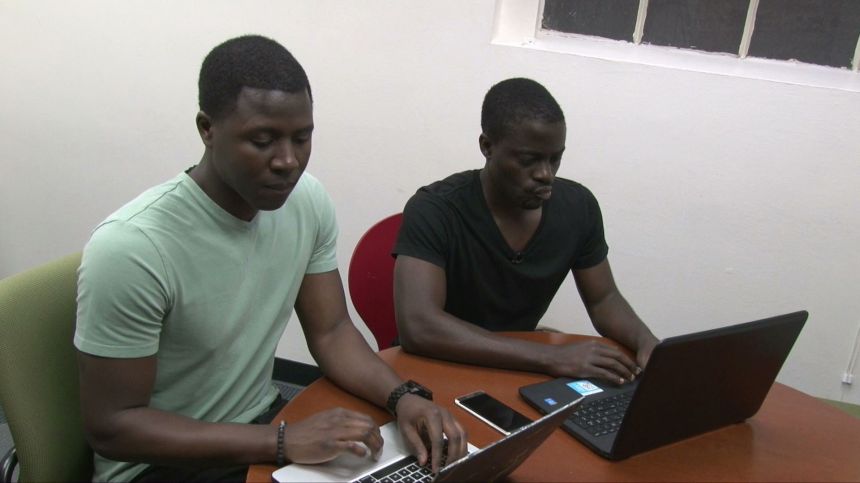
An innovations revolution is unfolding in Africa. Here in the Ghanaian capital Accra two techies have developed a cutting edge mobile APP called “Dokita APP.”
Dokita provides a platform for users who have health related concerned and answers from real doctors. Agana Agana Nsiire is the co-founder of Dokita App
“It works as a regular social network. So, imagine Facebook but it’s not you and your friends, it’s you and doctors. So, basically it’s an online application where users sign up and doctors sign up and then users can ask questions, and then doctors can answer the questions.


Mr. Nsiire says his App helps users to save money on doctor consultation fees and provides instant feedback. Here is how the App works.
“Hello Doctor, I have been experiencing back pains for some time now, especially under my right shoulder. Is there any particular cause? Thank you.”
“Alright, of course a real doctor wouldn’t say this but, “Paracetamol should do the trick,” and send. Alright, so the question has been sent and is displayed now and Steven should receive an SMS.”
I’ve received an SMS from Dokita telling me a doctor has answered my question, “Hi Steven, a doctor has answered your question. To see your answer login at, the link has also been provided for me. So if I were to be using a smartphone, I could just click the link to take me to the login screen where I login to see my answer.
Apps are the rage for a growing number of mobile devices. And young people are taking advantage of this revolution. Daniel Abakah is the founder of Ajumah.com which means “work” is an example. He has developed a mobile APP that helps African freelancers find jobs in other countries over the internet.
“We have tailored this platform just for the African freelancer to be able to go ahead and then do business. So we see it inspiring more African freelancers to even move out and then do most of these jobs. They feel empowered. We target them wherever they are and they still do a good job.
Daniel says that the online platform is generating a lot of traffic and sees potential for growth.
“We have about $ 32,000.00 value of jobs posted on this site.”
Meanwhile, Matrix Designs, Ghana’s leading Integrated Digital Marketing Agency in web design & social media is generating a buzz. The Accra-based tech company also provides a place for young, creative minds TO hone their skills. Bernard Adu-Gyamfi, leads the Social Media team.
“We started off basically as a software company and were developing software but overtime things have changed, so we decided to add web development and social media to it…as part of what we do.
Industry analyst say Matrix design is a highly sought after tech firm. Most their clients love the fact they are a one-stop-shop for all things digitally creative.
“We wanted to create a system where people could put in their information but also take away the area fraud and fake information. So, if you can speak to government systems then it verifies it. Ultimately, it can be translated into a national information or identification system.”
Analysts say this year is already brimming with unique mobile app innovations. Stay tuned to see what developers have to offer next year.

Paul Ndiho is a Ugandan – American video journalist/Executive producer, Africa Innovations & Technology based in Washington D.C with interests in innovation, technology and entrepreneurship in Africa. He is passionate about mentorship and developing the next generation of Africa’s young leaders. Email:pndiho@gmail.com, Facebook: Paul Ndiho and Twitter: @pndiho

SENDING AWAY YOUR LOVED ONES IN STYLE

By Paul Ndiho
Have you ever seen a coffin made to resemble a Lobster? How about a lion, a film projector or a Bible. Well these fantasy coffins are uniquely created to capture the essence of the departed – whether a character trait, an occupation, or a symbol of one’s standing in the community.mercedez-coffin_460_wide

Ghanaians are well known for their elaborate coffins, from stools a symbol for a chief to big pens a symbol for teachers, journalists and lawyers. This family run business, passed on from generation to generation has developed an innovative approach to making custom coffins.
“We have the film projector also for an old film producer or something like that. And then we have the crab, which is a totem of a particular clan, we have the lobster, which is also supposed to be for chief fisherman. We have the van, I mean the old “trotro” for a driver, the cocoa pot for a cocoa farmer and the lion for a chief, the spider supposed to be an old person, an old man.”
Like Father—like son, Eric Adjetey Anang has been running this family business, which was started by his grandfather Kane Kwei more than 50 years ago – Since then it’s been passed generation to generation. He has developed an innovative approach to making custom coffins.
The tradition of adding designs or sculpturing coffins dates back to Egyptian times. In Ghana, for instance, hand-carved coffins are popular and can be seen as a status symbol, or a way of remembering the deceased’s job or personality.
Eric Anang’s imagination runs wild in his carpentry shop. He’s made everything from a tilapia casket for a fisherman, to this cocoa pod for a farmer.
“The family comes with the idea of the profession of the deceased, so let’s assume the deceased is a driver, they come with the idea of the car the deceased was driving, so if it’s something I have done before, I could suggest let’s try to do a modern car or something.”
Eric says that the technology of building of the most popular coffins is perfectly controlled. Building is more or less complex according to the form of the model, the desired level of details.


. Although one of these sculpted coffins may cost an average year’s salary in Ghana, families and communities often band together to make such a purchase possible. This is believed to protect the well-being of the deceased in the after-world.
“Depending on a piece but actually is between two thousand cedes, when is to be use locally, but when we have to export it we have to us e good wood, we have to trade the wood and many other things and for that we give it at two thousand dollars.”
These fantasy coffins continue as a tradition in Ghana today and have been commissioned by people from around the world and also on display at various museums around the world.
“2013 I sent 24 pieces to Denmark and just this morning I just to understand a museum bought all the 24 pieces. I was there also myself, I built 2 pieces which has also been sold, I sent 20 pieces last year to Russia and they ended up in the museum, just a couple of months ago, like in January or February, I sent one to Florida, which is in a form of a Seahawk.”
Pretty much any object or thing you can think of. They are painstakingly painted, meticulously designed, and even in the face of death, strikingly lifelike.

Paul Ndiho is a Ugandan – American video journalist/Executive producer, Africa Innovations & Technology based in Washington D.C with interests in innovation, technology and entrepreneurship in Africa. He is passionate about mentorship and developing the next generation of Africa’s young leaders. Email:pndiho@gmail.com, Facebook: Paul Ndiho and Twitter: @pndiho

Teaching Strategic Communication Studies in Ghana

By Paul Ndiho
Declining newspapers sales, the rise of citizen journalism and use of new technologies are causing concern at some university campuses in Africa. The African University College of Communications, in Accra, Ghana is one of those universities that are re-thinking how to effectively teach communications.Ghana Communication School 1
Established in 2001 as the Africa Institute of Journalism and Communication (AIJC), the African University College of Communications (AUCC), has grown into a private, fully accredited institution, that offers carefully designed and uniquely blended programs at both the undergraduate and postgraduate levels. Kojo Yankah is the founder and president of the University.
“We started in the main stream journalism. You know Journalism at the beginning was just reporting, writing and editing. But then I took the broad fields – Communications should be more encompassing. So, I had to spread into public relations, advertising, marketing and then equally more important areas development journalism.
The University has approximately 1700 students from nearly 16 African countries. The AUCC is one of the few institutions offering courses in journalism, communications, business studies and other disciplines — and now the university is branching into radio and television.
“So we are now branching into multimedia studies to give a broad range of skills, at the feet of students, for them to see how they can now apply those skills, technologically and do better than we’re doing before. So, we have our radio station, for all those who are interested…in the past people could finish their journalism school without ever seeing a microphone. You have a radio station to, plus very active, lecturers.”
Industry experts say online publishing and multimedia communications are among the top growing industries — and they are the future of journalism. The university students asked me to explain why multimedia journalists are trending upward.


“For newspaper journalists right now, it’s not the best time to be a newspaper journalist. You want to be a multimedia journalist because most newspapers are cutting down or closing. The readership has gone down since everybody has a phone. Don’t be caught up, you need to think big and think outside of the box. If you are going to be studying journalism, don’t look at it from one angle; you have to look at it from all angles. If its print, TV, radio you do it –So that even when you are looking for a job, you have more options to choose from.”
Despite those fears, journalism and communication studies are still very relevant and the courses are attracting a lot of international students with varied reasons for selecting their particular paths of study.
“Well several reasons but the basic reason why I chose this school was that it was a communication school and I was pushing mass communication.
“I actually enjoy radio presenting, as a person, I love to write articles, I love to sing, I love to talk to people, so I thought radio presenting would be the best.”
“When it comes to the kind of courses they have, especially the one I’m specializing in, strategic communication, I found out that it was one of the best around.”
The main goal of Musah Larry Prince is to learn and enhance his communication skills.
“As someone who is interested in social issues and media in particular, I had the desire to enroll in a communications school.”
Most exciting, perhaps, is that Kojo Yankah recently added a business school that is also generating a lot of buzz. It’s geared towards teaching students hands on skills. He also has his sights set on Liberia and Sierra Leone where he is already in talks with the relevant ministries to open up satellite AUCC campuses.

Paul Ndiho is a Ugandan – American video journalist/Executive producer, Africa Innovations & Technology based in Washington D.C with interests in innovation, technology and entrepreneurship in Africa. He is passionate about mentorship and developing the next generation of Africa’s young leaders. Email:pndiho@gmail.com, Facebook: Paul Ndiho and Twitter: @pndiho

A TASTE OF GHANAIAN LOCAL DISHES

By Paul Ndiho

If you appreciate authentic Ghanaian food then you have something in common with Joseph Konney Mensah, founder and owner of Ultimate bar and Restaurant in Teshi – Accra Ghana. He’s a chef whose passion for making local and continental dishes has earned him the title of “best Chef in Town.” Taste of Ghanaian Local Dishes
Ghana has a rich culture, one that it has managed to hold onto for centuries. This culture is reflected in Ghanaian cuisine. It features traditional dishes from each ethnic group, tribe and clan. Most Ghanaian dishes are comprised of a starchy portion and a sauce or fish, goat meat or beef soup. This trend is evident at the Ultimate bar and restaurant.
“We operate every day, Monday to Sunday. Our main dishes are local, continental, and Chinese. With the local we have our local dishes known as Fufu/Banku, everything local that Ghanaians eat.
Founded nearly 7 year ago by Joseph Konney Mensah, this restaurant is now generating a buzz for its great food and attracting hundreds of people every weekend for live music.
Now Mensah is expanding his brand. He recently acquired a custom made mobile kitchen that caters for outside catering parties and wedding receptions.
“We also have our special which is Ultimate special rice. It’s been blended with chicken, beef, and shrimp…that is what we fry it with to have our special.”
His ambition to own a restaurant started when he was a young man. He mastered his craft in London and the U.S. where he worked in different kitchens before he moved back to his native country to launch Ultimate bar and restaurant.


“I started small. But, as time moved on I leased the land, the place that I was doing, my time got closer so I move into my own house…and I employed a few chefs. That were more experienced than I do so, I started a picking a few things that I didn’t know from them… and here I am today being a chef and an owner of Ultimate.”
Customers are spoiled for choice, sampling everything from a Banku – everything local that Ghanaians eat. Assistant chef Benjamin likes preparing fried rice and pizza.
“If I have my leisure time I move around to work with small, small people to train them for them also to become like me. Because it’s through him that I was able to become like this. So I want always to educate people that they are interested to do it so, I also help them to.”
NARRATOR:
Monica Annawi has been working here since the restaurant opened. Her specialty is making traditional foods like Okra stew. She says that she enjoys bringing a smile to people’s faces.
People come and say oh, their food is nice, it’s very tasty…and when they say that about you, you feel good, you feel pride.
Ultimate bar and restaurant employs more than 30 full time workers and has positioned itself as the best place to work in the area. Experts say the eatery has the potential to grow beyond Accra and spread to other cities hungry for a real taste of rich Ghanaian cuisine.

Paul Ndiho is a Ugandan – American video journalist/Executive producer, Africa Innovations & Technology based in Washington D.C with interests in innovation, technology and entrepreneurship in Africa. He is passionate about mentorship and developing the next generation of Africa’s young leaders. Email:pndiho@gmail.com, Facebook: Paul Ndiho and Twitter: @pndiho

Turning Shea Butter Into Natural Beauty Products

By Paul  Ndiho
This fascinating story is about a Ghanaian woman who quit her corporate job in the United States and moved back to West Africa to launch a lifestyle brand for natural products. Since returning to her native country, Nana Ama Yankah has turned her passion into a profitable business. Shea Butter Creams GHANA PKG
It has been said that being passionate about your work is the key to success. Nana Ama Yankah is no exception. It was her passion that triggered her to start Naya Naturals lifestyle brand for natural products — and she has literary turned her brother’s garage into a mini factory.
“This is raw Shea butter; we melt, we get it from the northern part of Ghana. I have met some people who actually process it in the north. I call them up and they send me some…
Nana says that using Shea Butter in various products is a business she’s had in mind for the last five years.
“I make two types of products – this is Shea butter that is mixed with oil – this is my orange and mint fusion – so this is Shea butter that has been mixed with coconut oil – Smells good.


“I started playing with Shea Butter products because some of my friends had some interest and they started bringing it around and this natural hair trend had started and Shea Butter was the baby of it.”
Nana says that many commercial creams irritated her sensitive skin, and that’s when she developed the idea to start making her own product line from local and imported materials.
“We have the mango, the banana and the papaya, ginger, lime and coconut and then we have almonds and chocolate.
Regarding her own technical knowledge of the Shea Butter making process, Nana admits, she did not have any formal training or background in chemistry – but she certainly does now.
“I’m not a Chemist by any measure. But through this process of learning and trying to make a good quality product, I’ve been able to learn the chemistry involved to make these creams.”
Like any start-up company, it’s not without its challenges. For example, getting her product line certified citified and approved by the Ghana Standards Authority took a long time. And of course, the constant problems with power blackouts. But despite these hurdles she has a very positive attitude.
“Our goal is to make products that people can identify with, they know what it is, and they’re natural from things that we find around us.”

Naya Naturals products can be found in several local Ghanaian shopping malls, at fairs and exhibitions. They deliver locally and sell and ship internationally.
Although there are many body care products on the market, making Shea Butter creams can be a perfect business opportunity, if you have the right people to market the product like Maame Serwaa.
“These creams nourish your skin, moisturized it, it rejuvenates and also protects the skin from direct sunrises and they have no side effects.”
Cosmetic experts say Shea Butter has qualities that make it a popular ingredient in many cosmetic supplies, lotions, and other skin care products.

Paul Ndiho is a Ugandan – American video journalist/ executive producer, Africa Innovations & Technology based in Washington D.C with interests in innovation, technology and entrepreneurship in Africa. He is passionate about mentorship and developing the next generation of Africa’s young leaders. Email:pndiho@gmail.com, Facebook: Paul Ndiho and Twitter: @pndiho

Political Satire In Africa

By Paul Ndiho
Comics are all over the entertainment circuit, trying to make us laugh with their political satire. From the likes of Herbert Ssegujja, AKA “Mendo Museveni”, to Adeola Fayehun – Presenter of “Keeping It Real” on Sahara TV — to Kenya and South Africa’s political satire puppet shows.11263031_10153259670892270_6680470281717153029_n
They seem to be omnipresent in our lives, to the extent that not only are they on local African television, but they have gone global via the internet, especially on YouTube, Facebook, and Twitter.
Herbert Ssegujja alias “Mendo Museveni”, A secondary school teacher and mimic in chief, is one of Uganda’s top comedians. He has built his career impersonating celebrities and politicians — especially Ugandan President Yoweri Museveni.
Ssegujja imitates President Museveni to near perfection. From the expressions and voice, to the stance and clothing, Ssegujja became well-versed in all things Museveni.
But Ssegujja calls it flattery, not mockery — especially since he’s an avid Museveni supporter.
The president was so amused he had to wipe away tears from laughing so hard.
New York based — Nigerian born Adeola Fayehun – Producer and Presenter of “Keeping It Real” on SaharaTV is also making her mark on the international stage. She now largely aims that talent at the political elite — especially Nigerian politicians.


It’s a passion Fayehun hopes to take far, while finding her own success. Observers say Fayehun’s online TV show “keeping it real” is causing some concern among some Nigerian politicians.
In Kenya, A local TV show featuring life-size puppets in the likeness of various top newsmakers – called XYZ – premiered on Kenyan television more than 5 years ago. The show centers on current affairs and is heavily satirical. Its producers say it is a unique and quirky way to discuss Kenyan and international political — and social issues. Gado is the producer and creator XYZ.
“We wanted to do a political satire show and at times we are mistaken as a comedy show, but it is not a comedy show, we want to do a political satire show. We thought we could have an interesting show using puppets, we can satirize politicians and lampoon them but at the same time, interrogate them and Kenyans as a society to look at ourselves and whether we achieve that, remains to be seen.”
Satirical shows, like” keeping it real”, XYZ and the South African based “Africa Puppet show” created by controversial South African cartoonist Jonathan Shapiro, have millions of viewers tuning in to watch on television, and many more watch online. Analysts say political satirists are pushing the boundaries of free speech, in some countries more than others. And comedians Across Africa are now beginning to cash-in — and the sky is the limit.

La-Tante DC10 Ghana’s Premier Restaurant

By Paul Ndiho
If you happen to be in the Ghanaian capital and you’re looking for a restaurant to have dinner — or you’ve never been on a airplane but you’re curious about what it feels like to eat on a plane. Ask no more! The country’s defunct airline, Ghana Airways, is now a restaurant. 11133818_10153169520697270_8128713134123885100_n
As the saying goes “One man’s trash is another man’s treasure” – in this particular case, that statement could not be true. Once upon a time, this was Ghana Airways. But now this national treasure has been turned into the state of the art La-Tante DC10 restaurant where locals and tourists come to taste authentic Ghanaian dishes.
Restaurant owner Vivian Awo Broom is credited for coming up with this innovative idea after she out-bid other contenders with different ideas.
“it was tough you have to do the technical bid and then the financial bid, so when putting everything, my artistic impression of the way the restaurant will look like and then the financials, how much we will be making from the restaurant, events and all that brought me up to win this bid.”
Located opposite the Marina Shopping Mall near Ghana’s International Airport, the restaurant is attracting lot of clients. There’s also no need to worry about Accra’s hot and humid climate, this restaurant is fully air-conditioned, with a unique ambiance that reflects the La Tante brand. It has a seating capacity of 118 — plus it features a live DJ.
“It’s one of kind, the first in Africa or West Africa if I should say and the expectations are high, we are doing African dishes, we needed to put some international twist to it to make it up there, not like the local dishes that are made in our local restaurants. So we have variety of dishes, the ambience and, like you can see today the ambience and the services just on point and people like it.


The eatery is where many locals get their first taste of what it’s like to dine on an airplane. John Michael is among a group of 25 people are visiting from outside the country.
“We came from Benin just to discover this restaurant on the plane.”
Raymond Baba is another customer who shares the same sentiment.
“They have very good Jollof Rice with chicken, and salad and I’m happy to be in plane on land.”
It was a walk down memory lane for another diner at the La-Tante restaurant, Paul says he had previously used Ghana Airways countless times about fifteen years ago — but today he brought his family for dinner.
“I flew in this plane and when we landed mostly in various countries, like Cambodia, Lebanon and other countries that peace keeping took place. And a s soon as we land you would see a lot of people from other countries come out to admire this plane – Simply because they used to overload this plane.”
The chairs and tables have been re-designed to meet high operational standards with separate washrooms for male and female customers. Sefakor Gbemu, managers the restaurant.
“It not been easy but we are managing, especially when the house is full you have to join them serve them, serve the customers and make sure they are satisfied, whatever, they want you make sure they are satisfied.”
The La Tante DC 10 Restaurant has great gardens for outside catering parties and wedding receptions. It also has high-level security, to effectively manage the risks of theft and unauthorized access to the facility.

Paul Ndiho is a Ugandan – American video journalist/ executive producer, Africa Innovations & Technology based in Washington D.C with interests in innovation, technology and entrepreneurship in Africa. He is passionate about mentorship and developing the next generation of Africa’s young leaders. Email:pndiho@gmail.com, Facebook: Paul Ndiho and Twitter: @pndiho

Bamboo Framed Bicycles Made In Kumasi – Ghana

By Paul Ndiho
A start-up firm, Boomers International, a bicycle production company in Kumasi, Ghana is generating a lot of interest and is rapidly becoming the leading producer of bamboo bicycles in West Africa.Bamboo Bikes Ghana PKGPeople are likely to ask, “What kind of bike is that?” And the answer is… It’s a Bamboo Bike -, an improved version that was first unveiled in 2009. For those who dare to be bold, this Bamboo bike has a striking design – one that commands attention. Voice of America was recently given exclusive, behind the scenes access, so let’s take it for a road test.
Started under the Yonso Project, a grassroots community-development organization, Boomers International is making its mark on the international market. The company is located in the Ashanti region of Ghana, and it specializes in producing bamboo-framed bicycles which are exported to countries around the world. Kwabena Danso is the CEO of Boomers International.
“We currently sell a lot on the international market, we are marketed in Germany, through a company called my Boo, we also market in Holland through a company called Forester Bikes, it actually started because of us. They actually set up the company just to distribute our product…and we also have another company in Australia called Ethical Wheels.”
Bicycles made from bamboo have been around for more than a century, but the demand has only increased in recent years. Today, Boomers international is seizing the opportunity to make use of this abundant, natural resource and the company is investing in the sustainability and the development of the local communities.


“For every bike that is sold, a child in the rural area also gets education, so we are trying to promote education, support rural community development through education, empower these children in the rural communities by the sales of our bikes.” Said Danso
John Marfo, head of the technical team at Boombers International, says he’s proud to work for the company.
“I feel very happy because without this company, I never thought I would be at even that place, or people would be interested in me that way. So I am very happy working with this company.
Some other apprentices have had the pleasure of being trained by Danso, who has given them the skills they need to build eco-friendly bicycles.
“I take the inventory here, and give them the necessary tools they need to do the job.”
Kwabena Danso says bamboo is the ideal crop to work with, it can be sustainably harvested and grows fast, without needing pesticides. The process requires the bamboo to be dried for six months and reinforced with carbon fiber. All of the bicycles are handmade, which is reflected in the price tag.
“This is a complete assembled bike made in Ghana here, by Boomers International Limited. As you can see, this is the frame. All these frames are made of bamboo, and this is the fork, the steer, and we’ve also provide a light in case you are riding in the evening or at night.”
Boomers international is already planning to expand the brand to sell on the local market. Bike analysts say Ghana’s fast growing population and rapid urban development means there are more cars on the roads, but having locally manufactured bikes could ease the crush of people using public transportation.

Paul Ndiho is a Ugandan – American video journalist/ executive producer, Africa Innovations & Technology based in Washington D.C with interests in innovation, technology and entrepreneurship in Africa. He is passionate about mentorship and developing the next generation of Africa’s young leaders. Email:pndiho@gmail.com, Facebook: Paul Ndiho and Twitter: @pndiho

QUALITY SHOES MADE IN GHANA

By: Paul Ndiho
The label “made in Africa” is not something you often see on shoes. But a young African entrepreneur is trying to change that with his quality shoe business, Horseman Shoes – a Ghanaian-based footwear manufacturing company. Horseman shoes
A Native Kumasi, Ghana, Tonyi Senayah is one of a growing number of young social entrepreneurs who wants to do something good for his community, while personally doing well. He launched his company nearly 5 years ago, with an aim to build Ghana’s biggest footwear manufacturing company. Last year, Horseman shoes received an endorsement from Ghanaian President John Dramani Mahama, who sported a pair Horsemen shoes during 2014 State of the Nation address in Parliament. Since that day, the company’s his sales have soared.
“This is Horseman Presidential — this is what we did for the president of Ghana when he wore it to parliament last year to deliver the state of the nation address. And it is one of the top notch and best-selling shoes. Normally, people who are top of the corporate ladder will want to go for these shoes, who are a bit conservative.
Horseman’s business is booming. It has gone from selling just a few pairs of quality shoes to bringing in more than Six Thousand US Dollars a month.
“This is one of our best selling shoes. Most the times when young people come here, those who want to get married, those who want to do weddings, they don’t have what to wear in mind. So we normally suggest that once you are wearing a suit you must look formal, you must look very serious. And naturally all the corporate guys want these shoes.”


Emmanuel Kwashi is a regular customer; he says quality shoes are a very important piece of the fashionable man’s wardrobe.
“We all know it is a Ghanaian brand. Because it’s a Ghanaian brand we want to be associated with it, not only associate with it because it’s Ghanaian, but I spoke about quality. I mean you’re looking for the best of leather then you talk about Horseman.”
Cabuttey Okansi is another regular customer and he says Horseman Shoes provides the Ghanaian working class with quality footwear that reflects people’s status.
“This is Horseman Shoes; this is where I buy most of my shoes. I do a variety of things, so my needs for shoes are quite varied. I’m a stage actor, so that one can come up with any kind of costume. And fortunately Horseman helps out with that.
Tonyi Senayah says his company wants to create a product by Ghanaians — for Ghanaians– thereby creating an avenue for young men and women with the skill in craftsmanship and arts to explore their talents and abilities to fulfill their dreams. Godfrey Nkrumah is one of the company’s shoe makers.
Horseman shoes are of high quality and quality leather. They’re affordable and a lot stronger. The shoes are good, the heel, the leather, everything is all original.
To stay ahead of the competition, Horseman Shoes is bringing in experts from Italy to train shoe makers. Italian Industry expert, Roberto Gussoni is teaching these young apprentices new skills.
“My goal is to teach them how to make a good design, good shoes. Maybe not always the same shoes that they are making every day. But try to give the message to give them the opportunity to make some other competitor shoes.
Analysts say the Horseman brand is becoming a household name. But, whether it can sustain the growth, keep the price point low and continue to employ workers at higher wages than its counterparts will, ultimately, be the true test.

Paul Ndiho is a Ugandan – American video journalist/ executive producer, Africa Innovations & Technology based in Washington D.C with interests in innovation, technology and entrepreneurship in Africa. He is passionate about mentorship and developing the next generation of Africa’s young leaders. Email:pndiho@gmail.com, Facebook: Paul Ndiho and Twitter: @pndiho

Ghanaian Mobile App Innovator Takes On The Counterfeit Drug Trade

By Paul Ndiho
The global counterfeit drug trade is a billion-dollar industry and it is thriving in Africa, where the markets are flooded with fake and poor-quality drugs. Could a new Ghanaian mobile phone-based system known as mPedigree be the solution in the fight against counterfeit?
The World Health Organization estimates that more than 100,000 deaths a year in Africa are linked to the counterfeit drug trade and that nearly 10 percent of prescription drugs available in pharmacies and hospitals around the world are counterfeit. slide103
Well thanks to Ghanaian social entrepreneur Bright Simons, who has developed his cutting edge mobile phone-based system known as mPedigree, which enables consumers to check the authenticity and validity of their medication through instant messaging.
Eugene Boadu head of Corporate Affairs and marketing at mPedigree, says there application is empowering the general public against counterfeit products.
“The app that empowers the consumer at the point of consumption to authenticate or confirm whether the product that you have just bought and are about to consume is genuine, and is coming from the right producers, has gone through the right checks.”
Drugs protected through mPedigree carry a short code that is revealed through scratching a specific area of the packaging. Users send this unique I.D free via text message on their smartphones short message Service (SMS) and they will immediately receive a message to verify the drug’s authenticity.
“With this new system of authenticating the safety and originality of drugs, you are sure what you are buying, so would not have reported cases of people suffering because they took in counterfeit drugs, so I’m sure what I’m buying, having test I know I am safe with this drug.”
Most exciting, perhaps, is that the system is now being used in more than six African countries and has been taken beyond Africa.


“Mobile phones are quite pervasive. In Ghana for instance, even in the hinterlands, you have quite a number of people using mobile phones. Not too long ago my grandmother requested for a mobile phone. So what that does is that you already have a device that a lot of people are hooked onto, and it makes a lot of sense and ease to be able to empower them to through that device protect and control their consumption patterns, especially for essential goods and commodities.
Earlier this year, mPedigree entered into a partnership with, GTP, makers of premium African prints — who are facing a huge challenge with counterfeiting. Steven Kofi Badu is the company’s marketing director.
“These shops are still selling our designs, but not with our labels. Somebody else has taken those designs and put their labels on them. Some have even gone further to put not just their label, they take our designs and put our own labels on it, so that makes it even more serious than it used to be. So we are losing market shares, we losing money, we losing margins, we are really struggling at this point.”
Badu believes that counterfeiting kill’s innovation kills industries and destroys the economy.
“We want to encourage consumers to always look out for the genuine thing, it might cost you slightly more, but you are better off buying a genuine product.”
The World Health Organization (WHO) says that the lack of proper monitoring of imported drugs in many parts of Africa is allowing counterfeit criminals to cash in on a continent that’s battling with other serious issues such as disease and poverty.

Paul Ndiho is a Ugandan – American video journalist/ executive producer, Africa Innovations & Technology based in Washington D.C with interests in innovation, technology and entrepreneurship in Africa. He is passionate about mentorship and developing the next generation of Africa’s young leaders. Email:pndiho@gmail.com, Facebook: Paul Ndiho and Twitter: @pndiho

« Older Entries Recent Entries »