Author Archives: Paul Ndiho

UGANDAN CHESS CHAMPION’S STORY BROUGHT TO LIFE IN A DISNEY MOVIE

By Paul Ndiho

Phiona Mutesi is a Ugandan girl, who until recently was relatively unknown at home.  Now, her life’s story is being told in an inspirational film by Walt Disney called “Queen of Katwe.”  The movie chronicles her outstanding ability to play chess and her rise to become a world chess champion, without any formal education.

“Queen of Katwe” starring Hollywood Superstars Lupita Nyong’o and David Oyelowo is about Phiona Mutesi a Ugandan girl who hails from one of Uganda’s biggest slums, “Katwe.”  The uplifting drama had its world premiere last weekend at the Toronto International Film Festival.

The film follows Mutesi who is living with her mother played by Lupita Nyong’o and siblings in poverty, in the Katwe slum, until she stumbles across a chess class run by charity worker, Robert Katende, played by David Oyelowo.

“It’s a life-affirming African story and as someone of African descent, we don’t see enough of that I believe in cinema, in the press as well so I’m very proud to see a story like this made by Disney as well.”

Despite repeated hardships, Phiona’s ability to play chees is amazing– and her journey to international stardom is amazing. Her big break appears to have happened when Tim Crothers, a renowned author and former writer for the magazine, Sports Illustrated, wrote a book titled “The Queen of Katwe” describing Phiona’s life. Lupita Nyong’o plays Phiona’s fiercely protective mother Nakku and at the premiere she explained how she felt the pressures of motherhood for the first time.

“I learned a lot about motherhood. I’m not a mother and yet I had to play a mother and I learned what it takes…. a bit about what it takes to provide for your family and to be concerned about so many people’s well-being. It’s almost like your heart is dislocated and running around and just feeling the fear, inhabiting the fear of a mother letting her chicks out every day to survive.”

Vanity Fair’s Mira Nair directed the film and brought her own knowledge of Katwe to the production.

“When I heard the story of Phiona and met her, it’s pretty inspiring and I thought of used it to use the locations I loved, the music, seeing the country from within, feeling the dignity and the complete joy even during the best of struggles and it was to make a story without sentiment but with truth and truth is very funny and stylish and sassy in Katwe,”

Mutesi has travelled the world to play chess and she’s met her hero, chess grandmaster Gary Kasparov. And she feels that being featured in a Disney inspirational movie is incredible. Now children from across Uganda are taking up chess like never before.  Voice of America was one first international media organizations to bring Phiona Mutesi’s story to light nearly four years ago.

DRONE RACING SPORT CONNECTS DRONE PILOTS AROUND THE WORLD

By Paul Ndiho

Racing unmanned aerial vehicles, better known as drones, is a new sport that’s on the rise in the United States, Europe, and Asia. “Drone Squad” a Los Angeles-based tech startup connects local drone pilots around the world for fun — but it’s the intense competition that’s taking this new sport to another level. screen696x696

Drone racing?  The technology for the new sport is only a few years old, but Drone racing has quickly progressed from hobbyists racing in empty parking lots into a competitive sport. In September 2016, The Drone Racing League and ESPN reached an agreement for the network to broadcast races. Startups like Drone Squad founded last year by Pete Mauro have emerged and are sponsoring drone races.

“I have always been Interested in the new markets, new technology and as soon as I started flying drones, I got so addicted to it.”

Pete Mauro, a certified drone pilot and software developer, says there’s real potential for the Drone Racing to go mainstream. Pilots in nearly 25-hundred cities are already using Drone Squad to build new clubs and grow the ones they have already started.

“In the past nine months, we’ve grown to have pilots over 95 countries around the world anyone the fastest growing drone racing communities in the world and down people is using our product to find other pilots.”

Drone Squad is a gaming community that connects the best pilots from around the world to compete and have fun.

“United States is the biggest market with about 60% of the drone pilots. It’s huge in Germany; it is huge in Korea, which is not surprising because they are really into video games. You know we also have pilots in Africa … there is probably 4 or 5. South Africa’s popular and guys from Zimbabwe. It’s going to explode.”

Mauro says drones zip through obstacle-filled courses, piloted by humans wearing something akin to a virtual reality headset. Tiny cameras mounted on the drones offer the pilots a cockpit-like view, as they steer using joysticks similar to what you’d find on an Xbox controller.

“I started Drone Squad a little over a year ago to solve a problem that I had. It was hard for me as a pilot to connect with other pilots. It was hard to find other people to fly with, and find safe flying locations. ”

Most competitive drones can fly at speeds of up to 120 miles per hour, with the goal of collecting the most points. Viewers also have a first-person cockpit view thanks to cameras positioned inside the drones.

Mauro has also created a cutting edge app that is free and available in the Apple app store and Google Play for Drone Racing App users to meet each other, share app feedback and get support. As for me, a want to be drone pilot — I still have some work to do.


Not bad at all… I was able to pick up some flying skills, but perhaps, I should leave the racing for the pro’s

Analysts say the drone industry expects increased use of the aircraft will help create 100,000 jobs and $82 billion in economic activity by 2025. The U.S. already has granted 76 exemptions to the new rules, mostly to companies that want to operate drones at night. Some of the commercial drones already are being used to monitor crops, inspect bridges and transmission lines, assist firefighters and police officers, film movies and make wedding videos. But for tech entrepreneurs like Pete Mauro, the sky is the limit.

AN AFRICAN ADVENTURE OF UGANDAN PRINCESSES

By Paul Ndiho

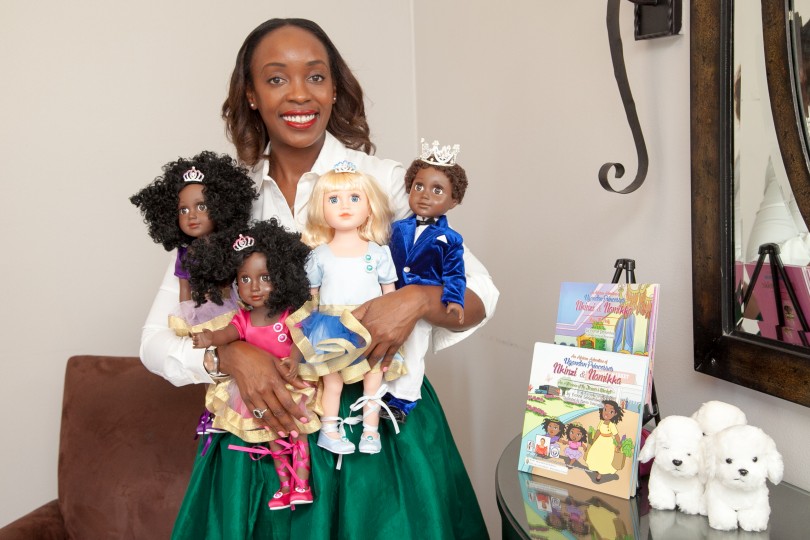
Our next story is about a fascinating Ugandan – American woman who turned her frustration in search for African dolls and children’s books with themed African characters into a business. Yvonne-Senkandwa-with-Dolls-810x540

Yvonne Senkandwa is a budding Ugandan entrepreneur, writer and author of children’s books, in Pasadena, California.  She is creating a niche for herself with the introduction of her brand of dolls and children’s books into the market about the royalty of the Buganda Kingdom in Uganda.

“The books were first published in 2014, they are for children, and they introduce Kingada culture to children who live in the diaspora as well as to comic book collectors and others who are interested in the Buganda Kingdom and comic books.”

With a keen interest in creative writing, Yvonne grew frustrated in her search for children’s books about African royalty. She turned her frustration into a challenge, writing a series of books that are teaching children the principles of integrity, kindness, and love.  For example, she authored the African adventure of Ugandan Princesses Nkinzi and Mamikka

“It’s my heritage, and it’s where I’m from, and it’s something that I was familiar with, and I thought that I could generate interest in that area. I’m also working in collaboration with other princesses and royalty in Uganda and around the world cause there’s royalty everywhere.”

Her passion triggered her to write a second book in the series, before branching into retailing; launching a series of dolls based on the characters in her books.

“I didn’t immediately go into manufacturing toys but I wrote the children’s series, I started writing the series. And from the series, that led into manufacturing the dolls.”

“Now these are the dolls that I’ve made. This is Nkinzi she is the one dressed in pink. And then we have Namikka, and she is dressed in purple. We’ve got crowned Prince Wassaja, dressed in blue. And lastly, we have Princess Lily their friend who they met at the farmer’s market. So that’s the doll collection

Getting her product sales up has been difficult, so she resorted to doing book fairs and festivals to generate interest, as well as working with toy shows. Despite these hurdles, she has a very positive attitude.

“One of the challenges is to get retailers to be interested in carrying the product. When you’re new, the big question is “Why your product?” and trying to generate a lot of publicity into why the dolls are marketable, doing interviews, book festivals, book fairs, and also working with other retailers that are interested in carrying the books. But that is the challenge. Because it’s a relatively new product.”

Senkandwa’s dolls have become a hit among the Uganda Diaspora and are also gaining popularity beyond the Ugandan community, as she has begun receiving orders to export them to schools in Uganda and to individuals in the United States and other African countries.  Due to the high cost of production in the U.S, the dolls are manufactured in China, after which the parts are shipped to the U.S and Uganda and re-packaged for sale. Yvonne says that her book teaches Luganda words, promote, encourage and preserve the Kiganda Culture in the Diaspora, and most importantly her characters teach life skills.

DELIVERING TECH SOLUTIONS IN EDUCATION TO RURAL AREAS IN GHANA

By Paul Ndiho

Education remains the fundamental tool to alleviate poverty in most African communities.  In Ghana, TechAide – A technology social enterprise, has come up with a different solution to deliver educational content to rural schools using new technology.

techaide

Having access to a library in most parts of Africa can be a challenge but in Ghana – it just got easier, thanks to TechAide a technology social enterprise that has developed E-solutions to tackle some of the country’s continuing education challenges. Kafui Prebbie is one of the brains behind TechAide.

“We have developed products specifically for education. And we’ve been in the space for close to ten years delivering technology solutions in education and supporting rural development. And two of our core products that we’ve developed over the period is EduLab, which is an education computing solution for schools and the latest one which is Asanka, which is our content delivery system.”

As the country becomes more connected to the internet, educators and publishers are finding new ways to reach young audiences and their developing minds. Many students have never experienced the world through reading because they don’t have a library. But TechAide is changing this reality, and they’re doing it is through digital libraries called EduLab.

“My passion has always been to bridge the digital divide – to bring technology into schools. Because I’m a trained educationist and I have the passion for technology. So the idea is how we bridge the gap, technologies that exist in the major cities, and rural areas do not have access too.”

TechAide has built over 70 EduLabs in rural areas where funding, teachers, and resources are scarce. The technology is not free to schools, but TechAide has partnered with IBM Corporate Service Corps, Ghana’s Ministry of Education and several banks to provide funding.

“We partnered with international nonprofits to have accurate low-voltage technology solutions, and so the computer labs that we do set up are specifically low-voltage and consume about the one-tenth of the power of a standard computing solution.”

Kafui Prebbie says through their programs, students can access approved educational content, including audio, video, and interactive games and with IBM’S global pro-bono consulting program they’ve been able to take this initiative to the next level.

“What that did to us was, it helped us to be able to change even the trajectory of how we were going to provide those technology solutions into the schools. With this, we have developed the architecture in such a way that it’s even more relevant to the needs of our communities.”

Gina Tesla, Director Corporate Citizenship, and corporate affairs says Ghana has long been a launch pad for innovative collaboration, making it logical for IBM to partner with TechAide in Ghana.

“What we want to do is help provide the highest skills possible, to help solve some of the world’s most pressing challenges.”


To date, IBM’s Corporate Service Corps, and TechAide are working very closely together to support girl’s education under the “Let Girls Learn initiative” launched by former U.S President Barack Obama and Michelle Obama in 2015.

“The whole premise is to help support greater access to education for adolescent girls. There are at least sixty-two million young girls worldwide who are not receiving an education.”

Kafui Prebbie says TechAide’s solution to deliver educational content in rural schools has potential to be replicated in many African countries. TechAide has its sights set on another innovative idea called ASANKA which means ‘community bowl’ — it’s a collection of important content for everyone to access.


USING VIRTUAL REALITY (VR) TO MANAGE ANXIETY AND PAIN

By Paul Ndiho

The virtual reality industry is still in its infancy, with one-million headsets expected to be sold this year. But one company, Applied VR, says this cutting-edge technology could potentially offer patients a highly enjoyable escape from scary and painful experiences in healthcare.

ahaw

You’ve probably never heard of Awah Teh, the Cameroonian tech-mogul, who has made a name for himself in Los Angeles for building cutting edge software and mobile applications that compete with some of the biggest names in the industry.

For example, one of the companies he worked for CinemaNow, a digital rights management (DRM) cashed big when it was sold to Rovi Entertainment Networks at 720 million dollars.

“That platform that we built basically, I think was what gave birth to a lot of the different platforms we have today. You know whether it’s Netflix, whether it’s Hulu, or to an extent some of the things that are happening with iTunes. They all use DRM today. And the valuation of cinema now went from this exciting startup with a potential solution to a problem to a seven hundred twenty million dollar company in the space of seven years.”

Once again Teh has created buzz in Los Angeles, he is one of the key players involved in innovative technology called Applied VR or Virtual Reality that is revolutionizing the way people interact with technology.  He says that applied VR’s platform is intended to increase patient comfort and support providers in managing anxiety and pain in a clinical setting before, during and after procedures.

“What we’re doing there is we are creating virtual reality platforms for healthcare. We’re doing things like pain management. So ultimately the long term goal there is to be able to make pain reduction as an alternative to chemical control of pain reduction.”

He also says his company has conducted clinical research to demonstrate how their products may decrease patient anxiety, reduce pain, minimize the need for sedation, lessen the risk of drug complications and shorten postoperative stays.

“We’re the leader in that space right now? We’re in eight of the top ten hospitals in the United States. And news organizations are. So it’s a fancy way of saying: instead of taking pain medication, you can use virtual reality to manage some of your pain.”  Reaching out to us to write articles. It excites me because in many ways we are changing the world.”

The tech executive has also developed several other internationally recognized web and mobile applications — including a global communication platform that allows people to communicate with each other through an interface similar to Facebook.

“The platforms called pen pals. That’s us. We own that trademark, and the pen pals platform is designed to allow people to reach out to folks that they’ve never met and spark new and exciting conversations with different cultures around the world.”

Tech analysts say that the concept of Pen Pals is not new, but what Awah Teh has created makes the world a little smaller and a lot friendlier for people from all walks of life.

As the tech mogul expands his business enterprise, he says his eyes are set on other innovative and cutting edge solutions, especially in the rapidly growing eMedical healthcare field.

Mobile App Monitors Cardiac Rehab Programs

By Paul Ndiho

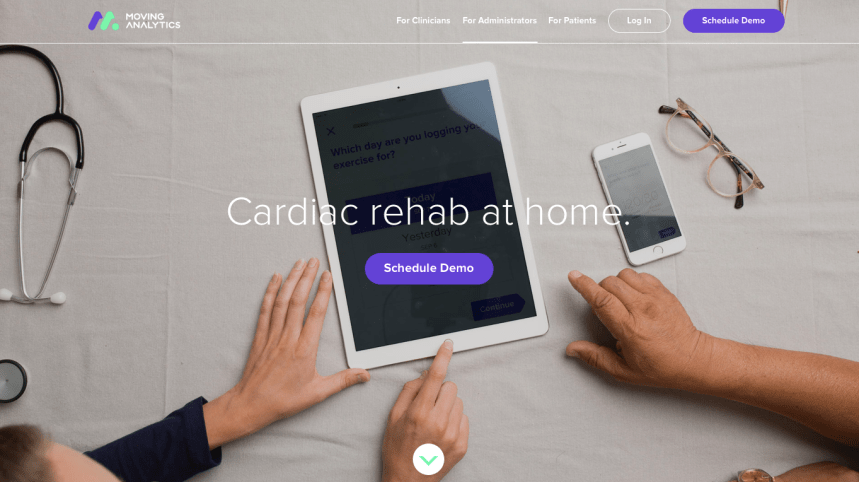
A Nigerian-born, California-based electrical engineer has developed a mobile application called “Movn”, that’s designed to implement virtual cardiac rehab programs for patients with heart disease.  Screen Shot 2017-04-08 at 7.57.51 PM-1

The World Health Organization says that cardiovascular disease, which includes heart disease and stroke, is the world’s number one cause of death. 17.5 million People die each year from heart-related disease. But could a mobile cardiac rehab program app be the answer?  Ade Adesanya, co- founder of the Los Angeles-based Moving Analytics has built a cutting-edge app called “Movn” that could be the future for hospitals to implement virtual cardiac rehab programs for patients with heart disease.

“What we do at moving analytics is we work with hospitals to design and implement virtual cardiac rehab programs for patients with heart disease. The goal is to help a patient after a heart attack or heart surgery to do their cardiac rehab at home through a tablet or a smartphone application.”

This mobile technology has the potential to overcome barriers to access to cardiac rehabilitation and may be a useful tool for increasing participation.

“The problem we’re solving is that less than 20 percent of patients in the U.S. after heart surgery or a heart attack do cardiac rehab, even though all the research shows that if they do it, they can live five years longer, they have half the risk of getting a second heart attack, improves the quality of life.

Adesanya says he was inspired by his father, a prominent Lagos businessman.

“I have always been fascinated with entrepreneurship, and that came from my experience growing up.”

The company’s biggest breakthrough came when they first met executives from the American Heart Association. What started as pitch to build a fitness tracker — resulted in an opportunity for Moving Analytics to venture into cardiac rehab.

“I remember picking up the phone and calling close to a hundred cardiac rehab programs across the country. I would say hey I am a grad student working with the American Heart Association — you know we’re trying to build an app for cardiac rehab, but I don’t know what is, so can you tell me what you do in a cardiac rehab program. What are the challenges are and what can you see as the source of innovation.”

Movn is an evidence-based rehab program developed at Stanford University.  Mr. Adesanya, says through the mobile app, patients can receive and interact with information, record and review data, receive automated feedback, and connect with other users or healthcare providers.

“They built the program and did numerous clinical trials, and that program is called multi-fit, they’re able to show that patients who did that program had the same critical outcomes.”

Shuo Qiao, chief technology officer, Moving Analytics says, technology is lowering the barrier of people making products, but security to protect patient information has to be a priority.

“We take security seriously because as a healthcare company, safety is the number one thing when you build a product. So we take all the safety measures to make sure that we can serve our patients in hospitals.”

Since its inception, the company has signed up 13 hospitals as paying customers.  As the firm grows and expands into more hospitals, its leaders have their sights set on other rehab applications — and a remote disease management platform to include

GAMING FOR A SOCIAL CAUSE – L.A CALIFORNIA BASED KAYDABI GAMING COMPANY

By Paul Ndiho

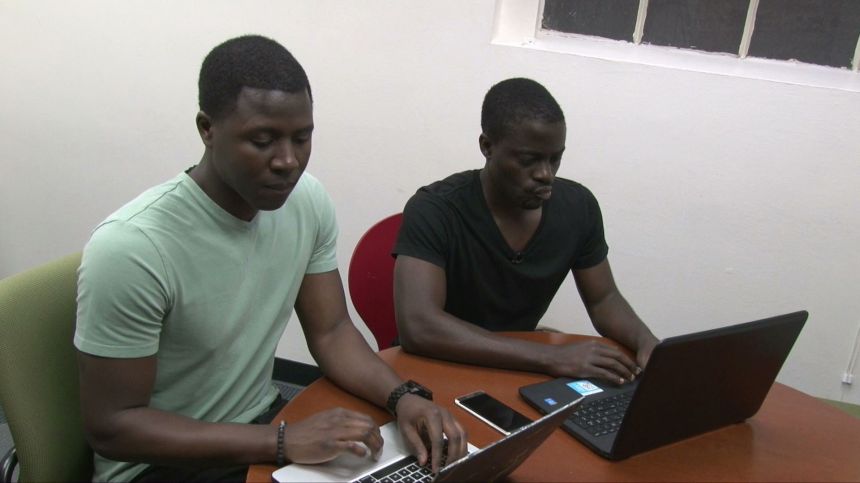
Two West African graduates at the University of Southern California in Los Angeles have created a mobile gaming company “Kaydabi “that aims to change the world, one video game at a time through philanthropy.Gaming for Social Change PKG-1

Dubbed as change makers, Ghanaian, Kwabena Osei-Larbi, and Cameroonian Kameni Ngahdeu met as students at the University of Southern California and they quickly bonded over their shared West African backgrounds and discovered that both had a passion for playing video games. But they wanted to do much more. They decided to turn that passion into a business — And Kaydabi gaming company was born — A mission-driven, African-led and Los Angeles-based mobile gaming company that pairs philanthropy and entertainment to create change.

Today they’re part of a creative team at USC who use the incubation lab to develop mobile video games. The USC Incubator accelerates the development of top students and alumni entrepreneurs through experiential education, mentor-ship, and community. Kaydabi Co-founder Kwabena Osei- Larbi explains.

“We build our games for both Android and iOS platforms and the all completely free to play. Wild Warriors built around Endangered Animals and Wildlife Conservation. The game is being used to help save and rescue some of the most endangered and at-risk animals we have over 20 species and over 67 levels.

The pair taught themselves how to code and develop games using free online resources, reading books and tapping into their passion of video playing games. Kaydabi co-founder Kameni Ngahdeu, graduated with a degree in Human Biology and a minor in entrepreneurship.

“From Human biology, one thing that helped me a lot which is the psychology behind games. I took classes in Neurosciences and Psychology, and it’s interesting you can take something that is fun and tie something positive into it.”

Kameni says a single game today has the potential to reach and entertain millions of people. However, the impact of most games usually stops there. But for these two gamers, that wasn’t enough, especially with all the problems that go unaddressed.

“The shortened goal for our first game Wild Warriors is to get 10 million+ downloads. Our target audience for this game is women ages 34-54 because they care about lot more about the cause and they are the demographic that plays these games more frequent that anyone else and they have a high spending power. Long-term for Kaydabi we want to have a multitude of games that we can shuffle in different charities and easy to raise money for them.”

Kwabena says that their company has partnered with four of the world’s largest wildlife organizations to make it happen.  Including Defenders of Wildlife, World Parrot Trust, Sea Turtle Conservancy and the African Wildlife Foundation.

“We have partners that range from different assets of wildlife conservation. The African Wildlife Foundation which is close to home for us as well and some others that were working with to make this happen.”

The game is pretty easy to play, even for a non-gamer like me.  I was able to quickly pick it up. This epic journey to save the world’s most endangered species from an army of powerful, mythical monsters that represent real-life threats – from poaching to pollution and climate change.

The game is free and available on the Apple App Store and the Google Play Store, but players can choose to buy only virtual goods in the game with real money if they want to. Kwabena and Kameni are building a team of marketers, engineers, artists and designers from all over the world.

Business and gaming analysts say Kaydabi is already brimming with unique mobile games and has committed to donating 10 percent of all proceeds from Wild Warriors to its charity partners. The developers also have their sights set on others games that will support a range of additional causes – from tackling world hunger and childhood poverty, to promoting gender equality and children’s health.


Ghanaian Twin Brothers behind Hollywood’s Auto Boutique shop Roadstarr Motorsports

BY PAUL NDIHO

You’ve probably seen these custom made cars in music videos, from reality stars to rappers to super-rich celebrities driving down the streets of Hollywood or even watched a TV show called “pimp my ride.” But, have you ever wondered who makes these cars? Well, ask no more! Paul Ndiho recently caught up with the owners of Roadstarr Ghanaian Twin brothers, behind the LA based automotive boutique that tunes expensive cars into Exotic automobiles. Nicki-Minajs-Pink-Lamborghini-Aventador

Most of us are happy to drive affordable vehicles, but for super rich, it’s all about status, and appearance in a custom made to car – One that meets their exquisite taste. Therefore, choosing to drive some of the market’s fastest, slickest, and most expensive cars.

“If you are one of those guys with deep pockets and you’re looking for a place to customize your vehicle, Roadstarr in LA is one place you need to check out.”

An appetite for driving expensive cars coupled with a fancy lifestyle inspired fraternal twins Hussein and Hassan Iddrisu as well as their cousin John Spio to start their customization shop Roadstarr Motorsports.

“We provide excellent services for those who have a lot of disposable income in the industry of automobile in a way we are an auto boutique company and basically what we do is provide services for those that have love and passion for most of the European cars.

The automotive shop has grown into a full-service luxury brand that caters to celebrities, From Paris Hilton, the heiress to the Hilton Hotels, Amber Rose, Sean P. Diddy, Kim Kardashian and rapper Soulja Boy just to mention but a few.

“Our most recent clients include California’s former governor, we have clients from all over the world, from heads of state to people that have disposal income. So it’s a beautiful thing because it gives us an opportunity to enter into certain people’s lives that we would probably not get the privilege to in the normal circumstances.”

Hassan says it is understandable why Hollywood celebrities, with a lot of money, can make, can afford to spend hundreds of thousands, and even millions of dollars for such cars.

“Price is not as important as the services you provide promptly. So their time is very precious, they have choices. You got to have them fall in love with you then they tend to pay more here than other competitors because of the after products.”

For example, this is a 2017 Lamborghini Aventador Roadstar– with this car the customer wanted us to build him a custom Aerodynamics body kit on the car.  That’s why the car is apart, and we have already used our high technology scanner to scan the car and come up with 3D’s and have already designed the car.”

Hassan Iddrisu says that whether custom captain chairs in the rear of your Mercedes Benz G Class, a complete executive conversion for your Ferrari or your Range Rover SVU. Their attention to detail and craftsmanship, along with professional highly-qualified experienced engineers, electricians, mechanics, and talented staff guarantee that your car is safe, sound and redefined in your special way.

“We take cars and redefine them into what you want it to be we’re like plastic surgeons of cars we achieve those dreams for you.”

Despite repeated hardships, their ability to succeed as a business has been remarkable. Hassan attributes his business success largely to his twin brother Hussein Iddrisu as well as their cousin John Spio and the talented staff that makes it happen.

CAMEROONIAN – AMERICAN ACTIVIST SPEAKS OUT ON TRUMP’S IMMIGRATION POLICY

By Paul Ndiho

Africans are among the most rapidly growing immigrant populations in the United States. As they become more integrated into the social fabric of this country, their participation in day to day issues becomes more important. Cameroon Immigration Activist PKG

Pamela Anchang, a Cameroonian – American publisher and immigration activist weighs in on Immigration.
“They’ve given us a bad name, are we going to own it no, are we criminals no, are we bad people, we’re proud people anti we… I want to tell you a story I’m from Cameroon … who knows Cameroon? We’re champions in soccer but guess what I’m here just like you, and we’re one people.”
Pamela Anchang came to the United States from Cameroon nearly years 20 ago, with the dream to earn a living and do better for herself. Today she’s become an icon in LA California as a publisher of the immigrant magazine, immigration activist and an outspoken critic of US President Donald Trump’s signature campaign promise to crack down on illegal immigration.

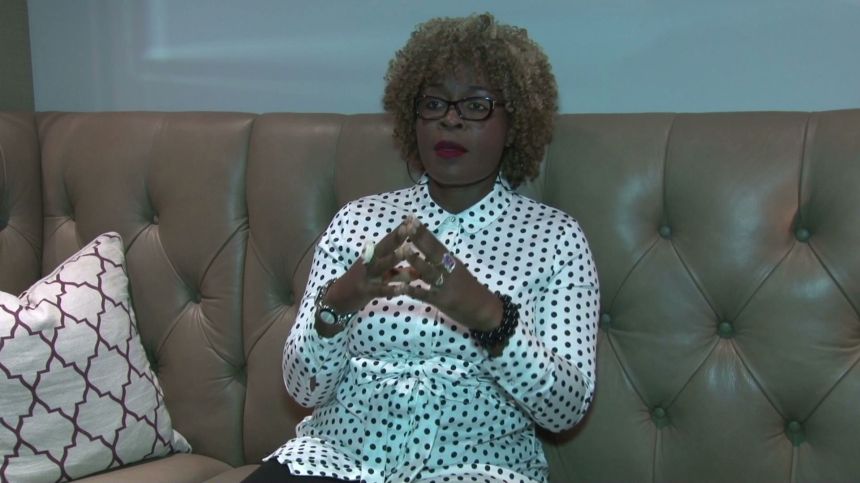
“We have an administration that seems to forget and want to penalize immigrants. I am not advocating for illegal immigration, but however, I am saying that we should have a comprehensive immigration reform that would legalize everybody. Ms. Anchang is the editor of The Immigrant Magazine, a Southern California-based news and features website that bills itself as “the voice of immigrants in America,” She has become the voice of the voiceless and made friends across the diverse spectrum of immigrant communities in the Los Angeles area. “I could not be more proud to reignite my immigrant pride.  I’m standing here with my brothers and sisters to say that we’re not criminals.” By becoming more involved in the anti- immigration campaign naturalized citizens like Pamela play a greater role in determining the fate of issues that impact other immigrants, such as comprehensive immigration reform.  “Immigrants feel like this is a land of opportunity. And now we have a president who seems to forget that immigrants build this country’s foundation. Immigrant strive made this country. This country has a lot of history of diversity regarding where we all have come from.” Pamela Anchang and her husband, Charles, started the immigrant magazine project as a print magazine in 2004 because they saw a gap in how the dominant media outlets portrayed immigrants in the United States. “The immigrant magazine started from the vision that I had for myself, talking about myself as an immigrant. I couldn’t find a place or an outlet to speak of these things, and I had that determination to want to do it. It’s all about determination, and that you don’t quit, you find all the avenues.” Over the years, the magazine has adopted a more political tone as Anchang uses it as a platform to call for an overhaul of the country’s immigration laws and a path to citizenship for the millions of immigrants here without permission. “When I started it actually, I thought I would be telling stories, beautiful stories of successful immigrants, but 10-15 years down the road, more than ever, it has become really, a magazine, which captures the immigrant experience in its totality. So whether its advocacy, and being out there in the rallies, and being out there speaking up on behalf of immigrants.” Pamela Anchang says her success as a publisher and celebrity immigration activist has not come easy. But despite the challenges, she is even more determined to keep pushing the envelope and be the voice of the voiceless especially in light of President Trump’s administration travel ban targeting, immigrants, refugees and several majority-Muslim countries.


TECH COLAB OPENS IN KADUNA NORTH WESTERN NIGERIA


By Paul Ndiho

Over the last five years, Nigeria has seen its innovation spaces grow from a handful to hundreds.  CoLab is the first tech hub in the northern part of Nigeria and is designed to be a multi-functional space where developers and start-ups can work and grow.

colab-kaduna

Nigeria has been getting a lot of attention lately in the tech world, and for a good reason. Young talent is entering the game with something unique and they’re developing mobile applications that are transforming their communities.

Located in the north western state of Kaduna, CoLab Nigeria is a hub for tech enthusiasts and entrepreneurs developers interested in solving everyday social and technological problems come to see their start-ups kick off.

Ifeanyi Mora is a regular at CoLab. He is working on an app that will help schools gather and manage their records.

“I don’t need to think of things I need to run like power and all what not. So it provides the space, it provides you know things I need to use like power and all that. And I said above all; you have people, people who have sort of the same skill set that you have that you can always mine from and share so that’s… it has been so helpful.”

There are many spaces like these around the world and a growing number in Africa – where nearly 90 technology hubs and research bases often funded by international firms such as Microsoft, Google, Facebook and Intel, incubate early-stage businesses in cities like Lagos, Johannesburg, and Nairobi.

CoLab founder, Sanusi Ismaila wants this space – launched just last year, to open up the state’s economy and draw investment for tech entrepreneurs and start-ups.

“What we are trying to do is get more people into co-working together. Get more people into technology because we feel like technology is one of the single biggest ways to get more people across the poverty line and especially here in this part of the country, so you know we are investing in that and we feel like where we are based now, which is Kaduna has everything that a tech ecosystem needs to flourish.”

CoLab offers training sessions on business and access to mentors and workshops to help local entrepreneurs develop their skills. It is also just a cool place to hang out. Youth unemployment is a massive problem in Nigeria; official figures show up to one in two young people are out of work.

“This is one of our work spaces; it’s the weekend so during weekends we do what we call downtime. Which is pretty much, play games, watch TV, chill, start interacting, and it’s open to everyone not just people from CoLab. So, we sought of having an avenue for people to interact with the people that are here and you know rub off each other. Get more people outside to come in and understand what we are doing, and also get user feedback on some of the things that we are working on,”

CoLab rents space out to members for between 3,100 naira (10 US dollars) and 10,500 naira (35 US dollars) a month. It can accommodate 100 people at full capacity in its indoor and outdoor areas.

Sanusi says the shared space and incubation concept is taking the time to catch on in Kaduna.

“You know the prevailing culture and mindset, so it’s one of the biggest challenges – changing people’s mindsets really and also getting people used to co-working. We also have a cultural of the problem here because everyone is sought of like siloes and you know is used to working on his own and doing everything for himself,”

Analysts say the potential market size of Africa’s most populous nation makes Nigeria, with nearly 170 million people, an attractive location.  Similar spaces in the capital Abuja and the second city Lagos, have helped many young people launch into tech business.

Perhaps it worth noting that Nigeria, is the home of Africa Internet Group (AIG), which owns several technology firms across 26 African countries including online retailer Jumia, delivery app HelloFood, hotel booking platform Jovago and online real estate marketplace Lamudi.


« Older Entries Recent Entries »